| AD, A.D. | abbreviation of Anno Domine (Latin: in the year of Our Lord) or Anno Domini. It is conventionally placed before a number to show that it refers to a year following the birth of Christ, although contemporary experts generally agree that Christ was probably born in 3 BCE. These are fundamentals of the Christian calendar. Other cultures designate years according to other schemes. An alternative term for AD is CE, standing for Common Era, a less traditional term, but preferred because it avoids the bias inherent in an insistance upon referring to Christ |
| in Spanish, después de Cristo, or when abbreviated d. de C. or d. de J.C. |
| a.D. | abbreviation of außer Dienst (German: retired - the English equivalent abbreviations are ret. and retd.) |
| a.d. | abbreviation of 'assistant director' |
| ad | abbreviation of 'advertisement', anuncios breves (Spanish m.pl.: small ads) |
| ad | (Latin) to |
| (Spanish) anuncio (familiar) |
| ad absurdum | (Latin) to the point of absurdity |
| adacquare | (Italian) to water, to irrigate |
| Adacquatolo | (Italian m.) watering-can |
| ad acta | (Latin) on file, in the archives |
| ad acta legen | (Latin) to shelve |
| adag. | abbreviation of adagio (Italian: slow) |
| Adage | (English, French m.) traditional maxim, proverb |
| adage | (French, from the Italian adagio, literally 'slowly') in dance, synonymous with adagio |
| adagiare | (Italian) to lay down gently, to set down, to make comfortable |
| adagiarsi | (Italian) to lie down, to stretch oneself out, to make oneself comfortable |
| adagietto | (Italian) as an indication of tempo, generally faster (i.e. less slow) than adagio |
| (Italian) as an indication of the duration of a piece of music, a short adagio, kleines adagio (German) |
| as a tempo marking, adagietto can mean a little slower than adagio or a little quicker than adagio. The latter meaning is considered the more correct |
| as the title of a musical work (for example, the fourth movement of Mahler's Fifth Symphony) |
| adagino | (Italian) synonymous with adagietto |
| Adagio | (Italian m., Spanish m.) adage, proverb |
| Adagio | (Spanish m., German n. from adagio (Italian m.), literally 'at ease', 'leisurely') as an indication of tempo, slow, leisurely, solemnly, generally slower than andante and faster than largo, langsam (German), gemächlich (German) |
| (Italian) softly |
| the adagio movement, written in a slow tempo, is often the second movement of a sonata, symphony, etc. |
| English ballet teachers use adage, the French adaptation, while Americans prefer the original Italian, adagio. In dancing it has two meanings: |
| a series of exercises following the centre practice | these consist of a succession of slow and graceful movements which may be simple or of the most complex character, performed with fluidity and apparent ease. These exercises develop a sustaining power, sense of line, balance and the beautiful poise, which enables the dancer to perform with majesty and grace. The principal steps of adagio are pliés, développés, grand fouetté en tournant, dégagés, grand rond de jambe, rond de jambeen l'air, coupés, battements tendus, attitudes, arabesques, preparations for pirouettes and all types of pirouettes |
| the opening section of the classical pas de deux | the ballerina assisted by her male partner, performs the slow movements and enlèvements in which the danseur lifts, supports or carries the danseuse. The danseuse thus supported exhibits her grace, line and perfect balance while executing développés, pirouettes, arabesques and so on, and achieves combinations of steps and poses which would be impossible without the aid of her partner |
|
|
|
| adagio adagio | (Italian) or adagio di molto (Italian), very slow |
| adagio assai | (Italian) or adagio di molto (Italian), very slow and expressive, sehr langsam (German) |
| adagio cantabile e sostenuto | (Italian) very slow in a sustained or singing style |
| adagio con gravità | (Italian) slow with gravity and majesty |
| adagio di molto | (Italian) or adagio adagio (Italian), very slow |
| adagio, ma non troppo | (Italian) not too slow |
| adagio molto | (Italian) or adagio di molto (Italian), very slow and expressive, sehr langsam (German) |
| adagio non lento | (Italian) slowly, but not dragging |
| adagio non molto | (Italian) not very slow |
| adagio non tanto | (Italian) not very slow |
| adagio patetico | (Italian) slowly and plaintive |
| adagio pesante | (Italian) slowly and heavily, schwer lastendes (German) |
| adagio religioso | (Italian) slowly and in a devotional manner |
| adagiosissimo | (Italian) or adagissimo (Italian), (as an indication of tempo) generally much slower than adagio (that is, excessively slowly), äußerst langsam (German), so langsam wie möglich (German) |
| adagio sostenuto | (Italian) slow and sustained |
| adagissimo | (Italian) or adagiosissimo (Italian), (as an indication of tempo) generally much slower than adagio (that is, excessively slowly), äußerst langsam (German), so langsam wie möglich (German) |
| Adai-adai | from Brunei, a group work song sung by fisherpeople |
| Adalid | (Spanish m.) leader |
| ad alta voce | (Italian) aloud, in a louder voice, mit lauter Stimme (German), laut (German) |
| Adam and Eve | one of the two-couple figures danced in a circle of four people traditionally associated with square dancing |
|
| adamascado | (Spanish) damask |
| à damier | (French) chequered |
| Adamo | (Nigeria) a talking drum |
| (Italian m.) Adam |
| Adam's apple | the visible projection of the thyroid cartilage of the larynx at the front of the neck |
|
| a raised larynx is a leading problem for many aspiring singers. If you put your finger on your Adam's apple and yawn, you will feel it move up and back down. The lower position is where you need it to stay. Try to sing up a scale with your finger lightly touching your Adam's apple; if it rises more than 1/2" then you have some problems. A raised larynx will make it so your throat closes making high notes impossible, it will also make it hard to produce resonance, vibrato, etc. It's something you need to work with a qualified vocal coach to verify and correct. Try singing in front of a mirror to make sure you do not develop any physical problems |
- How to sing from which the second text entry has been taken
|
| Adam's profession | gardening, agriculture |
| Adaptable | capable of becoming or being made suitable to a particular situation or use |
| adaptable | (Spanish) adaptable |
| Adaptación | (Spanish f.) adaptation, adjustment |
| Adaptación cinematográfica | (Spanish f.) screen version, screen adaptation |
| Adaptación teatral | (Spanish f.) dramatisation |
| Adaptador | (Spanish m.) adapter |
| adaptar | (Spanish) to adapt (machinery, book, play), to fit (adjust), to convert |
| adaptarse | (Spanish) to adapt oneself |
| adaptarse a ... | (Spanish) to adapt to ... (something) |
| adaptarse a hacer ... | (Spanish) to adapt to doing ... (something) |
| Adaptation | (English, French f., German f.) arrangement of a piece of music, play etc, that has been modified to suit available forces or conditions |
| also called 'aural fatigue' or 'habituation', the process by which the ear's sensitivity to sound is changed by the presence of a constant sound or drone. The state of fatigue caused by such a load on the sensory cells and nerve fibres results in a gradual decrease in the apparent loudness of a constant tone or noise |
- Adaptation from which the second entry has been taken
|
| Adapted melodies | adapted melodies are formed when the composer, having to put a melody to a new text, uses an extant traditional melody which he adapts, with such modifications as are necessary, to the new text |
| Adaptador | (Portuguese m., Spanish m.) crook (extra tubing for a brass instrument) |
| Adapter (s.), Adapter (pl.) | (German m.) adaptor, adaptor unit |
| adapter | (French) to adapt, to fit (in the technical sense) |
| adaptieren | (German) to adapt |
| adaptierend | (German) adapting |
| adaptiert | (German) adapted |
| Adaptierung | (German f.) adaption, adjustment, adaptation |
| Adaption | synonymous with adaptation |
| Adaptionsfähigkeit | (German f.) adaptability |
| adaptiv | (German) adaptive |
| Adaptive music | see 'interactive music' |
| adaptive Musik | (German f.) adaptive music |
| Adaptor (unit) | device for making equipment compatible, device for connecting several electrical plugs to one socket |
| Adäquanz | (German f.) adequacy |
| Adäquanztheorie | (German f.) adequation theory (of truth) |
| adäquat | (German) suitable, appropriate, adequate (reward, payment, translation, etc.) |
| adäquater | (German) more adequate |
| Adarga | (Spanish f.) shield |
| adatare da | (Italian) as from |
| à dater de | (French) as from |
| adattabile | (Italian) adaptable |
| Adattamento | (Italian m.) reduction, adaptation, fitness, suitablity, arrangement |
| adattare | (Italian) to adapt, to adjust, to apply, to fit (suitable for its purpose), to suit |
| adattarsi | (Italian) to adapt oneself, to accommodate oneself, to resign oneself, to be applicable, to suit, to fit |
| adatto | (Italian) suitable, right, proper, suitable, adapted |
| adatto al mare | (Italian) sea-worthy, sea-going |
| ADC | abbreviation of aide de camp (French: a confidential attendant) |
| ad captandum vulgus | (Latin, 'to appeal to the crowds'') to make promises solely to appeal to popular sentiment or prejudice |
| a. d. Chor | abbreviation of aus dem Chor (German: from the choir - tiré du choeur (French)) |
| ad clerum | (Latin) (a sermon or pastoral letter) addressed to the clergy |
| ADCM, A.D.C.M. | abbreviation of 'Archbishop of Canterbury's Diploma in Church Music', 'Associate Diploma in Church Music' |
| ad crumenam | (Latin) (an argument) intended to appeal to the listener's financial sense |
| addebitare | (Italian) to debit, to charge |
| Added | additional to, ajouté (French m.), ajoutée (French f.), adquisita (Greek) |
| Added numbers | separate songs added purely as display items at a time when singers were perceived to have a greater value than composers.
Mozart supplied additional arias for other composers' works, while Melba used to have a piano wheeled onto the stage turning the scene into a ballad concert frequently ending with a performance of Home, Sweet Home |
| Added seventh | a minor or major seventh added to a concluding major triad, for example, in jazz, the minor seventh which is one of the blues notes, or the major seventh played in tremolo over a tonic major triad by jazz pianists |
| Added sixth | arising from Rameau's harmonic theories, and particularly his analysis of two chords in which the bass, as written, descends one degree, which his theory does not allow (for example, passing from the chord D F A C to C E G C), Rameau's solution was to treat the first chord as being F A C with an added sixth D so that the fundamental bass moves from F to C |
| first used by Debussy and other early twentieth-century composers, where a sixth is added to the major tonic triad, preferably of the fourth degree (and therefore with a subdominant function), usually treated as a consonance at the end of a phrase, although according to the formal rules of harmony the chord should be resolved to the tonic or more usually to the dominant. In the key of C major, the major triad on the subdominant is F-A-C and the sixth is therefore D. The chord can be thought of also as the first inversion of the chord of the supertonic 7th chord. The added sixth was taken up later by jazz pianists |
|
| Added tone chord | a triadic chord with an extra "added" note, such as the added sixth. This includes chords with an added thirteenth and farther "extensions", but that do not include the intervening thirds as in an extended chord |
|
| Addendum (s.), Addenda (pl.) | (Latin, from addendus, 'that which is to be added') a thing to be added, an appendix |
| Addendum | (German n.) addendum (Latin), Zusatz (German m.), Nachtrag (German m.) |
| addentare | (Italian) to seize (with the teeth, etc.), to bite, to censure, to carp at, to indent |
| addentato | (Italian) cogged, notched (machinery) |
| addentrare | (Italian) to drive in, to put in |
| addentrarsi | (Italian) to penetrate, to plunge into, to study deeply |
| addentro | (Italian) inside, well within |
| Addestramento | (Italian m.) training (exercising), instruction, drilling (exercising) |
| addestrare | (Italian) to train (exercise), to drill, to exercise, to instruct, to discipline, to break in (a horse) |
| Addetto | (Italian m.) employee, (diplomatic) attaché |
| addetto | (Italian) assigned (to a role, position, etc.), attached, belonging (to) |
| addi | (Italian) or a di, the day of, on the |
| addierbar | (German) summable |
| addieren | (German) to figure up, to add up, to add, to sum up, to add up figures, to sum |
| Addierende Taktartbezeichnungen | (German f.) additive time signature (for example, 2+3+2/8) |
| addierend | (German) adding |
| Addierfehler | (German m.) adding mistake |
| Addiermaschine | (German f.) adding machine |
| addiert | (German) aggregated, figured up |
| addierte | (German) added |
| Addietro | (Italian m.) rear, hind part, stern (of a ship) |
| addietro | (Italian) back, backward, behind, previously, ago |
| Addio | (Italian m.) goodbye |
| additato | (Italian) fingered |
| Additif | (French m.) rider (note), additive (substance) |
| Addition | in music, an addition is a dot at the right side of a note, indicating that its duration is to be lengthened one half |
| Addition | (French f.) bill, check (in the US) (in a café, restaurant, etc.) |
| Addition | (German f.) summation, addition |
| additional | (English, German) additional, zusätzlich |
| Additional accompaniment | instrumental part or parts added to or modified in a composition by some person other than the original author, for example, a realisation of a figured bass |
| Additional keys | those keys that play notes higher than f''' (F in alt) on the piano |
| those keys that have been added to standardised key systems on wind-instruments, particularly flutes |
|
| Additionen | (German pl.) additions |
| Additionsprinzip | (German n.) summation principle |
| Additionszeichen | (German n.) addition sign |
| Additiv | (German n.) additive |
| additiv | (German) additive |
| Additive colour | red, green, and blue (RGB) are the three additive primaries. Additive colour theory is based on effects of projected light on human perception, and not the properties of light itself. Primates only have receptors in their retinas to perceive RGB colours. When additive primaries are equally mixed together they produce all visible wavelengths that are seen as white light. When only two additive colours are mixed, a third colour is made visible in the form of a secondary additive color; blue plus green makes cyan, red and green make yellow, and blue and red create magenta. All the colours of light can be made to the eye by combining different proportions of these additive primaries |
| Additive meter |  |
| or 'additive time signature', patterns of beats that subdivide into smaller, irregular groups, for example, 3 + 2 + 3 = 8; a meter common in certain types of Eastern European and African music |
|
| Additive monster | in contrast with the composite monster, mythologists and folklorists use the label additive monster to describe a creature from mythology or legend that has an altered number of body parts rather than body parts from multiple animals added together |
| Additive rhythm | in music, additive rhythms are larger periods of time constructed from sequences of smaller rhythmic units added to the end of the previous unit. This is contrasted with divisive rhythms, in which a larger period of time is divided into smaller rhythmic units |
| see 'additive meter' |
|
| additiver Rhythmus | (German m.) additive rhythm |
| additive Synthese | (German f.) additive synthesis |
| Additive synthesis | the process of constructing a complex sound using a series of fundamental frequencies (pure tones or sine waves). Each of the fundamental frequencies usually has its own amplitude envelope which allows independent control of each partial (harmonic). Pipe organs or Hammond organs are both instruments which are based on additive synthesis |
|
| Additive time signature | see 'additive meter' |
| Additivo | (Italian m.) additive |
| addizionale | (Italian) additional |
| addizionalmente | (Italian) additionally |
| addl | abbreviation of 'additional' |
| addn(s) | abbreviation of 'addition(s)' |
| addobbare | (Italian) to decorate (for example, a room) |
| Addobbo | (Italian m.) decoration |
| addolcendo | (Italian) becoming sweet, softening, soft or dolce, sanft werdend (German), abmildernd (German), en adoucissant (French) |
| addolcire | (Italian) to tone down (a colour), to soften |
| addolcirsi | (Italian) to mellow (figurative) |
| addolorare | (Italian) to grieve |
| addolorato | (Italian, literally 'pained' or 'grieved') plaintive, in a mournful manner, sorrowfully, sadly, with an expression of grief, wehmütig (German), schmerzerfüllt (German) |
| Addome | (Italian m.) abdomen |
| addominale | (Italian) abdominal |
| Add-on | (German n.) expansion pack |
| addossarsi | (Italian) to crowd, to shoulder (responsibility, burden) |
| addurre | (Italian) to adduce |
| addurre esempi | (Italian) to give examples |
| Add2 chords | |
| Ad-duff | (Mozambique) frame drum |
| Ade! | (German) Good bye! |
| ade | (German) goodbye |
| A. de C. | (Spanish) abbreviation of antes de Cristo (Spanish: before Christ, in English usually expressed as BC) |
| adecentar | (Spanish) to clean (up), to tidy (up) |
| adecentarse | (Spanish) to tidy oneself up |
| a decir de todos | (Spanish) by all accounts, according to all accounts, from all accounts |
| a decir verdad | (Spanish) to tell the truth, as a matter of fact, being completely honest |
| à découvert | (French) exposed, openly (figurative) |
| Adecuación | (Spanish f.) suitability |
| adecuadamente | (Spanish) suitably |
| adecuado (m.), adecueda (f.) | (Spanish) suitable, right, adequate |
| adecuar | (Spanish) to make suitable, to adapt |
| adecuar ... a ... | (Spanish) to adapt ... to ... |
| à défaut de | (French) for lack of |
| Adefesio | (Spanish m.) a ridiculous person, monstrosity (object), eyesore (object), an ugly person, a fright (to look a fright), a sight (pejorative: to look a sight) |
| adeguare | (Italian) to adjust |
| adeguarsi | (Italian) to conform |
| adeguato | (Italian) adequate, consistent (conforms) |
| A. de J.C. | (Spanish m.) abbreviation of antes de Jesucristo (Spanish: before Christ, the equivalent in English being BC) |
| Adekah | a section of Genesis including Genesis 22:1-19, of foundational importance in the three Abrahamic traditions of Islam, Christianity, and Judaism |
| Adel | (German m.) aristocracy, nobility, for example mit Adel (German: in a lofty style) |
| Adelaide | a song, Op. 46, by Ludwig van Beethoven (1770-1827), written in 1794/5 for high voice and piano, to a poem by the German Romantic poet, Friedrich von Matthisson (1761-1831) |
|
| Adelantado | (Spanish m.) the governor of a (Spanish) province, a grandee (hence any figure of importance) |
| in English usage, sometimes shortened to lantedo |
| adelantado (m.), adelantada (f.) | (Spanish) advanced (in studies, for one's age), precocious (child), fast (clock, watch), well (making good progress in one's studies) |
| Adelantamiento | (Spanish m.) advance(ment), overtaking (car, bus, lorry) |
| adelantar | (Spanish) to advance, to gain, to move ... forward, to speed up (accelerate), to put ... forward (clock, watch), to bring forward, to overtake (car, bus, lorry), to pass (overtake), to pass ... forward (ball), to go forward, to gain (clock, watch), to be fast (clock, watch), to get on with (work, task), to make progress |
| adelantar a | (Spanish) to be ahead of (one's time) |
| adelantarse | (Spanish) to advance, to go ahead, to move forward, to gain (clock, watch), to overtake (car, bus, lorry), to be early, to arrive early |
| adelantarse a los acontecimientos | (Spanish) to jump the gun (figurative) |
| adelante | (Spanish) forward, at the front, in front (at the front), on (to go on) |
| ¡adelante! | (Spanish) come in!, carry on!, forward! (march) |
| adelante de | (Spanish - Latin America) in front of |
| Adelanto | (Spanish m.) advance, progress |
| Aadelfa | (Spanish f.) oleander, rosebay |
| adelgazador | (Spanish) slimming |
| Adelgazamiento | (Spanish m.) slimming |
| Adelgazante | (Spanish m.) slimming |
| adelgazante | (Spanish) weight reducing, slimming |
| adelgazar | (Spanish) to make thin, to reduce (dimensions of a piece of wood, walls, etc.), to make thinner (wall, piece of wood), to lose (weight), to lose weight, to slim, to slim down |
| adelgazarse | (Spanish) to lose weight, to slim |
| adelig | (German) noble, aristocratic |
| Adeliger (m.), Adelige (f.) | (German) aristocrat |
| adeliger Herr | (German m.) Lord |
| adeln | (German) to ennoble |
| adelnd | (German) ennobling |
| Adelserziehung | (German f.) courtly education |
| Adelsfamilie | (German f.) gentry family, noble family, aristocratic family |
| Adelsfamilien | (German pl.) nobility |
| Adelsgeschlecht | (German n.) nobility, noble family |
| Adelshaus | (German n.) noble house |
| Adelskalender | (German m.) Almanach de Gotha |
| Adelsklasse | (German f.) gentry class |
| Adelspartei | (German f.) aristocratic party |
| Adelssitz | (German m.) aristocratic estate |
| Adelsstand | (German m.) noble rank, peerage, nobility |
| Adelstitel | (German m.) title (of nobility) |
| Adelswürde | (German f.) peerage |
| adelt | (German) ennobles |
| adelte | (German) ennobled |
| Adel verpflichtet | (German) noblesse oblige |
| Adem | (Dutch) breath |
| Ademán (s.), Ademanes (pl.) | (Spanish m.) expression, gesture, manners (mode of behaviour: plural form) |
| además | (Spanish) besides, also, as well, what's more, anyway, moreover, furthermore, too (as well) |
| además de | (Spanish) besides, apart from, as well as |
| además de eso | (Spanish) besides this, apart from this, as well as this, furthermore |
| además habla ruso | (Spanish) she speaks Russian too |
| a de menos que | (Spanish) unless |
| Ademhalingstechniek | (Dutch) breathing technique |
| à demi | (French) (only) half |
| à demi détaché | (French) or détaché (French), slightly separated, halb abgestoßen (German) |
| à demi-jeu | (French) with (only) half the power or strength of the instrument, equivalent to mezza voce (Italian) and mezzo forte (Italian) |
| à demi-voix | (French) with (only) half the power of the voice, equivalent to mezza voce (Italian) and mezzo forte (Italian) |
| a dentelladas | (Spanish) with the teeth, with bites |
| adentrarse en | (Spanish) to study thoroughly, to penetrate into, to go deep into, to go into (study thoroughly) |
| adentro | (Spanish) in(side) |
| adentro de | (Spanish - Latin America) in, inside |
| a Deo at Rege | (Latin) from God and the King |
| A.Dep. | abbreviation of anno depositionis (Latin: in the year of completion - a calendar used by some Royal and Select Masters (Masons) which begins at the completion of Solomon's Temple, where 1000 is added to the Christian Era date) |
|
| adept | (from Latin adeptus, 'having reached', 'attained') thorough and accomplished |
| Adepto (m.), Adepta (f.) | (Spanish) supporter, follower |
| adepto (m.) a, adepta (f.) a | (Spanish) supporter of, follower of - as in, ser adepto a ... (Spanish, 'to be a follower of ...') |
| Ader (s.), Adern (pl.) | (German f.) purfling (inlay), core, lode, strand, vein, reef, conductor, blood vessel, streak (figurative) |
| Aderbruch erleiden | (German) to break a blood vessel |
| a derecha | (Spanish) on the right-hand side |
| a derechas | (Spanish) correctly, in a proper way, properly, rightly |
| Aderendhülse | (German f.) ferrule, bootlace ferrule |
| Aderendhülsenzange | (German f.) crimping pliers for end sleeves |
| Aderente | (Italian m./f.) follower, adherent |
| aderente | (Italian) adhesive, tight (fit of clothing) |
| Aderenza | (Italian f.) adhesion |
| Aderenze | (Italian f. pl.) connections |
| aderezar | (Spanish) to flavour, to season (food), to dress (salad), to liven up |
| aderezarse | (Spanish) to dress up |
| Aderezo | (Spanish m.) flavouring, seasoning (condiments), dressing (for salads) |
| Aderlass | (German m.) blood-letting, bloodletting, venesection, phlebotomy |
| Aderlasser | (German m.) bleeder, bloodletter |
| Adernpaar | (German n.) pair of conductors |
| Adernschluss | (German m.) interwire short |
| Aderpresse | (German f.) tourniquet |
| aderton | (Swedish) eighteen |
| Aderumhüllung | (German f.) conductor sheath (cable) |
| Äderung | (German f.) veining |
| ade sagen | (German) to say goodbye |
| a descubierto | (Spanish) unsecured (loan, debt) |
| a descuento | (Spanish) at a discount, below par |
| a desgana | (Spanish) half-heartedly, reluctantly, without much enthusiasm, without much interest |
| a deshora | (Spanish) at an inconvenient time, at the wrong moment, inopportunely |
| (Spanish) at the wrong time, at an unreasonable hour, at some unearthly hour, unexpectedly, untimely, prematurely |
| a deshoras | (Spanish) at an inconvenient time, at the wrong moment, inopportunely |
| (Spanish) suddenly, unexpectedly |
| Adesione | (Italian f.) adhesion, agreement |
| adesivo | (Italian) adhesive |
| a desmano | (Spanish) out of reach |
| a desnivel | (Spanish) split-level |
| a despecho de | (Spanish) in spite of, despite, in defiance of, in despite of |
| à dessein | (French) intentionally |
| a destajo | (Spanish) by the piece, by piecework, by the job |
| Adeste Fideles | (Latin) O come, all ye faithful |
|
| a destiempo | (Spanish) à contre-temps (French), against the beat, syncopated |
| (Spanish) at the wrong time, at the wrong moment, inopportunely, extempore |
| à destination de | (French) (going) to |
| a destra | (Italian) for the right hand, rechts (German), für die rechte Hand (German) |
| a detrimento di | (Italian) detrimental to |
| adeudar | (Spanish) to owe |
| adeudarse | (Spanish) to get into debt |
| ad eundem gradum | (Latin) (reference) to admission to the same degree at a different university |
| Adeudo | (Spanish m.) debit |
| à deux | (French) (a meeting, a meal) for two persons, two persons in private together without the presence of a third person (i.e. tête-à-tête), in zweistimmiger Besetzung (German: (music) scored for two (performers)) |
| à deux | with reference to meter, abbreviation of à deux temps (French: in duple time, i.e. two beats in a bar or measure), zu zweit (German: two at a time) |
| (French) the equivalent of a due (Italian), a dos (Spanish) - the exact meaning of which depends on context: |
| orchestral instruments | normally two on the same staff (for example flute 1 and flute 2 | the two instruments should play in unison and is often used after a divisi |
| group of instruments | normally all in unison, for example, all the first violins | they should divide each half taking one of the two lines on the staff, that is they should divisi |
| vocal or instrumental music | indicates that the work has two independent parts |
|
| à deux choeurs | (French) for two choirs, a due cori (Italian) |
| à deux claviers manuels | (French) double manual, a due manuali (Italian) |
| à deux cordes | (French) in string playing, playing on two strings, usually the same note played on both strings to strengthen the note, auf zwei Saiten (German), zweichörig (German), a due corde (Italian), sobre dos cuerdas (Spanish) |
| on the piano, using the left hand pedal, a half shift (so that two rather than the normal three strings per note are struck by the hammers), a due corde (Italian), beim Klavierspiel mit halber Verschiebung (German) |
| à deux cymballes | (French) with two cymbals |
| à deux huit | (French) in 2/8 time |
| à deux mains | (French) for two hands, zu zwei Händen (German), zweihändig (German - piano music), a due mani (Italian) |
| à deux quatre | (French) in 2/4 time |
| à deux temps | (French) in common time, in duple time (usually 2/2 time), a due tempi (Italian) |
| à deux voix | (French) for two voices, in two parts, für zwei Stimmen (German), zweistimmig (German), a due voci (Italian), a dos voces (Spanish) |
| ad finem | (Latin) towards the end (of a page, chapter, etc.), bis zum Ende (German), gegen Ende zu (mit Musizieranweisung) (German) |
| ad fontes | (Latin, 'to the sources') motto of Renaissance Humanism |
| adgo | abbreviated form of adagio |
| adgo | abbreviated form of adagio |
| Adhan | (Arabic) the Islamic call to prayer, which is heard from the minaret (a tower attached to the mosque) at the times of prayer throughout the Arab and Muslim world |
| adhärent | (German) adherent |
| Adhärenz | (German f.) adherence |
| Adhäsion | (German f.) adhesion |
| adhäsionsarm | (German) low adhesion |
| Adhäsionskraft | (German f.) adhesive force |
| adhäsiv | (German) adhesive, anhaftend (German) |
| Adhäsivpaste | (German f.) adhesive paste |
| Adherencia | (Spanish f.) adhesion, grip (roadholding), roadholding, adherence (figuratively), adhesiveness |
| Adherencia absoluta | (Spanish f.) perfect bond |
| Adherend | one of the surfaces held to another by an adhesive |
| Adhérent (m.), Adhérente (f.) | (French) member |
| Adherente | (Spanish m.) adherent, follower |
| adherente | (Spanish) adhesive, joining |
| adhérer | (French) to adhere, to stick |
| adhérer à | (French) to stick to |
| adherir | (Spanish) to stick, to stick on, to stick |
| adherirse | (Spanish) to stick, to follow (figurative), to give one's support, to join (club, movement) |
| adherirse a | (Spanish) to give one's support to |
| Adhésif | (French m.) adhesive |
| adhésif (m.), adhésive (f.) | (French) adhesive |
| Adhesion | abnormal union of bodily tissues (most common in the abdomen), union of the sides of a wound, attachment, the property of sticking together (as of glue and wood) or the joining of surfaces of different composition |
| Adhésion | (French f.) membership, support |
| Adhesión | (Spanish f.) adhesion, joining, adherence, support (figuratively) |
| Adhesive | manmade product used to bond and fasten materials together. Although they may do the same or similar jobs, adhesives differ from glue in one fundamental way; adhesive is made from synthetic materials while glue is made from organic material, such as horses' hooves. Many adhesives can be used on a variety of jobs but some are very specific |
| Adhesive binding | a term used in the printing industry, a style of threadless binding in which the leaves of a book are held together at the binding edge by glue or synthetic adhesive and suitable lining |
| Adhesivo | (Spanish m.) adhesive, sticker |
| adhesivo (m.), adhesiva (f.) | (Spanish) adhesive, sticky |
| ad hoc | (Latin, 'for this purpose') for a particular reason or purpose, hastily improvised, made up at the time |
| ad hoc decisions are made as and when a situation demands, ad hoc committees are formed to address a particular issue, ad hoc meetings would take place to discuss specific matters |
| in Spanish, also adecuado, apropiado |
| Ad-hoc-Ausschuss | (German m.) ad hoc committee |
| ad-hoc-Gesellschaft | (German f.) consortium |
| Ad-hoc-Lösung | (German f.) workaround |
| Ad-hoc-Mitteilung | (German f.) ad-hoc message, ad-hoc report |
| ad hominem | (Latin, literally 'to a man') appealing to someone's sentiments or prejudices rather than to their intellect |
| Ad hominem fallacy | an argument that attacks a person because of the similarity between the views of someone making an argument and other proponents of the argument |
| ad honorem | (Latin) honour that carries no material advantage |
| adiacente | (Italian) adjacent |
| adiacente a | (Italian) next to |
| Adiaphone | an instrument developed from the Adiaphonon, a keyboard instrument in which hammers strike tuning forks instead of strings or metal rods |
| Adiaphonon | an instrument invented by the watchmaker Schuster of Vienna in 1819, a keyboard instrument with a range of six octaves in which hammers strike metal rods instead of strings |
| a diario | (Spanish) daily, every day |
| a diario una manzana es cosa sana | (Spanish) an apple a day keeps the doctor away |
| a diario una manzana es una cosa sana | (Spanish) an apple a day keeps the doctor away |
| a días | (Spanish) from time to time, now and then, sometimes |
| a días alternos | (Spanish) on alternate days, every other day |
| Adiastematie | (German f.) adiastematic (notation) |
| Adiastematic | notation that gives an idea of how a melody moves (i.e. up or down) but without specify exact pitch, for example adiastematic neumes |
| adiastematisch | (German) adiastematic (for example, neumes) |
| adibire a | (Italian) to put to use as |
| Adicción | (Spanish f.) addiction |
| Adicción a la cocaína | (Spanish f.) cocaine addiction |
| Adicción a la heroína | (Spanish f.) heroin addiction |
| Adicción al ajenjo | (Spanish f.) absinthe addiction |
| Adicción a la nicotina | (Spanish f.) nicotine addiction |
| Adicción a los somníferos | (Spanish f.) addiction to sleeping pills |
| a dicha | (Spanish) by luck, by chance |
| Adición | (Spanish f.) addition (mathematics) |
| (Spanish f. - Argentina, Uruguay) bill (at the end of a meal) |
| adicionado | (Spanish) added to |
| adicional | (Spanish) additional |
| adicionar | (Spanish) to add |
| adictivo (m.), adictiva (f.) | (Spanish) adjetivo addictive |
| Adicto (m.), Adicta (f.) | (Spanish) follower, addict, supporter |
| adicto (m.), adicta (f.) | (Spanish) devoted, addicted |
| adicto a ... | (Spanish) addicted to ... (something) |
| Adicto al trabajo | (Spanish m.) workaholic |
| Adictos a la cocaína | (Spanish m.pl.) cocaine addicts |
| ad idem | (Latin) of the same mind |
| a dieittura | (Italian) directly, straight |
| Adience | (in psychology) an urge to accept or approach a situation or an object |
| Adient | (in psychology) of or pertaining to acceptance or approach |
| adiestrado | (Spanish) trained |
| Adiestramiento | (Spanish m.) training |
| adiestrar | (Spanish) to train |
| adiestrarse | (Spanish) to practise |
| a diestra y siniestra | (Spanish) right and left |
| a diestro y siniestro | (Spanish) right and left, at large |
| a dieta | (Spanish) on a diet |
| Adieu (s.), Adieux (pl.) | (French m., from the phrase à Dieu vous commant, I commend you to God) goodbye, farewell |
| originally 'farewell' was said to a person leaving, while 'adieu' was said to the person remaining |
| 'Adieux' Sonata | (in full Les adieux, l'absence et le retour) the title given by the publisher to Beethoven's Piano Sonata No. 26, in E flat major, Op. 81a, written in 1809-1810, dedicated to Archduke Rudolph on his departure from Vienna arising from the French attack on the city by Napoléon Bonaparte, and which Beethoven called Das Lebewohl |
|
| a diferencia de | (Spanish) unlike, as distinguished from, in distinction from |
| a differenza di | (Italian) unlike |
| a digiuno | (Italian) on an empty stomach |
| Adinerado (m.), Adinerada (f.) | (Spanish) wealthy person, rich person |
| adinerado (m.), adinerada (f.) | (Spanish) wealthy, rich, moneyed |
| ad infinitum | (Latin) endlessly, to infinity, without end, forming an infinite series |
| in Spanish, also infinitamente, ilimitado, sinfín |
| ad initium | (Latin) at the beginning, am Anfang (German), zu Beginn (mit Musizieranweisung) (German) |
| ad inquirendum | (Latin) ordering an inquiry to be made into some matter of public interest |
| ad interim | (Latin) for the time being, temporary, provisional, provisionally |
| Adiós | (Spanish, from the phrase a dios vos acomiendo, I commend you to God) goodbye, bye (colloquial), bye-bye, farewell, adieu, hello (when passing somebody) |
| ¡adiós! | (Spanish) oh blast! for goodness sake! |
| Adiós a nuestras ilusiones | (Spanish) end of all our dreams and hopes |
| a Dios gracias | (Spanish) thanks to God, God be thanked |
| a Dios mi dinero | (Spanish) another thing gone down the drain, another thing gone to pot |
| a Dios rogando y con el mazo dando | (Spanish) Heaven helps those who help themselves, God helps those who help themselves, there is no gain without pain |
| adipös | (German) adipose, obese |
| Adipositas | (German f.) obesity, adiposity |
| adiposo (m.), adiposa (f.) | (Spanish) adipose |
| Adipsia | (medical term) absence of thirst or avoidance of drinking |
| adiratamente | (Italian) angrily, sternly, wrathful, zornig (German), aufgebracht (German), coléreusement (French) |
| adirato | (Italian) stizzito (Italian), angry, angered, in an angry manner, irate, irritated, infuriated, erzürnt (German), wütend (German), zornerfüllt (German), en colère (French) |
| adire | (Italian) to resort to |
| adire le vie legali | (Italian) to take legal proceedings |
| a discapito di | (Italian) to the detriment of |
| a discreción | (Spanish) at one's discretion, ad lib. (Latin), at will |
| a discreción de | (Spanish) at the sole discretion of |
| a discreción de él | (Spanish) at his discretion |
| a discreción de ella | (Spanish) at her discretion |
| a discreción de ellas | (Spanish) at their discretion |
| a discreción de ellos | (Spanish) at their discretion |
| a discreción de las partes | (Spanish) at-will |
| a discreción de uno | (Spanish) at one's discretion |
| a discreción mía | (Spanish) at my discretion |
| a discreción nuestra | (Spanish) at our discretion |
| a discreción suya | (Spanish) at your discretion |
| a discreción tuya | (Spanish) at your discretion |
| a discreción vuestra | (Spanish) at your discretion |
| à discrétion | (French) as much as one desires |
| a disgusto | (Spanish) reluctantly, against one's will, unwillingly, begrudgingly, with regret |
| a dismisura | (Italian) excessively |
| a dispetto di | (Italian) in spite of |
| a disposición | (Spanish) at hand, close at hand |
| (Spanish) at your service |
| a disposición de | (Spanish) at the service of, at the disposal of |
| a disposición de él | (Spanish) at his disposal |
| a disposición de ella | (Spanish) at her disposal |
| a disposición de ellas | (Spanish) at their disposal |
| a disposición de ellos | (Spanish) at their disposal |
| a disposición de usted | (Spanish) at your disposal |
| a disposición mía | (Spanish) at my disposal |
| a disposición nuestra | (Spanish) at our disposal |
| a disposición tuya | (Spanish) at our disposal |
| a disposición vuestra | (Spanish) at our disposal |
| a distancia | (Spanish) from a distance, from afar, at a distance, distantly, far, afar, far afield |
| (Spanish) remote, long-distance |
| a distancia segura | (Spanish) at a safe distance |
| a distinción de | (Spanish) as opposed to, as distinct from, as distinguished from, in contrast to, in distinction to, in distinction from |
| Adit | (from the Latin, aditus, approach, entrance) entrance |
| Aditamento | (Spanish m.) addition, accessory |
| Aditivo | (Spanish m.) additive |
| aditivo (m.), aditiva (f.) | (Spanish) additive |
| adito | (Italian) entrance (delight) |
| Aditus | (Latin) an approach, the opening to some interior space or cavity |
| adiuvare | (Latin) assist |
| Adivinación | (Spanish f.) divination, guessing (conjecture) |
| Adivinador | (Spanish m.) fortune-teller |
| Adivino (m.), Adivina (f.) | (Spanish) fortune-teller |
| Adivinanza | (Spanish f.) riddle, puzzle |
| adivinar | (Spanish) to foretell, to guess, to predict |
| adivinar el pensamiento | (Spanish) to read thoughts, to mind-read |
| adivinarse | (Spanish) to be visible (lights, moon, etc.) |
| adj. | abbreviation of 'adjective' (word used to describe or modify a noun or pronoun), adjetivo (Spanish) |
| Adja | (Brazil) metal bell |
| Adjective | word used to describe or modify a noun or pronoun |
| Adjektiv (s.), Adjektive (pl.) | (German n.) adjective |
| adjektivisch | (German) adjectivally, adjective, adjectival |
| adjetivar | (Spanish) to describe, to use as an adjective |
| Adjetivo | (Spanish m.) adjective |
| adjetivo (m.), adjetiva (f.) | (Spanish) adjectival |
| adj inv | abbreviation of adjetivo invariable (Spanish m.: invariable adjective) |
| adjoindre | (French) to appoint (a person) |
| Adjoint (m.), Adjointe (f.) | (French) assistant, deputy |
| Adjudicación | (Spanish f.) award, sale (in an auction), allocation, awarding (contract) |
| ¡adjudicado! | (Spanish) sold! |
| adjudicar | (Spanish) to award, to allot, to allocate |
| adjudicarse | (Spanish) to appropriate, to take over |
| Adjudicatario | (Spanish m.) the winner of an award |
| adjudizieren | (German) to adjudge |
| adjuger | (French) to award, to auction |
| Adjunct | (from the Latin, adjungere, joined to) closely related, as, for example, scales or keys to one another |
| Adjunct notes | notes not essential to the harmony (that is, auxiliary notes) whether they occur on accented or unaccented parts of the bar, although some authors restrict the term only to those non-essential notes that occur on unaccented parts of the bar |
| adjungiert | (German) adjoint, adjunct |
| adjuntar | (Spanish) to enclose |
| Adjunto (m.), Adjunta (f.) | (Spanish) assistant (teacher) |
| adjunto (m.), adjunta (f.) | (Spanish) enclosed, attached, assistant (auxiliary), associate (professor), deputy (director) |
| Adjunto dirección técnica (m.), Adjunta dirección técnica (f.) | (Spanish m.) assistant to the technical director, technical director's assistant |
| Adjuration | a solemn and earnest appeal to someone to do something |
| Adjuster | (English) or Feinstimmer (German m.), also called a 'string adjuster', a device fitted to stringed instruments to assist in the fine tuning of individual strings |
| adjustieren | (German) to adjust |
| Adjutant (m.), Adjutantin (f.) | (German) adjutant, aide-de-camp |
| Adjuvans | (German n.) adjuvant |
| adjuvant | (German) adjuvant |
| Adjuvant (s.), Adjuvanten (pl.) | (German m.) assistant(s) |
| Adjuvantchor | (German m.) see Adjuvantenchor (German m.) |
| Adjuvantenchor (s.), Adjuvantenchöre (pl.) | (German m.) community church choir or chorus. An Adjuvantenchor can consist both of vocalists and instrumentalists |
| although the Adjuvanten choirs existed sporadically in various parts of German during times when the interest in these organizations was growing, the main activities of such groups originated and were centered in Saxony and Thuringia with only some instances where they spread northwards to reach as far as Hamburg where records for such organizations were also found. In rural areas, where the Kantoreien were practically non-existent, the Adjuvantenchöre became the counterpart to the Kantoreien in the larger towns and villages and sang during the church services following the musical trends established by the Kantoreien elsewhere in more populated areas |
|
| Adjuvanten-gesellschaften | (German, literally 'company of assistants') professional associations of men who sang in Lutheran choirs |
| it was usual for school boys who had graduated and whose voices had changed to continue to sing for the church as adult tenors and basses. These singers were largely professionals who were moved by musical interests and devotion to continue singing. Membership fees were charged and members were entitled to elaborate music at their funerals. Rehearsals always closed with food and drink and wives were invited to these "collationes". They were most active from 1648 to 1700. The decline of Adjuvantenchöre came as a result of the attitudes promulgated by Pietism and later the Enlightenment, both of which frowned upon the activities of these organizations for different reasons. Nevertheless, some of them persisted well into the late eighteenth century. In all male choirs, the high soprano and alto parts were sung by falsettists |
|
| ad l. | abbreviation of ad libitum (Latin: at will) |
| Adler | (German m.) eagle |
| Adler- | (German) aquiline |
| Adlerauge | (German n.) eagle eye (figurative) |
| Adleraugen haben | (German) to be hawk-eyed |
| adleräugig | (German) eagle-eyed |
| Adlerfarn | (German m.) bracken |
Adler, Guido (Hugo)
(1855-1941) | Bohemian-Austrian musicologist and writer |
|
| Adlerhorst | (German m.) eyrie |
| Adlerjunges | (German n.) eaglet |
| Adlernase | (German f.) hooked nose, aquiline nose |
| adlernasig | (German) aquiline-nosed |
| Adlerschnabel | (German m.) eagle's beak |
| Adlersuchsystem | (German n.) hunt and peck (colloquial) |
| ad lib. | abbreviation of ad libitum (Latin: at will) |
| Ad Libbing | acting without having planned what to do or say, often done to cover up for something having gone wrong or for forgotten lines |
| ad libit. | abbreviation of ad libitum (Latin: at will) |
| ad libitum | (English, French, Spanish, ad-libitum (German), from Latin, literally 'at will' - most commonly abbreviated ad lib.) nach Belieben (German), at pleasure, as much as desired, as you wish it, synonymous with a piacere (Italian), recitativo (Italian), senza misura (Italian), senza tempo (Italian), a suo arbitrio (Italian), a capriccio (Italian), a piacimento (Italian), a bene placito (Italian), the opposite of obbligato. In other words, to depart from the written notes or script and improvise |
|
| ad-libitum Besetzung | (German f.) ad libitum instrumentation |
| ad libitur | (Latin) as desired |
| adlig | (German) aristocratic, aristocratical, noble |
| adlig von Geburt | (German) of noble birth |
| adlige Familie | (German f.) noble family |
| adlige Persönlichkeit | (German f.) noble personality |
| Adliger (m.), Adlige (f.), Adlige (pl.) | (German) nobleman, aristocrat, patrician, member of the upper class, member of the ruling class |
| adliger Abstammung sein | (German) to descend from aristocracy |
| ad litem | (Latin, 'for the suit') a temporary appointment which continues for the duration of a suit or action at law |
| ad locum | (Latin) at the place |
| Ad longum | (Latin) or Gros-Fa, applied by early authorities to compositions consisting of notes of equal duration, and those the longest in use (breves or semibreves) |
| Adm | (Spanish) abbreviation of Administración (Spanish f.: Administration) |
| ad maiorem Dei gloriam | (Latin) for the greater glory of God, the motto of the Society of Jesus (the Jesuits) |
| ad majorem Dei gloriam | (Latin) for the greater glory of God, the motto of the Society of Jesus (the Jesuits) |
| admettre | (French) to pass (a candidate in an examination) |
| Adminiculo | (Spanish m.) thing, gadget |
| Administración | (Spanish f.) administration, management, authorities, administrator's office, manager's office |
| Administración central | (Spanish f.) central government |
| Administración pública | (Spanish f.) civil service |
| Administracion regional | (Spanish f.) regional government |
| Administrador (m.), Adminstratora (f.) | (Spanish) administrator, manager |
| administrador (m.), adminstratora (f.) | (Spanish) administrating, managing |
| administrar | (Spanish) to run ( a business, etc.), to manage, to give (to administer medicine, sacraments, etc.), to administer |
| administrarse | (Spanish) to adminster one's money |
| administrarse bien | (Spanish) to adminster one's money well |
| administrarse mal | (Spanish) to adminster one's money badly |
| Administrateur (m.), Administratrice (f.) | (French) administrator, director |
| Administration | (English, German f.) the individual or collective management (direction) of any commercial or political office, business, or organization |
| administrativ | (German) administrative, administratively |
| Administrativo (m.), Adminstrativa (f.) | (Spanish) functionary, official, office worker, adminstrative assistant, adminstrative officer, clerk |
| administrativo (m.), adminstrativa (f.) | (Spanish) administrative |
| Administrator | (German m.) adminstrator |
| administrieren | (German) to manage |
| administrieren | (German) to administer |
| admirabel | (German) admirable |
| Admirable | deserving of the highest esteem or admiration |
| admirable | (Spanish) admirable |
| Admiración | (Spanish f.) admiration, amazement, exclamation mark (!) |
| Admirador (m.), Admiradora (f.) | (Spanish) an admirer |
| admirador (m.), admiradora (f.) | (Spanish) admiring |
| Admiral | (German m.) admiral |
| Admiralität | (German f.) admiralty |
| admirar | (Spanish) to admire, to amaze, to surprise, to astound, to astonish |
| admirarse | (Spanish) to be astonished, to be amazed |
| admirarse de ... | (Spanish) to be astonished at ..., to be amazed at ..., to be amazed about ... |
| Admirateur (m.), Admiratrice (f.) | (French) admirer |
| Admiration | originally meaning 'a wondering at', the meaning has weaken over time |
| admirativo (m.), admirativa (f.) | (Spanish) admiring |
| ad misericordium | (Latin) (an argument) appealing to the compassion of the listener, (a plea) for mercy |
| Admisibilidad | (Spanish f.) admissibility |
| admisible | (Spanish) acceptable, admissible |
| Admisión | (Spanish f.) admission, acceptance |
| (Spanish f.) inlet, intake (technical) |
| reservado de delrecho de admición (Spanish: the management reserves the right to refuse admission) |
| admissible | (French) eligible (candidate for a job, course, etc.) |
| admitir | (Spanish) to admit, to accept, to let in, to allow, to acknowledge, to hold (the capacity of a room) |
| admito que hice una tontería | (Spanish) I admit I did a silly thing |
| Admittanz | (German f.) admittance |
| admón. | (Spanish) abbreviation of administración (Spanish: administration - the English equivalent is 'admin.') |
| Admonición | (Spanish f.) warning, admonition, admonishment |
| admonitorio (m.), admonitoria (f.) | (Spanish) admonitory, warning |
| ADMT, A.D.M.T. | abbreviation of 'Associate Diploma in Music Teaching' |
| ADN | abbreviation of acide désoxyribonucléique (French m.: DNA) |
| abbreviation of ácido desoxirribonucleico (Spanish m.: DNA) |
| ad nauseum | (Latin, 'to a sickening extent') to the point of making one sick |
| in Spanish, also ad násueam |
| ado | abbreviated form of adagio (Italian: at leisure) |
| adobar | (Spanish) to pickle (culinary), to marinade, to cure (meat), to twist (figurative) |
| Adobe | (Spanish m., German m.) an unbaked brick dried in the sun |
| Adobera | (Spanish f.) mould for making (sun-dried) bricks |
| a doble espacio | (Spanish) double-spaced |
| a doble página | (Spanish) double-page (as in 'double-page spread') |
| Adobo | (Spanish m.) pickle, marinade |
| adocchiare | (Italian) to eye (look at), to covet |
| adocenado (m.), adocenada (f.) | (Spanish) ordinary, commonplace, common-or-garden, run of the mill |
| adocenarse | (Spanish) to become commonplac, to become common |
| Adoctrinamiento | (Spanish m.) indoctrination |
| adoctrinar | (Spanish) to indoctrinate |
| Adodo | (Ghana) a cluster of non-resonant bells forged to each end of a metal rod |
| a doi | see a duoi |
| adolecer | (Spanish) to be ill, to suffer from, to lack (suffer from a lack of) |
| adolecer de | (Spanish) to suffer with (some complaint), to suffer from ... (something) |
| adolecer de falta de nervio | (Spanish) to lack vigour |
| adolecer de pesimismo | (Spanish) to suffer from pessimism |
| Adolescencia | (Spanish f.) adolescence |
| Adolescente (s.), Adolescentes (pl.) | (Spanish m./f.) adolescent (general and technical use), teenager (non-technical use) |
| adolescente | (Spanish) adolescent, teenage |
| Adoleszent (m.), Adoleszentin (f.) | (German) adolescent |
| adoleszent | (German) adolescent |
| Adoleszenz | (German f.) adolescence |
| adombrare | (Italian) to darken, to veil |
| ad omnem tonum | (Latin) from every note |
| à domicile | (French) at home |
| a domicilio | (Spanish) at home |
| adonde | (Spanish) where |
| a dónde | (Spanish) where |
| adónde | (Spanish) where (to)? |
| a donde el corazón se inclina el pie camina | (Spanish) home is where the heart is |
| adondequiera que vayas | (Spanish) wherever you go |
| a donde sea | (Spanish) anywhere, anyplace |
| Adondo | (Ghana) a talking drum |
| Adonia | see 'Adonic feasts' |
| Adonic feasts | or Adonia, ancient feasts instituted in honour of Aphrodite and Adonis, and observed with great solemnity in Assyria, Alexandira, Egypt, Judea, Persia, Cyprus, Greece and Rome. They that lasted two days, and were celebrated by women exclusively. On the first day, they brought into the streets statues of Adonis, which were laid out as corpses; and they observed all the rites customary at funerals, beating themselves and uttering lamentations, in imitation of the cries of Venus for the death of her paramour. The second day was spent in merriment and feasting; because Adonis was allowed to return to life, and spend half of the year with Aphrodite |
- Adonia from which some of this extract has been taken
|
| Adonidie | (Greek) a song of the ancient Greeks dedicated to Adonis |
| Adonie | (Greek) or adonion (Greek), a melody performed on flutes (tibiae embaterie) by the Lacedaemonians when led to battle |
| Adonis | (Greek, English, German m., Spanish m.) figure from Greek mythology |
| (English, German m., Spanish m., reference to Adonis, a figure from Greek mythology) hunk (a beautiful man) |
| Adopción | (Spanish f.) adoption |
| a doppio | (Italian) with two, paired, à deux, mit zwei |
| adoptar | (Spanish) to adopt (child, nationality, attitude, custom), to take (decision, position, medicine) |
| adoptar una actitud firme (con ...) | (Spanish) to be firm (with ...) |
| adoptieren | (German) to adopt, to adopt a child |
| adoptierend | (German) adopting |
| Adoptierender (m.), Adoptierende (f.) | (German) adopter |
| adoptiert | (German) adopts, adopted |
| adoptierte Tochter | (German f.) adopted daughter |
| adoptierter Erbe | (German m.) adopted heir |
| adoptierter Patensohn | (German m.) adopted godson |
| adoptiertes Kind | (German n.) adopted child |
| Adoption | (German f.) adoption |
| Adoptionsagentur | (German f.) adoption agency |
| Adoptiv- | (German) adopted, adoptive |
| Adoptivbürger | (German m.) citizen by adoption |
| Adoptiveltern | (German pl.) adoptive parents, parents by adoption |
| Adoptivfamilie | (German f.) adoptive family |
| Adoptivkind | (German n.) adopted child, adoptee, adoptive child |
| Adoptivkinder | (German pl.) adoptees, adoptive kids (colloquial), adoptive children, adopted kids (colloquial), adopted children |
| Adoptivmutter | (German f.) adoptive mother |
| adoptivo (m.), adoptiva (f.) | (Spanish) adoptive (mother, father), adopted (son, daughter, homeland, country) |
| Adoptivsohn | (German m.) adoptive son, adopted son |
| Adoptivsöhne | (German pl.) adoptive sons, adopted sons |
| Adoptivtochter | (German f.) adoptive daughter, adopted daughter |
| Adoptivtöchter | (German pl.) adoptive daughters, adopted daughters |
| Adoptivvater | (German m.) adoptive father |
| Adoquín | (Spanish m.) idiot (figurative: stupid or silly person), paving stone, cobblestone, cobble, ice lolly (Peru) |
| adoquinado (m.), adoquinada (f.) | (Spanish) paved, cobbled |
| adoquinar | (Spanish) to pave |
| adorabel | (German) adorable |
| adorabile | (Italian) adorable |
| Adorable | worthy of adoration, admiration or affection |
| adorable | (Spanish) adorable |
| Adoración | (Spanish f.) adoration (of a person, of a thing, of a diety), worship |
| (Spanish f.) religious folksong from Latin America, for example, aguinaldo or villancico |
| Adorador | (Spanish m.) worshipper |
| adorador | (Spanish) adoring |
| Adorant | (German m.) worshipper |
| adorar | (Spanish) to adore (diety, person, thing), to workship (diety) |
| adorare | (Italian) to adore |
| Adoration | (English, German f.) act of worship, profound love or regard |
| Adorazione | (Italian f.) adoration |
| adorer | (French) to adore, to worship |
| adorieren | (German) to adore |
| a Dorio ad Phrygium | an aphorism from ancient Greece, referring to two ancient modes, for the behaviour of those who, when engaged in argument, shift from one side to the other without sufficient grounds |
| adormecedor | (Spanish) soporific, sedative |
| adormecer | (Spanish) to send to sleep, to calm (figurative), to soothe (figurative), to make (...) sleepy, to make (...) drowsy, to make ... drowse off, to numb (senses), to dull (senses) |
| adormecerse | (Spanish) to fall asleep, to doze off, to drowse off, to go to sleep (part of the body) |
| adormecido (m.), adormecida (f.) | (Spanish) sleepy, drowsy, dulled, numb (part of the body) |
| Adormecimiento | (Spanish m.) sleepiness, drowsiness, dullness (of part of the body), numbness (of part of the body) |
| Adormidera | (Spanish f.) (opium) poppy |
| adormilarse | (Spanish) to doze (short sleep), to drowse, to snooze, to sleep lightly, to be half asleep |
| a dormir | (Spanish) bedtime, to bed |
| adornamente | (Italian) gaily, neatly, elegantly |
| Adornamento (s.), Adornamenti (pl.) | (Italian m.) ornament, embellishment |
| adornando | (Italian) ornando (Italian), adorning, zierend (German), schmückend (German), en ornant (French) |
| adornar | (Spanish) to adorn, to decorate, to embellish |
| adornar con | (Spanish) to adorn with |
| adornar de | (Spanish) to adorn with |
| adornare | (Italian) to adorn (head, hair) |
| adornato | (Italian) embellished, decorated, ornamented, florid, adorned, verziert (German), orné (French) |
| Adorno | (Spanish m.) (musical) ornament, decoration |
| Adornos de Navidad | (Spanish m.pl.) Christmas decorations |
| Adornos musicales | (Spanish m.pl.) musical ornamentation, ornamentation signs |
| Adorno, Theodor Wiesengrund (1903-1969) | the theories and opinions of the German philosopher Theodor Wiesengrund Adorno on popular music and the culture industry are still highly influential in the domain of media studies. His thoughts about these subjects were very critical, pessimistic even. Adorno analysed the workings of the culture industry in terms of "standardization" and used the concept of "pseudo-individualization" to describe its effects on the listeners |
| to understand what he meant by these qualifications, the best you can do is to read his own writings. Here below you'll find links to some of these: On popular music, The culture industry, and The culture industry reconsidered |
|
| a dos | (Spanish) a due (Italian), à deux (French) |
| Adosado | (Spanish m.) terraced house |
| adosado (m.), adosada (f.) | (Spanish) adjacent, semidetached (house), terraced (house) |
| adosado a ... (m.), adosada a ... (f.) | (Spanish) fixed to ... |
| a dos aguas | (Spanish) ridged |
| adosar | (Spanish) to lean, to enclose (Mexico: documents), to attach (Mexico: documents) |
| adosar a | (Spanish) to lean against |
| adosar a ... | (Spanish) to fix to ... |
| adosar ... a ... | (Spanish) to fixed ... to ... |
| a dos caras | (Spanish) hypocritically |
| (Spanish) on both sides, on both faces |
| à dos de | (French) riding on |
| a dos dedos | (Spanish) within a hairbreadth |
| a dos dedos de | (Spanish) within an inch of, on the verge of, within an ace of |
| a dos haces | (Spanish) with an ulterior motive |
| a dos luces | (Spanish) ambiguously |
| a dos manos | (Spanish) readily, eagerly, with open arms |
| a dos pasos | (Spanish) close by, very near, a few steps away, a few steps forward |
| a dos pasos de | (Spanish) within an inch of, a short distance from, a stone's throw from |
| adosser | (French) to lean back (against) |
| a dos visos | (Spanish) with a double motive, with a double purpose |
| (Spanish) double-view |
| a dos voces | (Spanish) for two voices, a due voci (Italian), für zwei Stimmen (German), zweistimmig (German), à deux voix (French) |
| à double entente | (French) with a double meaning |
| A double flat |  |
| the double flattened sixth note of the scale of C major |
|
| A double sharp |  |
| the double sharpened sixth note of the scale of C major |
|
| adoucir | (French) to mellow |
| Adoucissant | (French m.) fabric softener |
| Adowa | adowa is by far the most widespread and frequently performed social dance of the Akan people of Ghana. The Akan are located in Ashanti, Brong Ahafo, Eastern , Central and parts of the Volta Regions of Ghana. It is best described in Akan musical traditions as a women's dance because they dominate the performance. The few men that are seen during any performance handle the musical instruments. This dance is mostly performed at funerals, but can also be seen at yearly festivals, visits of important dignitaries, and other celebrations |
|
| Adowa drums | carved drums from Ghana with peg tuning. Fontomfrom and antumpan are headed with cowskin while the others are headed with the skin of antelope |
| ad personam | (Latin) (an argument) designed to appeal to the personal sentiments or prejudices of the listener |
| adquirido | (Spanish) acquired |
| adquirir | (Spanish) to acquire (house, car, fortune, knowledge, collection, experience), to buy, to purchase, to attain (fame), to achieve (fame), to gain (experience) |
| adquirir carta de naturaleza | (Spanish) to become widely accepted (figurative) |
| adquirir malas costumbres | (Spanish) to get into bad habits |
| Adquisición | (Spanish f.) acquisition, purchase, buy (as in 'a good buy') |
| Adquisidor (m.), Adquisidora (f.) | (Spanish) purchaser, buyer, acquirer |
| adquisitivo (m.), adquisitiva (f.) | (Spanish) acquisitive, purchasing |
| Adquista | (Greek) added (applied by the Greeks to the note added at the bottom of the scale in each of the modes) |
| Adrastea | (from the Greek Adrasteia a reference to the daughter of Zeus, distributor of rewards and punishments, literally 'she from whom there is no escape') nemesis |
| adrede | (Spanish) on purpose, deliberately |
| ad rem | (Latin) to the point, relevent to the subject under discussion |
| Adrenalin | (German n.) adrenaline |
| Adrenalina | (Spanish f.) adrenaline |
| Adrenalinstoß | (German m.) adrenaline rush |
| Adreßabstand | (German m. - old form) displacement |
| Adressabstand | (German m.) offset |
| Adressanhängung | (German f.) address label |
| Adressat | (German m.) addressee, recipient |
| Adressatenkreis | (German m.) addressed audience (also figurative) |
| Adressaufkleber | (German m.) address label |
| Adressbuch | (German n.) table of addresses, address book, directory |
| Adressbüchlein | (German n.) address book |
| Adresse | (Danish, German f.) address |
| (French f.) address, skill |
| (German f.) location |
| Adresse der Bank | (German f.) address of the bank |
| Adressen | (German pl.) addresses |
| Adressen austauschen | (German) to exchange addresses |
| Adressen- und Informationsdienst | (German m.) address and information service |
| Adressenänderung | (German f.) change of address, address modification |
| Adressenanhänger | (German m.) tie-on label |
| Adressendruck | (German m.) address printing |
| Adressenformat | (German n.) address format |
| adressenfrei | (German) addressless |
| Adressenkarte | (German f.) address card |
| Adressenkartei | (German f.) address file, mailing list |
| Adressenliste | (German f.) mailing list, directory |
| adressenlos | (German) addressless, no-address, without address |
| Adressenverlage | (German pl.) directory publishers |
| Adressenverzeichnis | (German n.) address-book |
| adresser | (French) to send, to address (an envelope, etc.), to address (a remark) |
| adresser la parole à | (French) to speak to |
| Adressieren | (German n.) addressing |
| adressieren (an) | (German) to address (to) |
| adressierend | (German) addressing |
| Adressiermaschine | (German f.) mailing machine, addressing machine, addresser, Addressograph |
| adrett | (German) dapper, dapperly, trim, neat, neatly, smart, smartly |
| adretter | (German) neater |
| adretteste | (German) neatest |
| Adria | (German f.) Adriatic |
| Adriagebiet | (German n.) Adriatic region |
| Adriaküste | (German f.) Adriatic coast |
| Adrianalia | (Latin) Hadrianea (Latin) or Hadrianalia (Latin), games (including music and theatre) that took place in several cities of the Roman empire during the reign of Adrian (in English, Hadrian (76-138)). There were two sorts of Hadrianalia, the one held every year, and the other every five years |
| adriatico | (Italian) Adriatic |
| adriatisch | (German) Adriatic |
| Adriatisches Meer | (German n.) Adriatic Sea |
| adroit (m.), adroite (f.) | (from the French phrase à droit, 'to right') skilful, clever, dextrous |
| à droitie | (French) on the right, to the right |
| adroitement | (French) skilfully, cleverly |
| adscribir | (Spanish) to appoint, to attach, to ascribe (attribute) |
| adscribirse | (Spanish) to affiliate |
| adscribirse a | (Spanish) to affiliate to |
| adscribirse al marxismo | (Spanish) to become a Marxist |
| adscriptus glebae (s.), adscripti glebae (pl.) | (Latin, literally 'bound to the land') in feudal servitude |
| Adsorbent | (German m.) adsorbent |
| adsorbieren | (German) to adsorb |
| adsorbierend | (German) adsorbing, adsorbent |
| adsorbiert | (German) adsorbs |
| adsorbierte | (German) adsorbed |
| Adsorption | (German f.) adsorption |
| Adsorptionschromatographie | (German {f} adsorption chromatography |
| adsorptiv | (German) adsorptive, adsorptively |
| ADSR envelope | (English, ADSR (German m.)) see 'Attack Decay Sustain Release' |
| Adstringens | (German n.) astringent (lotion) |
| Adstringenzien | (German pl.) astringents |
| adstringierend | (German) astringent |
| adsum | (Latin) I am present |
| A.d.Ü | abbreviation for Anmerkung des Übersetzers (German f.: translator's note) |
| Aduana | (Spanish f.) customs, duty (import tax) |
| Aduanero (m.), Aduanara (f.) | (Spanish) customs officer |
| aduanero (m.), aduanera (f.) | (Spanish) customs |
| aducir | (Spanish) to allege, to adduce |
| a due |
| (Italian) or a duoi (Italian), the equivalent of à deux (French), zu zweit (German: for two), doppelt besetzt (German: two part), in zweistimmiger Besetzung (German: in two parts), a dos (Spanish) - depending on context, the meaning varies: |
| orchestral instruments | normally two on the same staff
(for example flute 1 and flute 2) | the two instruments should play in unison and is often used after a divisi or where one instrument has played solo |
| group of instruments | normally all in unison
(for example, all the first violins) | they should divide each half taking one of the two lines on the staff, that is they should divisi |
| vocal or instrumental music | indicates that the work has two independent parts |
|
| a due corde | (Italian) playing on two strings, usually the same note played on both strings to strengthen the note, auf zwei Saiten (German), zweichörig (German), à deux cordes (French), sobre dos cuerdas (Spanish) |
| on the piano, using the left hand pedal, a half shift (so that two rather than the normal three strings per note are struck by the hammers), beim Klavierspiel mit halber Verschiebung (German), à deux cordes (French) |
| a due cori | (Italian) for two choirs, à deux choeurs (French) |
| a due mani | (Italian) for two hands, zu zwei Händen (German), zweihändig (German - piano music), à deux mains (French) |
| a due manuali | (Italian) double manual, à deux claviers manuels (French) |
| adueñarse | (Spabnish) to take possession, to take hold (emotions, situation) |
| adueñarse de | (Spabnish) to take possession of, to take over, to take control of |
| a due stromenti | (Italian) for two instruments |
| a due tempi | (Italian) two beats in a bar, à deux temps (French) |
| a due violino | (Italian) for two violins |
| a due voci | (Italian) for two voices, für zwei Stimmen (German), zweistimmig (German), à deux voix (French), a dos voces (Spanish) |
| a due volte | (Italian) twice, zweimal (German) |
| Adufé | Portuguese and Brazilian tambourine, traditionally played by women, with a double-headed membrane covered with goat skin, and a frame made of pine within which seeds, grains or small pebbles may be placed |
|
| Adufo | seecuica |
| Aduk-aduk | (Brunei) a ceremonial dance performed by the Kedayan people during holidays, especially at the end of the harvest season |
| Adulación | (Spanish f.) flattery, adulation |
| Adulador (m.), Aduladora (f.) | (Spanish) flatterer, fawner |
| adulador (m.), aduladora (f.) | (Spanish) flattering, fawning |
| adular | (Spanish) to flatter, to adulate |
| adulare | (Italian) to flatter (praise) |
| Adulation | (from the Latin aduliari, 'to flatter' although the original meaning refers to the the wag of a fawning dog) flattery |
| Adulatore (m.), Adulatrice (f.) | (Italian) flatterer |
| Adulazione | (Italian) flattery, adulation |
| aduler | (French) to adulate |
| adult | (English, German) having attained full size and strength, grown up, mature |
| Adult album alternative | also called 'Triple-A', 'AAA' or 'Adult Alternative', a radio format which has a broader, more diverse playlist than most formats and tends to appeal more to adults than to teenagers |
|
| Adult contemporary music | also Adult Contemporary (German n.), frequently abbreviated AC, a type of radio format that plays mainstream contemporary pop music, excluding hip hop and rap (mainly since it is geared more toward adults than teens, despite the fact that most singers are adults, yet perform music for all ages.) |
|
| Adulteración | (Spanish f.) adulteration |
| adulterar | (Spanish) to adulterate (food, wine), to falsify (information, document), to commit adultery |
| adulterino | (Spanish) adulterous |
| Adulterio | (Spanish m.) adultery |
| Adúltero (m.), Adúltera (f.) | (Spanish) adulterer (m.), adulteress (f.) |
| adúltero (m.), adúltera (f.) | (Spanish) adulterous |
| Adulto (m.), Adulta (f.) | (Spanish) adult, grown-up |
| adulto (m.), adulta (f.) | (Spanish) adult, grown-up |
| ad una corda | (Italian) for or upon one string, auf einer Saite (German), einchörig (German) |
| a term used on the piano to mean use the una corda (Italian), una corde (French) or soft pedal (that is, to fully depress the left hand pedal, beim Klavierspiel mit voller Verschiebung (linkes Pedal) (German)) |
| ad una mano | (Italian) for one hand, für eine Hand (German), einhändig (German - keyboard music) |
| ad una voce | (Italian) for one voice, für eine Stimme (German), einstimmig (German) |
| Adungu | a seven to ten stringed harp of the Alur people from Uganda |
| ad uno ad uno | (Italian) one by one, one after another |
| ad un tratto | (Italian) suddenly |
| a duoi | (Italian) or a doi, for two |
| A-Dur |
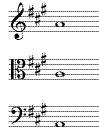 | (German n.) the key of 'A major', La majeur (French), La maggiore (Italian) |
|
| a duras penas | (Spanish) with great difficulty, hardly, by a hair, by a hair's breadth, by the skin of one's teeth, just barely, with difficulty, with much ado, with utmost difficulty |
| A-Dur-Tonleiter | (German f.) the 'A major' scale |
| adusto (m.), adusta (f.) | (Spanish) austere (lifestyle), severe, harsh (landscape), stern (personality), sullen (gesture), bleak (landscape) |
| ad usum Delphini | (Latin) bowdlerized |
| ad usum filioli | (Latin) bowdlerized, expurgated, made suitable for use by a child |
| adv. | abbreviation of 'adverb' (word indicating manner, degree, circumstance, etc., used to modify an adjective, verb, or other adverb), adverbio (Spanish) |
| ad valorem | (Latin, literally 'in proportion to value') used in reference to taxation, particularly duty |
| Advenedizo (m.), Advenediza (f.) | (Spanish) upstart, social climber |
| advenedizo (m.), advenediza (f.) | (Spanish) upstart |
| Advenimiento | (Spanish m.) advent, coming, arrival, accession (to the throne) |
| Advent | (English, German m.) Christian religious observance which in the Western church takes place in the four weeks immediately before Christmas (commencing the Sunday nearest to St. Andrew's Day, 30th November), and in Eastern churches, where it is also called the 'Nativity Fast', 'Winter Lent', or the 'Christmas Lent', it lasts forty days, beginning on November 15 (for those churches using the Julian calendar this is equivalent to November 28) |
|
| adventicio | (Spanish) accidental |
| Adventism | or second adventism, any Christian religion that believes the second coming of Christ is imminent |
| Adventismus | (German m.) adventism |
| Adventist (m.), Adventistin (f.), Adventisten (pl.) | (German) Adventist |
| Adventista | (Spanish m./f.) Adventist |
| Adventitious | associated with something by chance rather than as an integral part, extrinsic |
| adventiv | (German) adventitious |
| Adventkalender | (German m. - Austria) Advent calendar |
| Advent music | in Italy, among other Advent celebrations, is the entry into Rome in the last days of Advent of the Calabrian pifferari, or bagpipe players, who play before the shrines of Mary, the mother of Jesus, the Italian tradition being that the shepherds played these pipes when they came to the manger at Bethlehem to pay homage to the Messiah
|
| Adventsbotschaft | (German f.) Advent message |
| Adventsdekoration | (German f.) Advent decoration |
| Adventsingen | (German n. - Austria) Advent choral concert |
| Adventskalender | (German m.) Advent calendar |
| Adventskerze | (German f.) Advent candle |
| Adventslied | (German n.) Advent carol |
| Adventsonntag | (German m. - Austria) Advent Sunday |
| Adventssonntag | (German m.) Advent Sunday |
| Adventswochenende | (German n.) weekend in Advent |
| Adventszeit | (German f.) Advent season |
| Adventzeit | (German f. - Austria) Advent season |
| Adverb, Adverbien (German pl.) | (English, German n.) a grammatical part of speech for words that modify or describe verbs |
| Adverbial | having the same function as an abverb |
| in English, a noun for a word or group of words that function as an adverb |
| adverbial | (Spanish) adverbial |
| adverbial | (German) adverbial, adverbially |
| Adverbialbestimmung | (German f.) adverbial phrase |
| Adverbialsatz | (German m.) adverbial clause |
| adverbiell | (German) adverbial |
| Adverbio | (Spanish m.) adverb |
| Adversario (m.), Adversaria (f.) | (Spanish) opponent, adversary |
| adversario (m.), adversaria (f.) | (Spanish) opposing |
| adversat. | abbreviation of 'adversative' (expressing antithesis or opposition) |
| Adversidad | (Spanish f.) adversity, setback |
| Adversité | (French f.) adversity |
| adversativ | (German) adversative |
| Adversative | expressing antithesis or opposition |
| adverso (m.), adversa (f.) | (Spanish) adverse, unfavourable |
| Advertence | heedfulness, the action of being attentive |
| Advertencia | (Spanish f.) warning, (prefatory) note, foreward, prologue |
| advertido (m.), advertida (f.) | (Spanish) informed, warned |
| advertir | (Spanish) to warn, to notice, to realize, to advise, to inform |
| advertirle a ... de ... | (Spanish) to warn ... about ... |
| Adviento | (Spanish m.) Advent |
| ad vitam | (Latin) for life |
| ad vitam aut culpam | (Latin) during good behaviour |
| ad vitam aeternam | (Latin) for all time |
| ad vivam | (Latin) from the living model, life-like |
| Advocación | (Spanish f.) dedication |
| Advocatus Diaboli | (German m., from Latin) the devil's advocate, a fault-finder |
| Advokat (m.), Advokatin (f.) | (German) advocate, solicitor, lawyer |
| Advokatenstift | (German n.) Inn of Court |
| Advokatur | (German f.) advocacy |
| Advokatur | (German f.) law office, Anwaltschaft (German), Büro eines Anwalts (German) |
| Advokaturbüro | (German n. - Switzerland) lawyer's office |
| Advokaturskanzlei | (German n. - Austria) lawyer's office |
| Adyá | (Cuba) metal rattle |
| adyacente | (Spanish) adjacent, next to |
| Adytum (s.), Adyta (pl.) | (Latin) the sanctum or holy of holies of a pagan temple |
| Adzogbo | adzogbo originated from Benin (Dahomey) as a dzovu (spiritual/religious music and dance). It was called dzovu, because during any performance, the men participants would display their dzoka (juju/charms) especially the so-called 'love charms' to seduce women. When this music was brought to Togo and later Ghana in the late nineteenth century, its function changed. The southeastern Ewe of Ghana now performs it for entertainment during festivals and other social occasions. The women's section or phase of the dance is called kadodo |
|
