| G flat |  |
| sol bemolle (Italian), Ges (German), sol bémol (French), the flattened fifth degree of the scale of C major, which in 'fixed do' solfeggio is called se |
|
| G flat major |
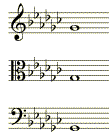 | the key of 'G flat major' |
|
 | | the scale of 'G flat major' |
|
| G flat minor | the key of 'G flat minor', enharmonically equivalent to the key of 'F sharp minor' |
| G gamut | the G that lies on the first (i.e. lowest) line of the bass clef |
| Ghaita | or rhaita, North-African double-reeded shawm |
|
| Ghangla | from Nepal, bells tied around the waist that sound in response to a dancer's movements (but not necessarily with the music's beat). They fulfill a major function in religious ceremonial dances |
- Ghangla from which this extract has been taken
|
| Ghani | village oil mill |
| Ghanti | hand-bells used by Hindu priests |
|
| Gharana | a concept peculiar to Hindustani classical music, gharana is comparable to a style or school of dance or music (vocal/ instrumental). The names of gharanas are almost always derived from the city, district or state that the founder lived in, for example Kirana, Gwalior, Agra, Rampur, Malhar, Jaipur, Patiala, Baroda, and so on. Various gharanas adopted their own particular approach to presentation, technique and repertoire |
| Gharana gayakee | authentic style of singing following a specific gharana |
| Gharenadar | a musician belonging to a traditional Hindustani school |
| Gharnati | an Algerian variety of Andalisian classical music that is popular also in Rabat and Oujda (Morocco). It is arranged in nuba like al-âla. There are sixteen nuba surviving, twelve complete and four incomplete. Gharnati orchestras consist of kvîtra, mandolin, banjo, oud and kamenjah |
| Gharry | (Hindi) an Indian carriage |
| Ghatam | South Indian clay pot drum |
| Ghab | Egyptian flute |
| Ghana | (English, German n.) Historically, the first great sub-Saharan state, created by the Soninke people, which by the 9th century AD was a major source of gold in the Mediterranean world. Today a state in West Africa, bordering the North Atlantic Ocean between Côte d'Ivoire, Burkina Faso, and Togo |
| Ghanaer (m.), Ghanaerin (f.), Ghanaer (pl.), Ghanaerinnen (f.pl.) | (German) Ghanaian |
| Ghanaian hip hop | |
| ghanaisch | (German) Ghanaian |
| Ghasel | (German n.) ghazal |
| Ghat | (English, German n., from Hindi) or ghaut, a mountain pass, a flight of steps leading to the water's edge |
| Ghatam | an ancient percussion instrument from Southern India, the ghatam is a mud pot with a narrow mouth. From this narrow mouth, it shapes itself outwards to form a ridge. Primarily made of clay fired with brass or copper filings with some small amount of iron filings, the ghatam's size varies according to pitch. In addition the pitch can be altered to a small degree by the application of plasticine, clay or water. The ghatam is placed on the lap of the performer, with the instrument's mouth facing the belly. The artiste uses his fingers (including thumbs), his palms, and occasionally, even the fingernails to produce various sounds. Sometimes, the ghatam is turned around so that the mouth faces the audience, and the player is able to play more readily on the neck of the instrument |
| Ghaval | an Azerbaijani frame drum with jingles |
| Ghawazee | female Egyptian gypsy dancer |
| Ghazal | Ghasel (German n.), a form of Arab lyrical poetry, Persian in origin, that deals with themes of unrequited love and longing, this light classical Indian music form has been latterly associated with popular music of Muslim Northern India and the Urdu language. However, whether sung in Arabic, Persian, Urdu or whatever - much is left to the listener's imaginative powers. What sounds like a tale of love is open to interpretation. Love may be construed as sacred or profane. "The Beloved", for example, may well stand for the supreme entity or it may be a lower-case beloved. Some nuances are beyond intonation |
|
| Ghee | (English, German n., from Hindi) clarified bitter |
| Ghetto (s.), Ghetti (Italian pl.), Ghettos (English pl., German pl.), Ghettoes (English pl.) | (English, German n., from Italian m.) a Jewish quarter (although now applied to any community restricted to a district, or to a mentality or state of mind that is thought to have been induced by living in such a district) |
| Ghettoblaster (s.), Ghettoblaster (pl.) | (German m.) boom box, ghetto blaster (colloquial) |
| Ghetto blaster | or boom box, slang for a large, powerful, portable radio and tape player, so called because of its popularity in inner-city ghettos, where it is used outdoors in urban areas |
| Ghetto-Blaster | (German m.) ghetto blaster (colloquial), boom box |
| Ghetto house | also called 'booty house' or 'Juke house', a type of Chicago House which started being recognised in its own right from around 1992 onwards. It features minimal 808 and 909 drum machine-driven tracks, and sometimes sexually explicit lyrics |
|
| Ghettoisierung | (German f.) ghettoisation |
| Ghettotech | a form of electronic dance music based in Detroit that combines Chicago's ghetto house, electro, hip-hop, techno, and grafts the perceived raunch of Miami Bass as the vocal stamp of the music. It is usually faster than average dance music at roughly 145 to 170 bpm |
|
| Ghibellinen | (German pl.) Ghibellines |
| Ghibellines | the Guelphs and Ghibellines were factions supporting, respectively, the Papacy and the Holy Roman Empire in Italy during the 12th century and 13th century |
| Ghichak | Afghan bowed string instrument |
| Ghijak | one of the most ancient Uzbeck stringed instrument whose round body covered with tight leather was traditionally made of coconut. The sound of the ghijak resembles that of a violin. It is played vertically on the knee and the sound is produced with the help of special bow-kamon |
| Ghijghe | archaic name for the fiddle |
| Ghillie-Anzug | (German m.) ghillie suit |
| Ghillie suit | or yowie suit, a type of camouflage clothing designed to resemble heavy foliage developed originally by Scottish gamekeepers |
| Ghiribizzo (s.), Ghiribizzi (pl.) | (Italian m.) caprice, fancy, humour, whim |
| in music, unexpected skip or fantastical passage |
| ghiribizzoso | (Italian) capricious, fantastical, humorous, whimsical |
| Ghironda | (Italian f.) hurdy gurdy, Drehleier (German), Radleier (German), Leier (German), vielle à roue (French) |
| Ghittern | archaic name for the cittern |
| Ghost | someone who 'covers' for another, thus, a 'ghost-writer' actually writes a book, play or article for another who actually receives credit for the result (for example, many 'so-called' celebrity autobiographies), a singer who provides the 'singing voice' for an actor in a film production (see, for example, Kathy Seldon in the film 'Singing in the Rain') |
| Ghost characters | this term should not be confused with characters who happen to appear on stage as ghosts. Shakespearean scholars use the word "ghost characters" to refer to characters listed in the stage directions or the list of dramatis personae but who appear to say nothing, take no explicit part in the action, and are neither addressed nor mentioned by any other characters in the play |
|
| Ghost halftone | a lightly printed halftone that has solid areas of translucent colours printed over it |
| Ghosting | (English, German n.) the appearance of one or more false images on a television screen |
| a name for double vision, where the eye sees objects in duplicate, with the second image fainter than the main one |
| also known as gloss ghosting, a condition occurring during the printing process when vapours from drying ink on one side of a press sheet interact chemically with dry ink or blank paper on sheets in contact with or on the reverse side of the same sheet creating unintended faint images |
| a condition in which the printing image appears faint where not intended, caused by an abrupt change in ink take-off on the rollers; often occurs when printing flat borders, L-shaped solids, and circles |
| Ghost light | the safety light left on overnight when a stage is not in use |
| Ghost note | or 'dead note', a note is implied in a musical phrase although either not played or otherwise played only faintly for effect |
| the term ghost note can have various meanings and the term anti-accent is probably more specific. Moreover, there exists a set of anti-accent marks. Percussion music, in particular, makes use of anti-accent marks: |
| slightly softer than surrounding notes | u (breve) |
| significantly softer than surrounding notes | ( ) (note head in parentheses) |
| much softer than surrounding notes | [ ] (note head in brackets) |
|
|
| Ghostwriter (m.), Ghostwriterin (f.) | (German) ghost writer |
| Ghost writer | a person who writes books, articles, etc. for another who professes to be the author (popularly associated with celebrity autobiographies) |
| Ghoul | one who delights in the revolting, morbid, or loathsome |
| grave robber |
| evil spirit or demon in Muslim folklore believed to plunder graves and to feed on the flesh of the dead |
| Ghul (s.), Ghule (pl.) | (German m.) ghoul (evil spirit) |
| Ghungru | or ghungroo, ankle rattles from India and Sri Lanka, typically used in kathak, bharatanatyam and other classical dances |
| see cap |
|
|
| Gia | after Remo Giazotto, the cataloguer of music by Tomaso Albinoni (1671-1750) and Giovanni Battista Viotti (1755-1824) |
| giacoso | (Italian) play in a merry, lighthearted manner |
| Giallo | (Italian m.) yellow |
| (Italian) an Italian twentieth-century genre of literature and film. It is closely related to the French fantastique genre, crime fiction, horror fiction and eroticism. The term is also used to mean an example of the genre, in which case it can take the Italian plural gialli. The word giallo is a reference to the genre's origin in paperback novels with yellow covers |
- Giallo from which this extract has been taken
|
| Giallo antico | (Italian m.) a rich yellow marble found among Roman ruins in Italy |
| Giamaica | (Italian f.) Jamaica |
| giambico | (Italian) iambisch (German), iambic, iambique (French), yámbico (Spanish) |
| Giambo | (Italian m.) iambus, Jambus (German m.), iambe (French m.), yambo nish m.) |
| giammai | (Italian) ever, never |
| Gianicolo | (Italian m.) Janiculum |
| Giannetta | (Italian f.) walking cane |
| Gianni | (Italian m.) contraction of Giovanni, John, Johnny |
| giannizzero | (Italian) janissary |
| Giano | (Italian m.) Janus (ythical) |
| Giansenismo | (Italian m.) Jansenism |
| Giansenista (s.), Giansenisti (pl.) | (Italian m.) Jansenist |
| giansenista | (Italian) Jansenist |
| Giant steps | a term coined by jazz musician John Coltrane (1926-1967) for 'augmented 2nds' |
| Giaour | (French, from Venetian dialect giaur, itself from Turkish and Persian) in Islam, a nonbeliever, an infidel, one outside the faith |
| a poem by Lord Byron first published in 1813 and the first in the series of his Oriental romances |
| Giapeto | (Italian) Japheth (Old Testament) |
| Giappone | (Italian m.) Japan |
| Giapponese | (Italian m.) Japanese |
| giapponese | (Italian) japanese |
| Giarda | (Italian f.) jar, drinking cup |
| Giardinaggio | (Italian m.) gardening |
| Giardinaggio con fiori | (Italian m.) gardening wth flowers |
| Giaur | (German m.) giaour |
| gib | (German) give (imperative) |
| Gibbon (s.), Gibbons (pl.) | (English, German m.) any of a family (Hylobatidae) of small, slender, long-armed, tree-dwelling, anthropoid apes of India, S China, and the East Indies |
| Gib dein Bestes! | (German) Try your best! |
| Gib dich da keiner Täuschung hin. | (German) Make no mistake about that. |
| Gibelotte | a rabbit stew dressed with butter, onions and potatoes |
| Gib es auf! | (German) Give it up! |
| Gib es mir! | (German) Give it to me! |
| Gibier | (French m.) game (animals) |
| Gib ihm deines! | (German) Let him have yours! |
| Gib ihm Saures! | (German) Let him have it! (colloquial) |
| Gib mir ... | (German) Gimme ... (colloquial) |
| Gib mir Bescheid! | (German) Let me know! |
| Gib mir eine Chance! | (German) Give me a chance! |
| Gib mir eine Gelegenheit! | (German) Give me a chance! |
| Gib mir einen Kuss! | (German) Give us a kiss! (colloquial) |
| Gib mir nicht die Schuld. | (German) Don't blame me. |
| Gib nicht auf. | (German) Don't give up. |
| Gib nicht so an! | (German) Don't fuss so! Don't brag so! |
| Gib niemals auf. | (German) Never give up. |
| Giboulée | (French f.) shower |
| Gibraltar | (English, German n.) a British crown colony comprising a fortress and seaport located on a narrow promontory near the Southern tip of Spain |
| Gibraltarer (m.), Gibraltarerin (f.), Gibraltarer (pl.) | (German) Gibraltarian |
| gibraltarisch | (German) Gibraltarian |
| Gibs auf! | (German) Why don't you give up? |
| ... gibt es als kompletten Satz oder einzeln | (German) ... are available as a complete set or individually |
| Gibt es ein Problem? | (German) Is there a problem? |
| Gibt es eine Möglichkeit? | (German) Is there a chance? |
| Gibt es einen Grund, warum ... | (German) Is there any reason why ... |
| Gibt es noch Karten? | (German) Are there any spare tickets? |
| Gibt es noch mehr davon? | (German) Is there any more of it? |
| Gibt es so etwas? | (German) Is there such a thing? |
| Gibt es sowas? | (German) Is there such a thing? |
| ... gibt es wie Sand am Meer. | (German) ... are a dime a dozen. |
| Gibt's noch was, das ich wissen sollte? | (German) Anything else I should know? (colloquial) |
| gicheroso | (Italian) merry, playful |
| Gicht | (German f.) (articular) gout, throat (of a furnace, smelter - ironworking) |
| Gichtanfall | (German m.) attack of gout |
| Gichtarthritis | (German f.) gouty arthritis |
| Gichtgas | (German n.) furnace gas |
| gichtgeplagt | (German) gout-ridden |
| Gichtknoten | (German m.) chalky stone |
| gichtkrank | (German) gouty |
| gichtlägerig | (German) abed with gout (archaic) |
| Gickel | (German m. - Southern Germany) cock, cockerel |
| gickelig | (German) giggly |
| gickeln | (German) to giggle |
| gickern | (German) to giggle |
| gicksen | (German) to squeak |
| gicler | (French) to squirt |
| Giclée | (French f.) squirt |
| Gidayu | the most famous and perhaps most demanding of Japanese narrative styles, named after Takemoto Gidayu (1651-1714), who was involved in bunraku puppet-theatre in Osaka |
| Gidayu shamisen | the largest of the shamisen family, used for gidayu, whose tradition is but little notated in books (maruhon) except for the texts and the names of certain appropriate generic shamisen responses. The shamisen player must be fully conversant with the entire work in order to respond effectively to the interpretations of the text by the singer-narrator |
| Gie | after Franz Giegling, the cataloguer of music by Giuseppe Torelli (1658-1709) |
| Giebel (s.), Giebel (pl.) | (German m.) gable, pediment |
| Giebeldach | (German n.) pitched roof, gabled roof, saddle roof, gable roof |
| Giebeldreieck | (German n.) pediment (in Grecian style), pediment |
| Giebelfeld | (German n.) tympanum |
| Giebelfenster | (German n.) gable window |
| giebelig | (German) gabled |
| Giebelrähm | (German n.) gable plate |
| Giebelseite | (German f.) gable end |
| Giebelwand | (German f.) gable end, gable wall |
| Giebelwerbung | (German f.) wall publicity |
| gieblig | (German) gabled |
| Giemen | (German n.) wheezing (associated with asthma) |
| Gier | (German f.) greed, avidity (desire), lust, craving, piggishness (appetite), avarice (for money), cupidity, ravenousness, voraciousness |
| Gierde | (German f.) eagerness |
| Gieren | (German n.) swerve, yawing |
| gieren | (German) to sheer, to yaw |
| gierend | (German) lusting, yawing |
| gieren nach | (German) to lust for |
| gierig | (German) avid, avidly, greedily, greedy, piggishly (colloquial), eager, avaricious, voracious, piggy (greedy) |
| gierig auf | (German) eager for |
| gierig ein (alkoholisches) Getränk mit einem Schluck herunterkippen | (German) to down a drink with one gulp |
| gieriger | (German) piggier (colloquial: greedier), greedier |
| gieriger Appetit | (German m.) ravenous appetite |
| gieriger Esser | (German m.) gobbler |
| gieriger Fresser | (German m.) cormorant |
| gierig ergreifen | (German) to grasp eagerly |
| gieriger Wolf | (German m.) ravenous wolf |
| gieriges Biest | (German n.) rapacious beast |
| Gierigkeit | (German f.) greediness |
| gierig nach | (German) avid for, greedy for |
| (gierig) saufen | (German) to swig (colloquial) |
| gierig sein | (German) to be greedy, to be rapacious |
| gierigste | (German) greediest, piggiest (greediest) |
| gierig verschlingen | (German) to consume greedily, to wolf down, to eat ravenously, to devour |
| gierig zugreifen | (German) to greedily grab |
| Gier nach | (German f.) voracity for |
| Gier nach Geld und Gut | (German f.) acquisitive frenzy |
| Gierschlund | (German m.) greedy pig (figurative), greedy guts (colloquial) |
| Gießanlage | (German f.) casting machine |
| Gießbach | (German m.) bourn, bourne, (mountain) torrent, river (of white) (typographic flaw) |
| Gießbachbett | (German n.) gully |
| gießbar | (German) pourable |
| Gießen | (German n.) watering (of plants), pouring, casting, slip casting (ceramics) |
| gießen | (German) to cast, to shape (molten metal, etc.) in a mould, to mould, to pour, to water, to found (metal, glass), to shower down, to sheet down (rain) |
| gießend | (German) moulding, pouring, casting |
| Gießer (m.), Gießerin (f.) | (German) founder, moulder, caster, pourer |
| Gießerei (s.), Gießereien (pl.) | (German f.) foundry, casting |
| gießfertig | (German) ready-to-pour |
| Gießform | (German f.) (casting) mould, pattern |
| Gießgrund | (German m.) casting base |
| Gießharz | (German n.) casting resin |
| Gießholz | (German n.) liquid wood |
| Gießkammer | (German f.) casting chamber, shot chamber |
| Gießkanne (s.), Gießkannen (pl.) | (German f.) watering can |
| Gießkannenkopf | (German m.) sprinkler |
| Gießlöffel | (German m.) casting ladle |
| Gießmasse | (German f.) casting slip |
| Gießpfanne | (German f.) (foundry) ladle |
| Gießtrichter | (German m.) sprue |
| Gießvorgang | (German m.) moulding procedure |
| Giffen goods | in economics and consumer theory, Giffen goods are those which people consume more of as price rises, violating the law of demand |
| Giffen-Güter | (German pl.) Giffen goods |
| Gifle | (French f.) slap (in the face) |
| gifler | (French) to slap |
| Gift (s.), Gifte (pl.) | (German m.) anger (Southern Germany), poison, toxin, venom (also figurative) |
| Gift- | (German) toxic (prefix) |
| Giftaffäre | (German f.) L'affaire des poisons |
| a major murder scandal in France which took place in 1677-1682, during the reign of King Louis XIV. During it, a number of prominent members of the aristocracy were implicated and sentenced on charges of poisoning and witchcraft. The scandal reached into the inner circle of the king |
|
| Giftampulle | (German f.) poison capsule |
| Giftanschlag | (German m.) poison attack |
| Giftbecher | (German m.) death-cup, cup of poison |
| Giftbuch | (German n.) book about poisons, book on poisons, drugs record book |
| Giftcocktail | (German m.) poisonous cocktail (figurative) |
| Gifted, Musically | the Kaufman Center provides an education for musically gifted children that combines a highly structured music curriculum with a standards-based academic program. The music curriculum at the Special Music School lays the foundation for the pursuit of a career in music without compromising academics. To the question "What do you look for when you seek children who are musically gifted?", they answer "We look for many things, including accurate pitch, good rhythm, musical memory and engagement in music." |
"After a brilliant performance, the audience gave the pianist, obviously a genius, a standing ovation. Critics called the performance brilliant .... The truly amazing thing was that the performer, although called a genius by the experts, was both blind and mentally retarded: unable to read a note of music, unable to read or write, even unable to feed himself properly."
[Bergman, J. & DePue, W. (1986) Musical idiot savants. Music Educators Journal, 72 (5), 37-40] |
| Winner, E. & Martino, G. (1993) Giftedness in the visual arts and music discusses early signs of musical giftedness: |
| interest in musical sounds |
| musical memory |
| perfect pitch |
| sight-reading |
| skill in performing on an instrument |
| musical generativity: ability to transpose, improvise, and compose |
| capacity for multiple representation of musical relations |
| capacity for sustained concentration |
| self-discipline and compliance |
| the musical prodigy's 'midlife crisis' |
| the role of family and teachers |
| correlations between musical ability and other abilities |
| procedures for identifying musically gifted children |
| high musical ability in average children as a function of instruction: the example of Suzuki |
| "savant" musicians |
| relation between early musical giftedness and adult musicianship |
|
- TalentEd from which the Bergman & Depue and Winner & Martino quotations were taken
- Gifted
|
| Gift einer Schlange | (German n.) venom of a snake |
| gifteln | (German- Austria) to do drugs (colloquial) |
| giften | (German) to rile, to be nasty (about) |
| giftfrei | (German) non-toxic, non-poisonous |
| Giftgas | (German n.) poison gas, toxic gas, lethal gas |
| Giftgasangriff | (German m.) poison gas attack |
| Gift geben | (German) to administer poison |
| Giftgehalt | (German m.) toxicity |
| giftgrün | (German) bilious green |
| gifthaltig | (German) containing poison, poisonous, toxic |
| gifthältig | (German - Austria) toxic, poisonous, containing poison |
| Gifthauch | (German m.) blight, miasma (literary) |
| giftig | (German) contaminative, poisonous, toxically, viperous, virulent, virulently, waspy, poisonously, viperously, baneful, noxious, rancorous, vitriolic (attack, comment, letter), waspish, waspishly, viperish (figurative), venomously (figurative), truculent (vitriolic), resentful (figurative: person), poisonous (figurative: malicious), bilious, venomous, toxic |
| giftige Bemerkung | (German f.) poisonous remark |
| giftige Hinterlassenschaft | (German f.) toxic legacy |
| giftige Person | (German f.) serpent (figurative) |
| giftiger | (German) more poisonous |
| giftiger Blick | (German m.) venomous look |
| giftiges Alkaloid | (German n.) poisonous alkaloid |
| giftiges Gas | (German n.) toxic gas |
| giftige Spinne | (German f.) venomous spider |
| giftiges Gas | (German n.) toxic gas |
| giftiges Weib | (German n.) cat (colloquial: spiteful woman) |
| giftige Zunge | (German f.) venomous tongue |
| Giftigkeit (s.), Giftigkeiten (pl.) | (German f.) poisonousness, venomousness, virulence, banefulness, toxicity, venom, vitriol |
| giftigste | (German) most poisonous |
| Giftkocher | (German m.) brewer of poison |
| Giftküche | (German f.) devil's workshop (viz. an idle brain) |
| Giftmischer (m.), Giftmischerin (f.) | (German) preparer of poison, stirrer (figurative), troublemaker (figurative), chemist |
| Giftmord | (German m.) poisoning (resulting in murder), murder by poisoning |
| Giftmörder (m.), Giftmörderin (f.) | (German) poisoner |
| Giftmüll | (German m.) toxic waste, hazardous waste |
| Giftnudel | (German f.) vixen, shrew (spiteful woman) |
| Giftpfeil | (German m.) poisoned arrow |
| Giftpflanze | (German f.) poisonous plant |
| Giftpille | (German f.) poison pill |
| Giftpilz (s.), Giftpilze (pl.) | (German m.) toadstool, poisonous mushroom |
| Giftschlange | (German f.) poisonous snake, venomous snake, viper, poisonous serpent, serpent (also figurative) |
| Giftschrank | (German m.) poison cabinet (also figurative), poison chest (also figurative) |
| Giftstachel | (German m.) poison sting |
| Giftstoff (s.), Giftstoffe (pl.) | (German m.) toxin, poisonous substance, toxic substance |
| Gifttod | (German m.) death by poison |
| Gift und Galle speien | (German) to fly off the handle |
| Gift und Galle spucken | (German) to breathe fire and brimstone, to fly off the handle |
| Giftwirkung | (German f.) toxic effect |
| Giftzahn | (German m.) poison fang |
| Giftzwerg | (German m.) poison dwarf |
| Gig | synonymous with 'jig' |
| (English, German n.) light, two-wheeled carriage drawn by one horse |
| (English, German f.) long and light rowing boat, skiff |
| (English, German m.) in jazz and popular music generally, a musical job whether at a club, record date, party or festival |
| Giga | (Italian f.) derived from the English jig but quicker than the French gigue, the Italian giga was most commonly written in 12/8 time, with the beats grouped in 3s in the ratio 2:1 (for example, in 12/8, crotchet, quaver, crotchet, quaver, crotchet, quaver, crotchet, quaver) |
| (Spanish f.) jig |
| Giga- | (English, German) prefix indicating a quantity times 10 to the power of 9 (for example, gigahertz = 10 to the power of 9, cycles per second) |
| Gigabyte | (German n.) gigabyte |
| Gigahertz | (German n.) gigahertz, gigacycle |
| Gigaku | (Japanese) also called kure-gaku, the dominant style of ancient Japanese music for the popular dances and pantomimes of southern China and northern Indochina that were imported into Japan |
|
| Gigant (s.), Giganten (pl.) | (German m.) giant, leviathan (figurative), Brobdingnagian |
| gigantesque | (French) gigantic |
| gigantiform | (English, German) very large |
| gigantisch | (German) gigantic, colossal, cyclopean, staggering, monolithic, titanic, tremendous, giant, huge, gigantiform, Brobdingnagian |
| gigantische Gelegenheit | (German f.) gigantic opportunity |
| gigantische Parade | (German f.) huge parade |
| gigantisches Unternehmen | (German n.) colossal undertaking |
| Gigantismus | (German m.) gigantism |
| Gigantomachie | (German f.) gigantomachia, gigantomachy |
| Gigantomachy | or gigantomachia - in Greek mythologiy, the war between the giants and the gods: hence, a war between giant powers |
| Gigantomanie | (German f.) love of big things |
| Gigawatt | (German n.) gigawatt (10 to the power of 9 watts) |
| Gig bag | a soft, light and cheap padded bag used to carry brass, woodwind and stringed instruments, but particularly guitars
[corrected by Tom Hobbs] |
| Gigboote | (German pl.) skiffs |
| Gigelira | (Italian f.) xylophone, Strohfiedel |
| Gigerl | (German m./n. - Southern Germany, Austria) popinjay (old-fashioned), dandy
|
| Gigg | synonymous with 'jig' |
| Gigge | synonymous with 'jig' |
| giggeln | (German) to giggle |
| Gighardo | (Italian) a sort of jig |
| Gigliera | the guitarist Mrs Sidney Pratten (born 1840) wrote an instruction book for this instrument. It is made of wood and straw |
| Gigolo | (English, French m., German m.) professional (male) dancing partner, paid male escort. kept man |
| Gigot | (French m.) leg (of lamb) |
| gigoter | (French) to wriggle (familiar) |
| Gigue | (French f., German f.) imported into France during the seventeenth century, the English 'jig' developed into the French gigue, a moderate to quick, triple or compound duple meter dance that became one of the standard movements in the Baroque suite |
| a medieval instrument similar to the violin, related to the German geige |
| Gijak | Chinese fiddle made from walnut wood |
| Gilb | (German m.) yellowing |
| (German m.) imaginary evil spirit that causes white fabric, paper, or paint to turn yellow |
| gilben | (German) to amber, to yellow |
| Gilbert | (English, German m.) a unit of magnetomotive force |
| Gilbertine | a monastic order founded in England in the 12th century; a double order comprising male and female members under the spiritual guidance of the Augustinian canons |
| Gilde (s.), Gilden (pl.) | (German f.) guild, livery company (London) |
| Gildehaus | (German n.) guildhall |
| Gildenhaus (s.), Gildenhäuser (pl.) | (German n.) guildhall |
| Gilder's garlic | (in gilding) garlic juice used as a mordant for gilding. A technique usually found on paper but it is also known to be used on furniture and decoration |
| Gilder's liquor | (in gilding) a mix of water and alcohol used in water-gilding sometimes with the addition of rabbit skin glue. It is mopped on to the clay surface to activate the glue in the clay before gold leaf is applied. In effect the gold is laid on this liquid surface and then adheres to the clay surface as the water is absorbed |
| Gilder's malt | (in gilding) a concentrated brew of malt used as a mordant for gilding. It is usually thick in consistency and can be thinned with water. A mordant usually found in gilding on paper but it is known to have been used on furniture and decoration |
| Gilder's mop | (in gilding) the name of the brush used to lay the gilding liquor on the clay surface just prior to laying the gold. This brush came by its nickname because of its capacity to hold a large amount of liquid. The objective is to mop on a lot of liquid not to mop it up |
| Gilder's pad | a board covered with padding and leather. It should be small and light enough to be held in one hand for long periods of time. The pad is used for cutting the 3" X 3" gold leaves into smaller more manageable pieces with a gilder's knife. There can be a parchment or wind shield attached to this board to protect the gold on the pad from being blown away by passing breezes or co-workers |
| Gilder's tip | (in gilding) a small card, like an index card, that has a row of squirrel hairs attached. The tip is used to pick up and apply gold and metal leaf. A small amount of oil is applied to the tip from the skin or hair. The leaf is attached to the oil in the tip allowing one to pick up the leaf. The attraction of the leaf to water or the leaf to size is stronger than the attraction of the leaf to oil allowing one to lay the leaf on the object to be gilded |
| Gilding | (in gilding) to overlay with or as if with a thin coating of gold |
| Gilet | (French m., German n.) cardigan, waistcoat, body warmer |
| sleeveless over-garment similar to the waistcoat though often with a zip front, popular also in leather and fur |
| (French m., German n.) in ballet, bodice shaped like a man's waistcoat, body warmer |
| Gilet de sauvetage | (French m.) life-jacket |
| Gilgamesch | (German m.) Gilgamesh |
| Gilgamesch-Epos | (German n.) Epic of Gilgamesh |
| Gilgamesh | a legendary Sumerian king who was the hero of an epic collection of mythic stories, the Epic of Gilgamesh |
| Epic of Gilgamesh: dating from long after the time that king Gilgamesh was supposed to have ruled, and based on earlier Sumerian legends of Gilgamesh, the most complete version of the epic was preserved on eleven clay tablets in the collection of the 7th-century BC Assyrian king Ashurbanipal |
| Giligilipi | (India) small kettle drum connected to stick by a string which extends from the center of the drumhead, a paper attached to a piece of unglazed, bowl-shaped pottery. The player holds the stick and twirls the drum in the air. The friction produced by the stick and thread when twirled is transmitted to the drumhead and a squeaky sound is produced |
|
| Gill | (German n.) unit of volume of a liquid = 5 fluid ounces or ¼ pint, equivalent to 0.142 litre |
| (spinning) one of the combs of closely ranged steel pins which divide the ribbons of flax fibre or wool into a smaller number of parallel filaments |
| (old usage) the flesh under or about the chin |
| or ghyll, a woody glen, a narrow valley containing a stream |
| (old usage) a young woman, a sweetheart, a flirting or wanton girl |
| Gillie | (Gaelic) a servent of a Highland chief (now a servant who accompanies a sportman in the Scottish Highlands) |
| Gilling | (German f.) roach (fresh water fish) |
| Gilo stones | (Solomon Islands, Pacific) an instrument created by striking certain stones with bamboo sticks of varying lengths, producing sounds like running water |
| Gillung | (German f.) roach (fresh water fish) |
| Gimbri | a large long-necked lute, like the ngoni, played by the mystic Gnawa (Gnaoua) Sufi brotherhood of Morocco |
| Gimchi | (German n.) kimchi (Korean fermented cabbage) |
| Gimel | see 'gymel' |
| Gimmick (s.), Gimmicks (pl.) | (English, German m./n.) an ingenious or novel device, scheme, or stratagem, especially one designed to attract attention or increase appeal |
| a device employed to cheat, deceive, or trick, especially a mechanism for the secret and dishonest control of gambling apparatus |
| Gimpe | (German f.) a flat trimming of silk, wool, or other cord, sometimes stiffened with wire, for garments, curtains, etc. |
| a coarse thread, usually glazed, employed in lacemaking to outline designs |
| Gimpel | (German m.) sucker (colloquial) |
| Gimpenführung | (German f.) gimp guide |
| Gimpenknopfloch | (German n.) gimp buttonhole |
| Gimpy | also 'guimpe' or 'guipure', a narrow flat braid or rounded cord of fabric used for trimming |
| Gin | (English, French m., German m.) a strong colourless alcoholic beverage made by distilling or redistilling rye or other grain spirits and adding juniper berries or aromatics, known perjoratively as 'mother's ruin' |
| Ginebra | see arrabel |
| Gingan | (German m.) gingham |
| Ginge er doch bloß einmal früher ins Bett. | (German) If only he'd go to bed a little earlier for once. |
| Gingerale | (German n.) ginger ale |
| Ginger-Ale | (German n.) ginger ale |
| Gingerbread | (English, German n.) a moist dark molasses cake flavoured with ginger; also a rolled biscuit similarly flavoured |
| Gingham | (English, German m.) a yarn-dyed cotton cloth, usually woven in stripes, checks, or plaids |
| gingillarsi con | (Italian) to fiddle about with |
| Gingiva | (German f.) gingiva, gum |
| Ginglarus | a small Egyptian flute |
| Ginglymus | (from Greek ginglumos, 'hinge') a reference to a type of joint found in the skeleton, that allows movement in one plane only (for example, the knee and elbow joints and the joints between the bones of the fingers) |
| Ginko | a large ornamental tree (Ginkgo biloba) from China and Japan, belonging to the Yew suborder of Coniferae. Its leaves are so like those of some maidenhair ferns, that it is also called the maidenhair tree |
| Ginocchio | (Italian m.) knee |
| Gin Rommé | (German n.) gin rummy (card game) |
| Ginsengtee | (German m.) ginseng tea |
| Ginster | (German m.) broom, gorse |
| Ginsterbusch | (German m.) gorse |
| Gintang | zither from India |
|
| Gin Tonic | (German m.) gin and tonic (gin with tonic water) |
| giocare a bilie | (Italian) to play marbles |
| giocare con | (Italian) to toy with |
| giocare con l'acqua | (Italian) to plash (play with water) |
| giocherellare con | (Italian) to play around with, to poke at, to fiddle with |
| giochevole | (Italian) playful, merry, jocose |
| giochevolment | (Italian) playfully, merrily |
| Gioco | (Italian m.) or giuoco, game, play, joke |
| Gioco con i dadi | (Italian m.) craps (US: form of gambling) |
| Gioco d'azzardo | (Italian m.) game of chance, game of skill |
| giocolarmente | (Italian) playfully, joyously |
| giocondamente | (Italian) playfully, joyously |
| giocondo (m.), gioconda (f.) | (Italian) jocose, cheerful, merry |
| giocondoso | (Italian) jokingly, humorously, cheerfully, merrily |
| giocosamente | (Italian) joyfully, humorously, merrily |
| Gioco scherzo | (Italian m.) joke |
| giocoso (m.), giocosa (f.) | (Italian) humorous, merry, playful |
| Gioia | (Italian f.) joy, mirth |
| gioioso | (Italian) joyfully, mirthfully |
| Gioja | (Italian f.) joy, mirth, gladness |
| giojante | (Italian) blithe, joyful, mirthful |
| giojosamente | (Italian) joyfully, merrily, mirthfully |
| giojoso | (Italian) joyful, mirthful |
| Giong | giong are Vietnamese stamping tubes that are usually played in pairs. They are made of large bamboo pipes open on one end, which are struck on the ground or on a stone to produce a low percussive sound. The pitch is determined by the length and size of the pipe. They are native to the highland regions of Vietnam where, it is said, they were derived from sticks used for digging. Stamping tubes are found throughout South East Asia, Oceania, and in parts of Africa |
| gioire con | (Italian) to rejoice with |
| giorgionesk | (German) Giorgionesque |
| Giorgionesque | pertaining to the work of the Italian painter of the Venetian school, whose original name was Giorgio Barbarelli (c.1478-1511), who introduced a new unity between figures and landscape, as well as those of many of his pupils and assistants, the latter including Tiziano Vecelli (c.1448/1490-1576) better known today as Titian |
| Giornalaio | (Italian m./f.) newsagent |
| Giornale | (Italian m.) (news)paper, journal, radio news bulletin |
| Giornale di bordo | (Italian m.) logbook |
| Giornale di formato ridotto | (Italian m.) tabloid |
| giornaliero | (Italian) daily |
| Giornalismo | (Italian m.) journalism |
| Giornalista | (Italian m./f.) journalist |
| Giornata | (Italian f.) day |
| Giorno | (Italian m.) day |
| Giorno della Cineri | (Italian m.) Ash Wednesday |
| Giorno dei morti, il | (Italian m.) All Soul's Day |
| Giorno di magro | (Italian m.) fast day |
| Giorno doppo, il | (Italian m.) next day, the day after |
| Giorno feriale | (Italian m.) working day |
| Giorno intercalare | (Italian m.) 29th February, added to the calendar in leap-year |
| gioviale | (Italian) jovial, pleasant, merry, cheerful |
| giovialità | (Italian) gaiety, joviality |
| Gipfel (s.), Gipfel (pl.) | (German m.) summit, top, peak (figurative), pinnacle, acme, height, apogee, crest, apex, zenith |
| Gipfel des Ruhms | (German m.) pinnacle of fame |
| Gipfelerlebnis | (German n.) peak experience |
| Gipfelhöhe | (German f.) (absolute) ceiling |
| gipfelig | (German) peaky |
| Gipfelkonferenz (s.), Gipfelkonferenzen (pl.) | (German f.) summit conference, summit meeting |
| Gipfelkreuz | (German n.) cross on the summit of a mountain |
| Gipfelleistung | (German f.) peak performance, crowning achievement |
| gipfeln | (German) to culminate, to peak |
| gipfelnd | (German) culminating |
| gipfeln in | (German) to culminate in |
| Gipfelpunkt | (German m.) crest, culmination, apogee |
| Gipfelstock | (German m.) massif |
| Gipfeltreffen | (German n.) summit conference, summit meeting, summit |
| Gips | (German m.) plaster, gypsum, plaster (cast), cast, gesso, platser (of Paris) |
| Gipsabdruck (s.), Gipsabdrücke (pl.) | (German m.) plaster cast, plaster impression |
| Gipsabguss (s.), Gipsabgüsse (pl.) | (German m.) plaster cast |
| Gipsarm | (German m.) plastered arm |
| gipsartig | (German) chalky |
| Gipsbein | (German n.) leg in plaster |
| Gipsbinde | (German f.) plaster bandage |
| Gipsbüste | (German f.) plaster bust |
| Gipseinfassung | (German f.) cast |
| gipsen | (German) to plaster |
| Gipser | (German m.) plasterer |
| Gipsfigur | (German f.) plaster figure, plaster statue |
| Gipsform | (German f.) plaster mould |
| Gipshobel | (German m.) plaster plane |
| Gips-Kalkputz | (German m.) gypsum-lime plaster |
| Gipskarton | (German m.) plasterboard |
| Gipskartonplatte | (German f.) plasterboard |
| Gipskartonwand | (German f.) plasterboard wall |
| Gipskorsett | (German n.) body cast |
| Gipsmesser | (German n.) plaster-of-Paris knife, plaster knife |
| Gipsmodell | (German n.) plaster model |
| Gipsmörtel | (German m.) plaster of Paris |
| Gipsplatte | (German f.) plasterboard, gypsum plasterboard |
| Gipsputz | (German m.) stucco, plaster |
| Gipsschiene | (German f.) splint |
| Gipstafel | (German f.) plasterboard |
| Gipsverband | (German m.) cast, plaster, plaster cast (medical), plaster of Paris |
| Gipswerk | (German n.) gypsum works |
| Giradischi | (Italian m.) record player |
| Giraffe (s), Giraffen (German pl.) | (English, German f.) tallest living quadruped, having a spotted coat and small horns and very long neck and legs |
| (English, German f.) a term applied to varieties of upright spinet and piano |
|
| Giraffenbaby | (German n.) baby giraffe |
| Giraffenflügel | (German m.) giraffe piano |
| Giraffenhals | (German m.) giraffe's neck |
| Giraffenmuster | (German n.) giraffe pattern |
| Girandole | (French) a branched support for candles, or other lights, in the form of a wall bracket (although sometimes free-standing) |
| girare con | (Italian) or frequentare, to hang around with |
| girare con la mercanzia | (Italian) to peddle (for example, to sell door-to-door) |
| Giratondo | a children's game from Lucca, similar to the English Ring Around the Roses |
| Giri | Ghanaian xylophone |
| girieren | (German) to endorse, to negotiate |
| Girl | (English, German n.) a young woman |
| Girlande (s.), Girlanden (pl.) | (German f.) garland, festoon, swag |
| Girlgroup | (German f.) girl group (singing group) |
| Girl group | a musical group featuring a group consisting usually of young female singers, singing mostly pop and R & B songs. It is essentially the female equivalent of a boy band |
|
| Giro di parole | (Italian m.) circonlucozione (Italian f.) circumlocution, Weitschweifigkeit (German f.), Umschreibung (German f.), circonlocution (French f.), circunloquio (Spanish m.) |
| girren | (German) to coo |
| Gis, gis |  | | (German n., Dutch) the note 'G sharp' |
|
| Gisant | (German m.) effigy (on monuments) |
| gischen | (German - dated) to spray up |
| Gischt | (German m./f.) spray, surf, (sea) foam (on sea water), sea spray |
| gischten | (German) to spray up |
| Gis-Dur | (German n.) the key of 'G sharp major', enharmonically equivalent to the key of 'A flat major' |
| Giseh | (German n.) Giza, Gizah |
| Gisis, gisis |  | | (German n.) the note 'G double sharp' |
|
| gis-Moll | 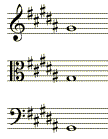 | (German n.) the key of 'G sharp minor' |
|
| Git | abbreviation of Gitarre (German: guitar - guitare (French)) |
| Gita | the Celestial Song, a Hindu scriptural work in Sanskrit verse, composed some centuries before the Christian era, in which Sri Krishna sums up the essence of Hindu religion and philosophy |
| Gitalele | (German f.) guitalele |
| Gitan (m.), Gitane (pl.) | (French) gipsy |
| Romanies are generally known in spoken French as gitans or tsiganes. Romanichels or manouches are considered pejorative and Bohémiens is outdated. Gens du voyage (literally, travellers) is a widely accepted term and does not bear any social stigma. The French National Gendarmerie tends to refer to MENS (Minorités Ethniques Non-Sédentarisées (literally, travelling ethnic minorities) a neutral administrative term |
| Gitana | (Italian f., Spanish f.) a gipsy dance |
| Gitanada | (Spanish f.) gypsy trick, mean trick, wheedling, cajolery |
| Gitanería | (Spanish f.) band of gypsies, gypsy (way of) life, gypsy saying, wheedling, cajolery |
| Gitano (m.), Gitana (f.), Gitanos (pl.) | (Italian, Spanish) gipsy |
| Romanies in Spain are generally known as gitanos and tend to speak Caló which is basically Andalusian Spanish with a large number of Romani loanwords |
| Gitarr | (Swedish, Dutch) guitar |
| Gitarre (s.), Gittaren (pl.) | (German f.) guitar, chitarra (Italian), guitare (French), guitarra (Spanish) |
| Gitarrenbanjo | (German n.) guitar-banjo |
| Gitarrengriff | (German m.) guitar tab, guitar chord (TAB) |
| Gitarrenhals | (German m.) guitar neck |
| Gitarrenlehrer (m.), Gitarrenlehrerin (f.) | (German) guitar teacher |
| Gitarrenlehrer | (German m.) guitar tutor |
| Gitarrennotation | (German f.) classical guitar notation |
| Gitarrensolo | (German n.) guitar solo |
| Gitarrenspiel | (German n.) guitar play |
| Gitarrenspieler (m.), Gitarrenspielerin (f.) | (German) guitarist, guitar player |
| Gitarrespielen | (German n.) playing the guitar |
| Gitarre spielen | (German) to play the guitar |
| Gitarrist (m.), Gitarristin (f.), Gitarristen (pl.) | (German) guitarist |
| Gitsche | (German - Austria) girl |
| Gittarone | an acoustic bass guitar |
| Gitter (s.), Gitter (pl.) | (German n.) bars, railings, grille, wire screen, gratings, grid, lattice, latticework, trellis, grate, grating, wire frame |
| hinter Gittern (German: behind bars) |
| gitterartig | (German) latticed, lattice-like |
| Gitterbatterie | (German f.) grid battery |
| Gitterbett | (German n.) latticed bedsted, crib, cot |
| Gitterbox | (German f.) barred box, lattice box, wire mesh crate |
| Gitterfenster | (German n.) lattice window, barred window |
| gitterförmig | (German) grid-like |
| Gittergeber | (German m.) pattern generator (test picture) |
| Gitterkoordinaten | (German pl.) grid references, grid co-ordinates |
| Gitterlinie | (German f.) crosshatch line |
| Gittermuster | (German n.) grid pattern, lattice pattern |
| Gittern | an early form of guitar with four pairs of gut strings |
| we must be careful not to assume that before the sixteenth century the terms guitarra, chitarra, guiterne, gittern, etc., meant what they came to mean in later centuries, i.e. guitar, because this was not always the case. Laurence Wright, in his brilliant and highly original article The Medieval Gittern and Citole: A Case of Mistaken Identity, has shown that these terms (guitarra, chitarra, gittern, etc.), often meant not a guitar at all, but the tiny treble lute which, in the sixteenth century, became known as the mandora |
|
| Gitternetz | (German n.) grid, reticule, graticule (optical instruments) |
| Gitternetzlinie | (German f.) gridline |
| Gitterplatte | (German f.) flat plate (lead-acid battery) |
| Gitterraster | (German n.) cross-hatch pattern |
| Gitterrost | (German m.) grating, grid |
| Gitterschnittkreuz | (German n.) grid intersection |
| Gitterschnittpunkt (s.), Gitterschnittpunkte (pl.) | (German m.) grid intersection point |
| Gittersieb | (German n.) screen |
| Gitterstab (s.), Gitterstäbe (pl.) | (German m.) stanchion, bar |
| Gitterstruktur | (German f.) grid structure |
| Gittersystem | (German n.) grid system |
| Gittertestbild | (German n.) grid pattern (image) |
| Gittertür | (German f.) grille, lattice gate |
| Gitterwerk | (German n.) wattle, wattling, grillwork, lattice, lattice work, trellis-work |
| Gitterzaun | (German m.) palings, lattice fence |
| Gittith | (Hebrew) it is mentioned in the titles of Psalms 8:1 81:1 84:1, and from the name, it is believed that David brought it from Gath. Others have concluded that it is a general name for a string instrument |
| giú | (Italian) down (as in down-bow) |
| giubbiloso | (Italian) jubilant, exulting |
| giubilante | (Italian) jubilant, joyful |
| Giubilazione | (Italian f.) rejoicing, jubilation |
| giubilio | (Italian) rejoicing, jubilation |
| giubilo | (Italian) rejoicing, jubilation |
| giubiloso | (Italian) jubilant, joyful |
| giucante | (Italian) giojante |
| giuchevole | (Italian) giojante |
| Giuditta | (Italian f.) Judith |
| giudiziale | (Italian) judicial |
| giudiziario | (Italian) judiciary, judicial |
| Giudizio | (Italian m.) judgment, opinion, trial, verdict, decision, sentence, prudence, good sense |
| il giudizio universale (Italian m.: the last judgment) |
| giudizioso | (Italian) judicious, sensible, wise |
| Giuggiolone | (Italian m.) great fool, dolt |
| Giugno | (Italian m.) June (month) |
| giugulare | (Italian) jugular |
| giulebbare | (Italian) to sweeten (a drink), to candy (fruit) |
| giulebbarsi | (Italian) to cherish |
| giulebbato | (Italian) candied |
| Giulia | (Italian f.) Julia |
| Giuliano | (Italian m.) Julian |
| Giuli Alpi | (Italian f. pl.) Julian Alps |
| Giulietta | (Italian f.) Juliet (for example, Romeo and Juliet) |
| Giulio | (Italian m.) Julius |
| Giulio Cesare (Italian: Julius Caesar) |
| giulivamente | (Italian) joyfully, lively |
| giulivissimo | (Italian) very joyful, very lively |
| giulivo | (Italian) joyful, joyous, cheerful, merry |
| Giullare | (Italian m.) jester, buffoon, strolling-singer |
| Giumella | (Italian f.) double handful |
| Giumenta | (Italian f.) mare (female horse) |
| Giumento | (Italian m.) beast of burden |
| Giunca | (Italian) junk (Chinese boat) |
| Giuncata | (Italian f.) junket |
| Giuncheto (m.), Guincaia (f.) | (Italian) bed of roses, reed-bed |
| Giuchiglia | (Italian f.) jonquil |
| Giunco (s.), Giunche (pl.) | (Italian m.) rush, reed |
| giungere | (Italian) to arrive, to join, to combine, to clasp (hands) |
| giungere a | (Italian) to reach, to overtake |
| Giungla | (Italian f.) jungle |
| Giunone | (Italian f.) Juno (mythology) |
| Giunta | (Italian f.) addition, increase, surplus, overweight, appendix, start, junta, committee, council, examination-board |
| giuntare | (Italian) to join, to sew together, to overreach (figurative), to cheat, to swindle |
| Giunteria | (Italian f.) fraud, cheating, swindling |
| Giuntina | (Italian f.) edition of the Giunti press (Florence) |
| Giunto | (Italian m.) joint, coupling, clutch (car) |
| giunto | (Italian) added, joined, clasped, arrived |
| Giuntura | (Italian f.) joint, juncture |
| Giunzione | (Italian f.) joint, junction |
| giuocante | (Italian) playful |
| giuochevole | (Italian) playful |
| Giuoco | (Italian m.) action, clearance (space between two objects), play (in a mechanism), sport, pastime, set (or articles for a game), gaming, gambling, speculation, trick, joke |
| Giuoco d'azzardo | (Italian m.) game of chance, game of skill |
| Giuoco di mano | (Italian m.) sleight of hand |
| Giuoco di parole | (Italian m.) play on words, a pun |
| Giuoco leale | (Italian m.) fair play |
| Giuoco sleale | (Italian m.) foul play |
| giuocoso | giocoso |
| giusta | (Italian) perfect, when applied to an interval (unison, fourth, fifth or octave) |
| see giusto |
| giustamente | (Italian) strictly, exactly, precisely, steady speed and rhythm, with precision |
| Giustezza | (Italian f.) exact, strict, suitable, precision |
| Giustiniana | (Italian) fifteenth-century songs to texts by or thought to be by the Venetian poet-composer, Leonardo Giustiniani (1383?-1466). In the sixteenth century, the term was applied to villanella or canzone napolitana, both forms sometimes incorrectly labelled as madrigals |
| according to Thomas Morley, A Plain and Easie Introduction to Practicall Music (1597), the giustiniana (or justiniana) is a rather vulgar song with amorous lyrics: "There is likewise a kind of song (which I had almost forgotten) called Giustianas and are all written in the Bergamasca language; a wanton and rude kind of music is this, and like enough to carry the name of some notable courtesan of the city of Bergamo, for no man will deny that Justiniana is the name of a woman." |
| giusto (m), giusta (f.) | (Italian) exact, strict, suitable, precision, just, appropriate, moderate |
| a tempo giusto (Italian: at a moderate tempo) |
| Giveaway card | a postcard that is free for the taking, published mostly for hotels, restaurants, etc., with a picture of the establishment on it. These cards were designed to provide advertising for the issuing business |
| Giwong | the jaw harp of the Kalinga people of northern Luzon in the Philippines |
|
| Giza | or Gizah, an ancient Egyptian city on the west bank of the Nile opposite Cairo, the site of three Great Pyramids (the largest, which was completed around 2570 BC, is the oldest and last remaining of the Seven Wonders of the World) and the Sphinx |
| Gizeh | (German n.) Giza, Gizah |
| gjennomsett | (Norwegian) revised |
| Gk. | abbreviation of 'Greek' |
| G-klav |  | (Swedish) a clef sign that shows the position of G on the staff, for example, the treble clef |
|
| Gl | abbreviation of Gocken (German: bells), Gloria (Latin) |
| Glabella (s.), Glabellae (pl.) | (English, German f. from Latin) the smooth area between the eyebrows just above the nose |
| Glace | (German f. - Switzerland) ice cream |
| Glacé | (French) leather or fabric that has a highly polished or lustrous surface, ice cream |
| glacé | (French) (fruit, etc.) glazed (coated with sugar) |
| Glacéhandschuhe | (German pl.) kid gloves |
| Glacéleder | (German n.) glacé leather |
| Glacélöffel | (German m. - Switzerland) ice-cream scoop |
| glacial | (French f.) icy |
| Glacis | (English, German n.) a gentle slope, an incline, a slope extending down from a fortification |
| Gladiator, Gladiatoren (German pl.) | (English, German m.) an armed combatant who entertained audiences in the Roman Republic and Roman Empire in violent confrontations with other gladiators, wild animals, and condemned criminals. Some gladiators were volunteers who risked their legal and social standing and their lives by appearing in the arena. Most were despised as slaves, schooled under harsh conditions, socially marginalized, and segregated even in death. Irrespective of their origin, gladiators offered audiences an example of Rome's martial ethics and, in fighting or dying well, they could inspire admiration and popular acclaim. They were celebrated in high and low art, and their value as entertainers was commemorated in precious and commonplace objects throughout the Roman world |
- Gladiator from which this extract has been taken
|
| Gladiatorenfriedhof | (German m.) gladiator graveyard |
| Gladiatorenkampf (s.), Gladiatorenkämpfe (pl.) | (German m.) gladiator fight |
| Gladiatorenschule | (German f.) gladiator school |
| Gladiatorenspiele | (German pl.) gladiatorial games |
| gladiatorisch | (German) gladiatorial |
| Gladiatrix, Gladiatorin (German f.) | the female counterpart to the male gladiator, an armed fighter who engaged in violent combat with humans or animals for the entertainment of audiences in the arenas of the Roman Republic and Roman Empire. Though very rare, gladiatrices are attested in archaeology and literature |
|
|
| Gladiatur | (German f.) gladiature, gladiatorial contest |
| Gladiole (s.), Gladiolen (pl.) | (German f.) gladiolus, gladiola, gladioli (plural form) |
| Gladius | (English, German m., from Latin) the short sword wielded by gladiators |
| Glagolitic | usually a reference to the Glagolitic alphabet, the earliest alphabet used by the Slavs (see also 'Glagolitic church singing') |
| Glagolitic church singing | (Glagolitic or Glagolitsa; from the Slavonic glagol, a word; glagolati, to speak) Glagolitic is an ancient alphabet of the Slavic languages, also called in Russian bukvitsa. The use of the Glagolitic alphabet was reserved exclusively for the service books of the Roman Rite, just as the Cyrillic was used for the Greek Rite |
|
|
|
the earliest mention of Glagolitic singing in Croatia is from the year 1177, when Pope Alexander III visited the town of Zadar in Croatia, known for its ancient and rich Glagolitic tradition. In the 1368 Missal of Duke Novak (held in the National Library in Vienna) there are symbols above the Glagolitic text which seem to denote the way of singing. The same holds for the Hrvoje Missal, written in about 1404 by scribe Butko, probably in Zadar, and kept in the library of the Turkish Sultans in Constantinople in Turkey. Glagolitic singing has three basic components - Gregorian choral, Croatian folklore and Byzantine church music. This type of church singing is still preserved to this day on some Croatian islands |
|
| Glagolitic Mass | an oratorial work by Leos Janácek with the text written in Old Church Slavonic. Janácek was a strong supporter of pan-Slavism, and this mass has been viewed as a celebration of Slavic culture |
|
| glagolitisch | (German) glagolithic |
| Glagolitische Messe | (German) Glagolitic Mass, a work by Leos Janácek |
| Glair | egg white, used as the binding medium for gilding, the glair being applied to an area where the gold leaf is to be applied, and as a glazing agent (for example, in pastry making) |
| Glaive | European polearm weapon, consisting of a single-edged blade on the end of a pole |
| Glam. | abbreviation of 'Glamorgan' |
| Glam metal | a subgenre of 'heavy metal' music, that arose in the late 1970s in the United States. It was a strong force in popular music throughout the 1980s |
|
| Glamour | (German m.) glitz (colloquial) |
| Glamour-Aktie | (German f.) glamour stock |
| Glamour-Ausgabe | (German f.) glamour issue |
| Glamourgirl | (German n.) glamour girl |
| glamourös | (German) glitzy (colloquial), glamourously, glamourous |
| Glamourpaar | (German n.) glamour pair |
| Glam rock | less commonly, and mostly in the US known as 'glitter rock', was a style of rock music popularised in the early 1970s. It was mostly an English phenomenon between the years of 1971 and 1973 |
|
| Glam-Rock | (German m.) glam rock |
| Glanders | see 'farcy' |
| Glandula sebacea | (German f.) sebaceous gland |
| glandulär | (German) glandular, glandulous |
| Glanz | (German m.) shine, gloss (paper, paint), sheen, polish, brilliance (figurative), splendour, lustre, brilliancy, effulgence, finery, glance, glossiness, luminousness, radiance, refulgence, resplendence, shininess, glamour, blaze, blink, brightness, brillancy, sparkle, glitter, glitz (colloquial), pompousness, burnish, satin (finish), sleekness |
| glanzarm | (German) low-sheen |
| Glanzbilder | (German pl.) glossy prints |
| Glanzbrand | (German m.) final firing (ceramics) |
| Glanzbürste | (German f.) polishing brush |
| Glanz der Sonne | (German m.) shine of the sun, splendour of the sun |
| Glanzdruckfarbe | (German f.) gloss ink |
| Glänzen | (German n.) shininess |
| glänzen | (German) to shine, to gleam, to glare, to glisten, to sparkle, to glitter, to glint, to be shiny, to beam (shine) |
| glänzend | (German) shining, bright, sparkling, glossy (paper, hair), brilliant (figurative), brilliantly (figurative), fulgent, effulgent, effulgently, gleamy, glossing, lustrous, lustrously, refulgent, resplendent, resplendently, shinily, shiny, splendidly, splendid, gleaming, refulgently, beaming, glamorous, glittering, glittery, illustrious, magnificent, polished, radiant, lucent, lustred, swimmingly (colloquial), famously (colloquially), goodly (archaic: of metal) |
| glänzende Anordnung | (German f.) lucid arrangement |
| glänzende Augen | (German pl.) beady eyes, radiant eyes, shining eyes |
| glänzende Augenblicke | (German pl.) shining moments |
| glänzende Aussichten | (German pl.) bright prospects |
| glänzende Blätter | (German pl.) shiny leaves |
| glänzende Darbietung | (German f.) scintillating performance |
| glänzende Gelegenheit | (German f.) splendid opportunity |
| glänzende Glasur | (German f.) shiny glaze |
| glänzende Idee | (German f.) splendid idea |
| glänzende Knöpfe | (German pl.) shiny buttons |
| glänzende Kritiken | (German pl.) rave reviews |
| glänzende Leistung | (German f.) splendid performance |
| glänzende Nase | (German f.) shiny nose |
| glänzender | (German) shinier |
| glänzender Erfolg | (German m.) éclat (literary) |
| glänzender Stil | (German m.) brilliance of style |
| glänzendes Beispiel | (German n.) shining example |
| glänzende Seide | (German f.) bright silk, glossy silk |
| glänzende Sonne | (German f.) bright sun |
| glänzendes Silber | (German n.) bright silver |
| glänzend in der Partie | (German) brilliant in the part |
| glänzend machen | (German) to brighten, to brighten up, to shine |
| glänzend sauber | (German) shining with soap and water |
| glänzend spielen | (German) to shine |
| glänzendste | (German) shiniest, most brilliant |
| glänzend werden | (German) to brighten |
| Glanzfarbe | (German f.) gloss ink |
| Glanzform | (German f.) brilliant form |
| Glanzgold | (German n.) gold foil |
| Glanzgrad | (German m.) degree of gloss |
| Glanzgradmessgerät | (German n.) glossmeter |
| Glanzkohle | (German f.) anthracite |
| Glanzlack | (German m.) gloss varnish |
| Glanzleistung | (German f.) masterly-achievement, splendid achievement, tour de force |
| Glanzlicht (s.), Glanzlichter (pl.) | (German n.) specularity, highlight (figurative) |
| glanzlos | (German) lacklustre, drab, wan, lustreless, dreich (dull: Scottish), dull (lacklustre) |
| glanzlose Farbe | (German f.) dead colour |
| glanzloses Haar | (German n.) lifeless hair, dull hair |
| glanzlose Vorstellung | (German f.) dead performance (figurative), lacklustre performance |
| glanzlos machen | (German) to deaden (colour) |
| Glanzmesser | (German m.) glossmeter |
| Glanzmessgerät | (German n.) gloss meter, glossmeter |
| Glanznummer | (German f.) highlight, pièce de résistance |
| Glanzpapier | (German n.) glossy paper, shiny paper |
| Glanzparade | (German f.) brilliant save |
| Glanzpunkt | (German m.) high light, highlight |
| Glanzresultat | (German n.) decisive victory |
| Glanzschleier | (German m.) haze |
| glanzschleifen | (German) to burnish |
| Glanzseide | (German f.) glossy silk |
| Glanzseite | (German f.) bright side |
| Glanzstelle | (German f.) shiny patch |
| Glanzstoff | (German m.- dated) viscose |
| Glanzstück | (German n.) masterpiece, show-piece, gem (figurative), pièce de résistance |
| glänzt | (German) sheens |
| Glanztage | (German pl.) heyday |
| Glanzton | (German m.) lustre |
| Glanz und Elend | (German m.) glamour and gloom (misery) |
| glanz- und farbloses Haar | (German n.) dull and colourless hair |
| Glanz und Gloria | (German) Pomp and Circumstance |
| Glanz verbreiten | (German) to shed radiance |
| Glanzverchromen | (German n.) bright chromium plating |
| glanzvoll | (German) brilliant (figurative), brilliantly (figurative), splendid, splendidly, glittering, glamorous, illustrious, glitzy (colloquial), prestigious (past) |
| glanzvoller Name | (German m.) dazzling name |
| Glanzweiß | (German n.) satin white |
| Glanzzeit | (German f.) heyday, prime (of a person) |
| Glanzzink | (German n.) bright zinc |
| glapissant (m.), glapissante (f.) | (French) shrill, squeaking |
Glareanus (Heinrich Glarean)
(1488-1563) | a Swiss music theorist, poet and humanist. Glarean's first publication on music, a modest volume entitled Isogoge in musicen, was in 1516. In it he discusses the basic elements of music; probably it was used for teaching. But his most famous book, and one of the most famous and influential works on music theory written during the Renaissance, was the Dodecachordon, which he published in Basle in 1547. This massive work includes writings on philosophy and biography in addition to music theory, and includes no less than 120 complete compositions by composers of the preceding generation (including Josquin, Ockeghem, Obrecht, Isaac and many others). In three parts, it begins with a study of Boethius, who wrote extensively on music in the sixth century; it traces the use of the musical modes in plainsong (e.g. Gregorian chant) and monophony; and it closes with an extended study of the use of modes in polyphony. The most significant feature of the Dodecachordon (literally, "12-stringed instrument") is Glarean's proposal that there are actually twelve modes, not eight, as had long been assumed, for instance in the works of the contemporary theorist Pietro Aron. The additional modes included the Ionian and the Aeolian - the modes which we today call the major and minor scales. Glarean went so far as to say that the Ionian mode was the one most frequently used by composers in his day |
- Glareanus from which this extract has been taken
|
| Glas | (Slovenian) voice |
| (French m.) knell |
| (German n.) glass, glassware, jar (for jam, etc.), glass jar |
| Glas- | (German) vitreous, glass (prefix) |
| Glasablage | (German f.) glass shelf |
| glasähnlich | (German) hyaloid |
| Glasanbau | (German m.) glass annex (building) |
| Glasart (s.), Glasarten (pl.) | (German f.) type of glass |
| glasartig | (German) glassy, vitreous, hyaloid |
| Glasätzung | (German f.) glass etching |
| Glasaufbau | (German m.) glass structure |
| Glasauge (s.), Glasaugen (pl.) | (German n.) glass eye |
| Glasballon | (German m.) carboy |
| Glasbau | (German m.) glass building, glass construction |
| Glasbaustein | (German m.) glass brick |
| Glasbearbeitung | (German f.) glass machining |
| Glasbehälter | (German m.) glass container |
| Glasblasen | (German n.) glass-making, glass blowing |
| Glas blasen | (German) to blow glass |
| Glasbläser (m.), Glasbläserin (f.) | (German) glassblower, glass blower, gaffer (senior glassblower) |
| Glasbläserei | (German f.) glassblowing, glass blowing workshop |
| Glasbläserkunst | (German f.) glassblower's art |
| Glasbläserpfeife | (German f.) glassblower's pipe |
| Glasbodenboot | (German n.) glass-bottom boat |
| Glasbrechzange | (German f.) glass pliers |
| Glasbruch | (German m.) breakage of glass |
| Gläschen | (German n.) (little) drink, (little) (glass) jar, (little) glass, tot (of spirits, etc.) |
| Glascontainer | (German m.) bottle bank (glass recycling) |
| Glasdach | (German n.) glass roof |
| Glasdecke | (German f.) glass ceiling |
| Glasdeckel | (German m.) glass lid |
| Glas des gewohnten Getränks | (German n.) glass of the usual (drink) |
| Glasdicke | (German f.) glass thickness |
| Glas einritzen | (German) to scratch glass |
| Glaseis | (German n.) verglas (thin coating of ice on rock) |
| Gläseln | (German n.) glass moving |
| Glaser (s.), Glaser (pl.) | (German m.) glazier |
| Gläser | (German pl.) glasses (containers or materials) |
| Glaserdiamant | (German m.) diamond pencil |
| Glaserei | (German f.) glazing (trade), glazier's workshop |
| Gläser für kurzsichtige Augen | (German pl.) glasses to correct shortsightedness |
| Glaserhammer | (German m.) glazier's hammer |
| Glaserkitt | (German m.) glazier's putty, putty |
| gläsern | (German) vitreous, glassy, vitreously, glass, of glass, crystalline, transparent |
| gläserne Decke | (German f.) glass ceiling (figurative) |
| gläserner Aufzug | (German m.) glass lift |
| Gläserrücken | (German n.) glass moving |
| Gläserschrank | (German m.) cabinet for wineglasses |
| Gläserspüler | (German m.) glass washer, glass washing machine (in bars, clubs, pubs, etc.) |
| Gläsertuch | (German n.) glasscloth |
| gläserweise | (German) by the glassful |
| Glaserwerkstatt | (German f.) glazier's workshop |
| Glaserzange | (German f.) glazier's pliers, glass pliers |
| Glasfabrik | (German f.) glass factory |
| Glasfaden | (German m.) glass filament |
| Glasfalz | (German m.) glazing rebate |
| Glasfaser | (German f.) glass fibre, fibre optic, fibreglass |
| Glasfaserdämmstoff | (German m.) glass fibre insulation material |
| Glasfasergeflecht | (German n.) glass fibre braid |
| Glasfasergewebe | (German n.) glass fibre fabric |
| Glasfaserkabel | (German n.) light-wave cable |
| Glasfaserkitt | (German m.) polyester putty |
| Glasfaserkommunikation | (German f.) fibre-optic communication |
| Glasfaserleiter | (German m.) optical fibre |
| Glasfaserrute | (German f.) glass fibre rod |
| Glasfaserstift | (German m.) glass fibre pencil |
| Glasfaserstoff | (German m.) fibreglass |
| Glasfasertechnik | (German f.) fibre optics, optical fibre technology |
| glasfaserverstärkt | (German) fibreglass-reinforced, glass fibre reinforced |
| glasfaserverstärkter Kunststoff | (German m.) glass fibre reinforced plastic, glass reinforced plastic |
| Glasfaservlies | (German n.) glass fibre mat, glass fibre matting |
| Glasfassade | (German f.) glass facade |
| Glasfenster (s.), Glasfenster (pl.) | (German n.) glass window, glazing (of a window) (plural form) |
| Glasfläschchen | (German n.) (small) glass bottle, glass vial |
| Glasflasche | (German f.) glass bottle |
| Glasformmaschine | (German f.) glass moulding machine |
| Glasfuß | (German m.) glass base |
| Glasgebäude (s.), Glasgebäude (pl.) | (German n.) glass building |
| Glasgefäß | (German n.) glass jar |
| Glasgehäuse | (German n.) glass envelope (for example, of a tube) |
| Glasgemälde | (German n.) stained glass (picture) |
| Glasgeschirr | (German n.) glassware |
| Glasglocke | (German f.) cloche, glass cover, glass dome, bell jar (also in chemistry) |
| Glasgower (s.), Glasgowerin (f.) | (German) Glaswegian |
| Glasgower Dialekt | (German m.) Glaswegian (accent, dialect) |
| Glashahn | (German m.) glass stopcock |
| Glasharfe | (German f.) musical glasses, played using the technique used first in 1743 when an Irishman, Richard Puckeridge, had the bright idea of rubbing with wet fingers glasses standing on a table |
| (German f.) glass harp (or glass harmonica), designed and played by the German virtuoso Bruno Hoffmann (1913-1991), consisting of a set of wine glasses, mounted in a wooden box, whose rims were rubbed to produce the tone |
| Glasharmonica | (German f. - rare) or Glasharmonika, glass armonica, glass harmonica |
| Glasharmonika | (German f. - more common) or Glasharmonica, glass armonica, glass harmonica |
| Glashaus (s.), Glashäuser (pl.) | (German n.) glasshouse, greenhouse |
| Glashauseffekt | (German m.) greenhouse effect |
| Glashaus für Weinreben | (German n.) vinery (building) |
| Glashauswirkung | (German f.) greenhouse effect |
| Glasherstellung | (German f.) glass-making |
| Glasherstellungsprozess | (German m.) glass manufacturing process |
| Glashütte | (German f.) glassworks, glass foundry, glass factory |
| glasieren | (German) to glaze, to enamel, to ice (cake) |
| glasierend | (German) glazing |
| glasiert | (German) glazed, iced (cake, bun) |
| glasierter Kuchen | (German m.) iced cake |
| glasiertes Steingut | (German n.) delftware |
| glasig | (German) vitreous, glassily, glassy, glasslike, glazed, translucent (for example, cooked diced onions) |
| glasiger | (German) glassier |
| glasiger Feldspat | (German m.) ice spar |
| glasigste | (German) glassiest |
| glasig werden | (German) to glaze over (eyes) |
| Glasindustrie | (German f.) glass industry |
| Glasjuwelen | (German pl.) glass jewels |
| Glaskasten | (German m.) glass case |
| Glaskeramik-Kochfeld | (German n.) ceramic (glass) hob |
| glasklar | (German) glassy, clear as daylight, as clear as glass, crystal clear, clear as glass, transparent, abundantly clear, evident |
| glasklare Chance | (German f.) clear-cut chance |
| Glasknochenkrankheit | (German f.) brittle-bone disease |
| Glaskolben | (German m.) glass bulb, (glass) flask, jacket (lamp), envelope (light bulb) |
| Glaskorken | (German m.) glass stopper |
| Glaskristallstein (s.), Glaskristallsteine (pl.) | (German m.) rhinestone |
| Glaskugel (s.), Glaskugeln (pl.) | (German f.) crystal ball, glass ball, marble (children's toy) |
| Glaskuppel | (German f.) sky dome, glass dome |
| Glaslamelle | (German f.) glass louvre |
| Glasleiste | (German f.) glass strip |
| glaslos | (German) glassless |
| Glasmachen | (German n.) glassmaking |
| Glasmacher | (German m.) glassmaker |
| Glasmaler | (German m.) stained-glass maker |
| Glasmalerei | (German f.) stained glass, glass painting, painting on glass |
| Glas Milch | (German n.) glass of milk |
| Glasnost | (English, German f. from Russian) an official policy of the former Soviet government emphasising candor with regard to discussion of social problems and shortcomings |
| Glasnudel (s.), Glasnudeln (pl.) | (German f.) fine Chinese noodle, cellophane noodle, Chinese vermicelli (plural form), glass noodle, crystal noodle |
| Glasoberfläche | (German f.) glass surface |
| Glasöffner | (German m.) jar opener |
| Glaspalast (s.), Glaspaläste (pl.) | (German m.) glass palace (also figurative), glass-walled office building |
| Glasperle (s.), Glasperlen (pl.) | (German f.) glass bead, bead (of glass) |
| Glasphase | (German f.) glassy phase, vitreous phase |
| Glasplatte | (German f.) glass top, piece of glass, glass slab |
| Glasproduzent | (German m.) glass manufacturer |
| Glasprüfmaß | (German n.) optical flat |
| Glaspyramide | (German f.) glass pyramid |
| Glasrahmen | (German m.) glass frame |
| Glasrand | (German m.) bezel, rim of the glass |
| Glasreiniger | (German m.) glass cleaner |
| Glasreinigung | (German f.) glass cleaning |
| Glasrohr | (German n.) glass tube |
| Glasröhre | (German f.) glass tube |
| Glass armonica | also called 'glass harp', 'musical glasses' and 'glass harmonica'; an instrument invented by Benjamin Franklin (1706-1790) on the principal of vibrating wine glasses (idiophone). Franklin's instrument consisted of a number (36-54) of nested glass bowls without stems, attached to a metal rod and lying in a tray of water, which are rotated using a foot-pedal. The performer gently touched the rims of the revolving glass bowls thus setting them to vibrate. The pitch varied according to the size of the bowl. Wolfgang Amadeus Mozart, among others, wrote several compositions for the Glass Armonica |
|
|
| Glasschaden (s.), Glasschäden (pl.) | (German m.) breakage of glass |
| Glasschale | (German f.) glass bowl |
| Glasscheibe | (German f.) glass plate, pane (of glass), sheet of glass, glass panel, glass slab |
| Glasscherbe | (German f.) piece of (broken) glass, shard of glass |
| Glasscherbeninsel | (German f.) Vienna's second district |
| Glasscherbenviertel | (German n.) slum area, skid row (US) |
| Glas schleifen | (German) to cut glass |
| Glasschleifer (m.), Glasschleiferin (f.) | (German) glass cutter (person) |
| Glasschmelze | (German f.) molten glass |
| Glasschmelzofen | (German m.) glass kiln, glass furnace |
| Glasschneider | (German m.) glass cutter (person) |
| Glasschord | or 'glasscord', a crystallophone that resembles the celesta but uses keyboard-driven hammers to strike glass bars instead of metal bars |
| Glasschrank | (German m.) glass cabinet, cabinet |
| Glasschüssel | (German f.) glass bowl |
| Glasschutz | (German m.) cloche (for plants) |
| Glasseide | (German f.) glass fibre yarn |
| Glasseidenmatte | (German f.) glass mat |
| Glas Senf | (German n.) jar of mustard |
| Glass flutes | in 1806, the Parisian woodwind instrument maker Claude Laurent obtained French patent number 382, nouvelle fabrication des flûtes en cristal ("a new [method of] making flutes from crystal"). His innovation did not claim any special qualities of sonority, but rather a greater ability than wood or ivory to resist problems caused by changes in humidity and temperature. Laurent's new design was also the first to employ all-metal sockets and a novel mechanical means of applying keywork. With bodies of cut crystal glass and joints and keys in Gold vermeil, Laurent's instruments are truly dazzling; and because they are more resistant than a wooden flute to humidity and moisture from the player's breath, glass and crystal flutes are also practical |
|
| Glass harmonia | see 'glass armonica' |
| Glass harp | glass armonica |
| Glassine | a very thin and smooth type of paper which is air and water resistant. It is generally translucent unless dyes are added to colour the paper or make it opaque |
| Glassinepapier | (German n.) glassine paper |
| Glassinpapier | (German n.) glassine paper |
| Glass marimba | a 'crystallophone' that is similar to the marimba, but has bars of glass instead of wood. The bars, which the performer strikes with padded mallets, are perched on a glass box to provide the necessary resonance |
| Glass organ | glass armonica |
| Glasspatel | (German m.) diascope (a flat glass plate through which one can examine superficial skin lesions by means of pressur) |
| Glasspiel | (German n.) musical glasses |
| Glassplitter (s.), Glassplitter (pl.) | (German m.) splinter of glass, broken bit of glass, glass fragment |
| Glasspritze | (German f.) glass syringe |
| Glasstab | (German m.) glass rod |
| Glasstein (s.), Glassteine (pl.) | (German m.) rhinestone |
| Glasstopfen | (German m.) glass stopper |
| Glassturz | (German m.) glass cover |
| Glast | (German m. - Southern Germany, also literary) glare, shine |
| Glastafel | (German f.) glass pane, glass panel |
| glastig | (German - Southern Germany, dated) shiny |
| Glastisch | (German m.) glass table, glass-topped table |
| Glastrennwand | (German f.) glass partition |
| Glastür | (German f.) French door, glass door |
| glasüberdacht | (German) glass-covered, glass-roofed |
| Glasüberdachung | (German f.) glass roof |
| glasumschlossen | (German) glass-enclosed |
| Glasur (s.), Glasuren (pl.) | (German f.) overglaze, varnish, enamel, glaze (ceramics), icing, gloss (metal) |
| Glasur aufrühren | (German) to stir a glaze |
| Glasurbrand | (German m.) glaze firing |
| Glasurfarbe | (German f.) glaze colour |
| Glasurrezept | (German n.) glaze recipe |
| Glasurversatz | (German m.) glaze formula |
| Glasvitrine | (German f.) glass cabinet |
| Glas voll | (German n.) glassful |
| Glas voll bis zum Rand | (German n.) glass filled to the brim |
| Glaswand | (German f.) glass partition, glass wall |
| Glaswaren | (German pl.) glassware |
| Glas Wasser | (German n.) glass of water |
| Glas Wein | (German n.) glass of wine |
| Glaswatte | (German f.) glass wool |
| glasweise | (German) by the glass (especially wine) |
| Glasweizen | (German m.) durum (wheat) |
| Glaswolle | (German f.) glass wool, fibreglass |
| Glas - zerbrechlich! | (German) Glass - Fragile! |
| Glasziegel | (German m.) glass tile |
| Glaszylinder | (German m.) glass cylinder |
| glatt | (German) smooth, even, glibby, sleek, slick, slickly, sleekly, smoothbore, uncreased, glossy, straight (hair, etc.), waveless (pond), finely ground (of flour), oily (of hair, etc.), silky (figurative: person), swimmingly (colloquial: problem free), unruffled (peaceful, trouble-free), slippery, clean (regular, even), lank (hair), downright, flatly (deny, etc.), point-blank, outright (complete), plain (without pattern, unlined, etc.), icy |
| glatt ablehnen | (German) to refuse bluntly |
| glatt abschneiden | (German) to cut off cleanly |
| Glätte | (German f.) sleekness, smoothness, silkiness, concinnity, slipperiness, evenness |
| glatte Ablehnung | (German f.) flat denial, strict denial |
| glatte Absage | (German f.) flat refusal |
| glatte Beschaffenheit | (German f.) smooth consistency |
| glatte Funktion | (German f.) smooth function (mathematics) |
| Glättegefahr | (German f.) danger of ice (on road) |
| glatte Haare | (German pl.) straight hair |
| Glatteis | (German n.) black ice |
| Glatteisbildung | (German f.) ice formation, formation of black ice |
| Glätteisen | (German n.) hair straightener, styling iron, flat iron (hair straightener), straightening iron |
| Glatteisgefahr | (German f.) danger of black ice |
| Glättekelle | (German f.) smoothing trowel, finishing trowel |
| glatte Lüge | (German f.) bald lie, downright lie, outright lie |
| Glätten | (German n.) smoothing, polishing |
| glätten | (German) to straight out, to smooth, to polish, to brighten, to calender, to filter, to level, to smoothen, to smooth out, to plane, to smooth away, to flatten, to unpleat, to smooth down, to grind down, to iron (Switzerland), to burnish |
| glättend | (German) smoothing, trowelling, conciliatory |
| glatte Oberfläche | (German f.) smooth surface, plain surface |
| glatter | (German) glossier, slicker, smoother, more slippery |
| glätter | (German - rare) smoother |
| glatter Betrug | (German m.) sheer fraud |
| glatter Bewehrungsstahl | (German m.) plain steel bar |
| glatter Bruch | (German m.) clean breach, clean break, clean fracture |
| glatterdings | (German - rare) absolutely |
| glatter Karton | (German m.) Bristol board, Bristol paper |
| glatter Marmor | (German m.) polished marble |
| glatter Schnitt | (German m.) clean cut |
| glatter Unfug | (German m.) positive nuisance |
| glatter Unsinn | (German m.) sheer nonsense |
| glattes Haar | (German n.) straight hair |
| glattes Maul | (German n.) smooth jaw |
| glattes Mehl | (German n.) cake flour |
| glatteste | (German) glossiest, smoothest |
| glätteste | (German - rare) smoothest |
| glatte Straßenoberfläche | (German f.) smooth road |
| glatte und gekerbte Proben | (German pl.) unnotched and notched specimens |
| glatte und weiche Haut | (German f.) smooth skin |
| glatte Unmöglichkeit | (German f.) sheer impossibility |
| glatte Verweigerung | (German f.) outright refusal, outright denial |
| Glattfläche | (German f.) smooth surface |
| glatt fließende Rede | (German f.) smooth speech |
| glattgehen | (German) to go smoothly (without complications) |
| glattgestellt | (German) square |
| glatthaarig | (German) flat-coated |
| Glatthai | (German m.) tope |
| Glattleder | (German n.) smooth leather |
| glatt machen | (German) to make smooth |
| Glättmittel | (German n.) smoothing agent |
| glattrasieren | (German) to shave closely |
| glatt rasieren | (German) to shave close, to shave closely |
| glattrasiert | (German) clean-shaven, clean-shaved |
| glatt rasiert | (German) close-shaven, smooth-shaven, well-shaven |
| glatt rasierter Kopf | (German m.) clean-shaven head |
| Glattrasur | (German f.) close shave |
| glattrasiertes Kinn | (German n.) smooth chin |
| Glattrohr | (German n.) smooth bore |
| glatt schlagen | (German) to beat smooth |
| glattschleifen | (German) to sand smooth |
| glatt schleifen | (German) to cut smooth |
| Glättspachtel | (German f.) smoothing trowel, finishing trowel |
| Glättstahl | (German m.) burnishing tool |
| Glattstellen | (German n.) even up |
| glattstellen | (German) to balance, to square |
| Glattstellung | (German f.) smoothing operation |
| glattstreichen | (German) to smooth down |
| glattstreichend | (German) smoothing |
| glatttrocknend | (German) smooth-drying |
| Glättung | (German f.) equalisation, smoothing (prices) |
| Glättungsfaktor | (German m.) smoothing factor |
| glattwalzen | (German) to steamroller (road) |
| glattweg | (German) simply, bluntly |
| glattweg abgelehnt werden | (German) to be turned down flat |
| glatt wie ein Aal | (German) slippery as an eel |
| Glatze | (German f.) bald head, baldness, skinhead |
| Glatzkopf | (German m.) bald person |
| glatzköpfig | (German) bald (person), bald-headed, hairless (bald) |
| glatzköpfiger Mann | (German m.) bald-headed man |
| Glatzköpfigkeit | (German f.) baldness |
| Glaube (s.), Glauben (pl.) | (German m.) credence, estimation, credit (belief), belief, persuasion (belief), faith |
| Glaube an | (German m.) belief in, faith in |
| Glaube an sich selbst | (German m.) self-belief |
| Glauben (s.), Glauben (pl.) | (German m.) faith, belief, confidence |
| glauben | (German) to estimate, to believe, to deem, to feel, to credit (believe), to fancy (think), to think (believe), to reckon, to guess |
| glauben an | (German) to believe in |
| glaubend | (German) believing |
| glauben, dass . | (German) to hold the belief that . |
| Glaubender (m.), Glaubende (f.), Glaubende (pl.) | (German) believer |
| Glaubens- | (German) religious (pertaining to religion) |
| Glaubensabfall | (German m.) lapse in faith |
| Glaubensakt | (German m.) act of faith |
| Glaubensartikel (s.), Glaubensartikel (pl.) | (German m.) article of faith, article of belief |
| Glaubensbekenntnis (s.), Glaubensbekenntnisse (pl.) | (German n.) Creed, profession of faith, confession of faith, credo, statement of faith |
| Glaubensbote | (German m.) missionary |
| Glaubensbruder | (German m.) co-religionist, fellow believer |
| Glaubensdinge | (German pl.) matters of faith |
| Glaubenseifer | (German m.) religious zeal |
| Glaubenseiferer | (German m.) zealot |
| Glaubenserfahrung | (German f.) experience of faith |
| Glaubenserklärung | (German f.) declaration of one's belief |
| Glaubensflüchtlinge | (German pl.) religious refugees |
| Glaubensfrage | (German f.) question of faith |
| glaubensfrei | (German) creedless |
| Glaubensfreiheit | (German f.) religious freedom, freedom of worship, freedom of belief |
| Glaubensgemeinde | (German f.) religious community |
| Glaubensgemeinschaft | (German f.) confession, denomination, religious community, community of faith, faith community |
| Glaubensgenosse (m.), Glaubensgenossin (f.) | (German) fellow believer, co-religionist, brother in faith (m.), sister-in-faith (f.) |
| Glaubensgericht | (German n.) auto-da-fe |
| Glaubensgrundlage | (German f.) statement of faith |
| Glaubensgrundsatz | (German m.) article of faith |
| Glauben Sie es bloß nicht. | (German) Don't run away with the idea. |
| Glauben Sie nicht? Wir werden sehen. | (German) You think not? We shall see. |
| (German) You don't think so? We'll see. |
| Glaubensinhalte | (German pl.) beliefs |
| Glaubenskampf | (German m.) religious war |
| Glaubenskongregation | (German f.) Congregation for the Doctrine of the Faith (the oldest of the nine congregations of the Roman Curia) |
| Glaubenskrieg | (German m.) religious war, war of opinions |
| Glaubenskrise | (German f.) crisis of faith |
| Glaubensleben | (German n.) life of faith, religious life |
| Glaubenslehre | (German f.) doctrine, religious instruction |
| glaubenslos | (German) faithless, irreligious |
| Glaubensmeinung | (German f.) belief |
| Glaubensmenü | (German n.) pick-and-choose faith |
| Glaubensmission | (German f.) faith mission |
| Glaubenspraxis | (German f.) practice of faith |
| Glaubensprinzipien | (German pl.) principles of faith |
| Glaubensregel | (German f.) rule of faith |
| Glaubensrichtung | (German f.) persuasion (sect, denomination), religious orientation |
| Glaubenssache | (German f.) matter of faith, matter of belief |
| Glaubenssatz (s.), Glaubenssätze (pl.) | (German m.) dogma, belief system, tenet |
| Glaubensschlacht | (German f.) doctrinal battle |
| Glaubensspaltung | (German f.) (religious) schism |
| Glaubensstreit | (German m.) religious controversy, religious dispute |
| Glaubenssystem | (German n.) belief system, dispensation (religious system) |
| Glaubensüberzeugung | (German f.) religious belief |
| Glaubensunterricht | (German m.) faith instruction |
| Glaubensunterweisung | (German f.) instruction in the faith |
| Glaubensverfolgung | (German f.) religious persecution |
| Glaubensvorstellungen | (German pl.) beliefs |
| Glaubenswechsel | (German m.) change of religion |
| Glaubenszeugnis | (German n.) testimony of faith |
| Glaubenszugehörigkeit | (German f.) (religious) affiliation |
| Glauben verschaffen | (German) to accredit |
| Glaubersalz | (German n.) Glauber's salt |
| Glauber's salt | a colourless hydrated sodium sulphate, used in paper and glass manufacturing and as a cathartic and diuretic |
| glaubhaft | (German) believable, plausible, plausibly, credible, believably, trustworthy (statement, account), probable, convincingly |
| glaubhafter | (German) more plausible |
| glaubhafteste | (German) most plausible |
| glaubhaft gemachter Sachverhalt | (German m.) prima facie case |
| Glaubhaftigkeit | (German f.) plausibleness, plausibility, believableness, trustworthiness (of statement, account), believability |
| glaubhaft klingen | (German) to ring true |
| glaubhaft machen | (German) to show probable cause |
| Glaubhaftmachung | (German f.) prima facie evidence |
| glaubhaft nachweisen | (German) to satisfactorily show |
| gläubig | (German) religious, believing, devout, believingly, faithful |
| gläubiger | (German) more religious |
| Gläubiger (m.), Gläubige (f.), Gläubige (pl.) | (German) believer |
| Gläubiger (m.), Gläubigerin (f.), Gläubige (pl.) | (German) creditor |
| Gläubigerschutz beantragen | (German) to file for bankruptcy protection |
| Gläubigkeit | (German f.) religious faith, trustfulness |
| gläubigste | (German) most religious |
| glaublich | (German) believable, credible (dated) |
| Glaubst du, es wird dir schlecht ergehen? | (German) Do you think you will fare badly? |
| Glaubst du mir? | (German) Do you believe me? |
| Glaubst du, sie versuchen es überhaupt? | (German) Do you think they'll even try? |
| Glaubst du wirklich, dass ... ? | (German) You really think ... ? |
| Glaubt man dem Hype, so ... | (German) Believe the hype and ... |
| glaubwürdig | (German) credible, credibly, believable, authentic, plausible, reliable, trustworthy (statement, account), worthy of belief |
| glaubwürdige Bestreitbarkeit | (German f.) plausible deniability |
| glaubwürdige Entschuldigung | (German f.) airtight excuse (figurative) |
| glaubwürdige Information | (German f.) authentic information |
| glaubwürdige Kopie | (German f.) faithful copy |
| glaubwürdiger | (German) more credible |
| Glaubwürdigkeit (s.), Glaubwürdigkeiten (pl.) | (German f.) credibility, plausibility, authenticity, reliability, trustworthiness (of statement, account), believability |
| Glaubwürdigkeitslücke | (German f.) credibility gap |
| Glaubwürdigkeitsproblem | (German n.) problem of credibility |
| Glaubwürdigkeit verlieren | (German) to lose credibility |
| glaubwürdigste | (German) most credible |
| glaubwürdig wirken | (German) to look the part (figurative) |
| Glaukom | (German n.) glaucoma |
| Glaw-ng khaek | (Thailand) a long-bodied drum made of hardwood, about 58 cm. in length. The two drumheads are of unequal size, the larger being 20 cm. and the smaller 18 cm. in diameter. The two heads are made of calf- or goatskin. Although the two heads were originally fixed with cane or rattan, today leather thongs serve the same purpose. The drums are used in pairs. The higher-sounding drum is referred to as tua-phu (male) and the lower-sounding drum, as tua-mia (female) |
| Glaw-ng yao | (Thailand) a drum with a single head with a body made from hardwood. The diameter ranges from 20-30 cm and the length varies from 75-110 cm. The centre of the drumhead, usually made of calfskin, is treated with a mixture of cooked rice and ashes to give it the desired tone and pitch. The body is usually decorated with a piece of plain or patterned cloth which is fastened around the upper part of the body. Another strip of cloth, 5-8 cm long, hangs down loosely from the edge of the drumhead and is attached to the long body. This strip which is placed over the shoulder of the player provides the means of carrying the drum. This drum is played mainly with the hands, but skilled drummers show great dexterity often striking it with the knees or the heels of their feet |
| glazial | (German) glacial |
| Glazial | (German n.) glacial period |
| Glazialerosion | (German f.) glacial erosion |
| Glazialzeit | (German f.) glacial (glacial epoch) |
| Glaziologe (m.), Glaziologin (f.) | (German) glaciologist |
| Glaziologie | (German f.) glaciology |
| glaziologisch | (German) glaciological |
| Glebe | a plot of land belonging or yielding profit to an English parish church or an ecclesiastical office |
| Glee | (Englis, German m./n.) from the Anglo-Saxon gleó, gleow, gliw, meaning 'mirth', 'joy', 'music') short part-song, for male voices, popular in Britain between the mid 17th- and mid 19th-centuries |
|
| Glee club | (English, Glee-Club (German m), Glee-Klub (German m.)) a chorus, historically of men but also of just women or mixed voices, which traditionally specializes in singing short songs. Glee clubs originated in England, but are no longer common in Britain; modern glee clubs are primarily found in North American colleges and universities. Glee in this context does not refer to the mood of the music or its singers, but to a specific form of English seventeenth- and eighteenth-century part-song, the glee. Most American Glee Clubs are choruses in the standard sense and no longer perform glees |
| Gleek | archaic word meaning 'music' or 'musician' |
| Gleekman | see 'gleeman' |
| Gleeman | (from gleek, literally a joke, a jeer, a scoff) also gleekman or gligman: in some of the notes on this word it has been supposed to be connected with the card-game of gleek, but it was not recollected that the Saxon language supplied the term glig, ludibrium, and a corresponding verb. Thus, 'glee' signifies mirth and jocularity, and 'gleeman' or 'gligman' a minstrel or joculator. Gleek was therefore used to express a stronger sort of joke, a scoffing. It does not appear that the phrase, 'to give the gleek', was ever introduced in the above game, which was borrowed by us from the French, and derived from an original of very different import from the word in question.... 'To give the minstrel' is no more than a punning phrase for 'giving the gleek'. Minstrels and jesters were anciently called gleekmen or gligmen
[from Rev. Alexander Dyce's Glossary to the Works of Shakespeare (1902)] |
| Viking professional musician who, if skilled, might be appointed a court musician. It was usual after a feast to pass round the hall a harp or lyre so that each person could take their turn entertaining the assembly. In the story of Caedmon the eponymous hero was ashamed of the fact that he had no skill at music: 'And therefore at the merrymaking, when for the sake of mirth it was ordered that they all in turn should sing to the harp, when he saw the harp coming near him he arose for shame from the table and went home to his house.'
|
- Jester from which the first extract has been taken
- Regia Angelorum from which the second extract has been taken
|
| Glefe | (German f.) glaive |
| gleich | (German) like, equal, consonant, similar, alike, equally, same, in a moment, likely (archaic), at par, constant, equitable, even, identical, in the same manner, identically, uniformly, uniform, in a bit, outright (at once), equally, like, the same (in the same way), equal to, straight away, shortly, immediately, now, in a jiffy (colloquial) |
| gleich abdämpgen | (German) immediately damped |
| Gleichabständigkeit | (German f.) equidistance |
| gleichachsig | (German) coaxial, coaxially |
| gleich als | (German) as soon as |
| gleichalterig | (German) coeval |
| gleichaltrig | (German) (of) the same age, contemporary, coeval, same-aged, of the same age |
| Gleichaltriger (m.), Gleichaltrige (f.), Gleichaltrige (pl.) | (German) peer (person of the same age) |
| gleich am Anfang | (German) at the very beginning |
| gleich am nächsten Tag | (German) the very next day |
| gleich am Pool | (German) poolside |
| gleich am Schwimmbad | (German) poolside |
| gleich an Bedeutung | (German) coequal |
| Gleichanteil | (German m.) steady component |
| gleich an zweiter Stelle kommen | (German) to come a close second |
| gleich anfangen | (German) to start right away, to start straight away |
| gleichartig | (German) similar, congenial, equal, homogeneous, of similar type, of the same kind, homogenous, kindred |
| gleichartiges Verhalten | (German n.) parallelism |
| Gleichartigkeit | (German f.) homogeneousness, similarity, homogeneity |
| gleichauf | (German) neck and neck, dead level, nip and tuck |
| gleichauf liegen | (German) to be level-pegging, to go head to head |
| gleich aus welchem Grund | (German) whatever the reason |
| gleich aus welchem Rechtsgrund | (German) on whatever legal ground(s), for whatever legal reason, irrespective of the legal basis |
| gleich aus welchen Rechtsgründen | (German) for whatever legal reasons |
| gleichbedeutend | (German) tantamount, synonymic, synonymical, conterminously, conterminous, synonymous |
| gleichbedeutend mit | (German) equivalent to |
| gleichbedeutend mit ... sein | (German) to be tantamount to ... (something) |
| gleichbedeutend sein mit ... | (German) to be metonymic with ... (something) (to be synonymous with ... (something)) |
| gleichbedeutend wie | (German) the same as |
| gleich behandelt werden | (German) to be treated equally |
| Gleichbehandlung | (German f.) equal treatment, non-discrimination |
| Gleichbehandlungsgrundsatz | (German m.) equality principle, principle of equal treatment |
| gleich bei | (German) just off (right near) |
| gleich beim | (German) at the first (try, go, etc.) |
| gleichberechtigt | (German) having equal rights, emancipated, equal before the law, equal, equitable, on an equal footing |
| gleichberechtigt sein | (German) to have equal rights, to enjoy equal rights |
| Gleichberechtigung | (German f.) equality, emancipation, equal status, equal rights (of men and women) |
| Gleichberechtigung der Geschlechter | (German f.) sexual equality |
| Gleichberechtigung für Frauen | (German f.) equal opportunities for women |
| Gleichbewegung | (German f.) similar motion |
| gleiche Bewegung | (German f.) similar motion |
| gleich bleiben | (German) to level off, to stay the same, to remain the same, to remain constant |
| gleichbleibend | (German) steady, monotonic, unchanging, unvariable, monotonically, unchangingly, unvaryingly, unvarying, constant, level, unchanged, uniform, consistent, unvaried, routine (process, task, etc.) |
| gleich bleibend | (German) consistent, constant (dated), steady (dated), unvarying (dated) |
| gleichbleibendes Klima | (German n.) unchanging climate |
| gleichbleibende Zahl | (German f.) constant number |
| gleichbleibend gut | (German) consistently good |
| gleichbleibend sein | (German) to remain steady, to remain the same, to remain constant |
| gleich bleibend sein | (German) to remain the same (dated), to remain steady (dated), to remain constant (dated) |
| gleich brechend | (German) isotropic |
| Gleich da drüben. | (German) Right over there. |
| gleich danach | (German) shortly after, next to that (in comparisons) |
| gleich darauf | (German) a moment later |
| gleich darauf folgen | (German) to be next (race, table, list) |
| gleiche Anzahl von Frauen und Männern | (German f.) equal number of men and women |
| gleiche Aussichten | (German pl.) equal chances |
| gleiche Bedeutung | (German f.) same meaning |
| gleiche Behandlung | (German f.) same treatment |
| gleiche Chance | (German f.) even chance, equal opportunity |
| gleiche Entfernung | (German f.) equidistance |
| gleiche Entlohnung | (German f.) equal pay |
| gleiche Entlohnung von Frauen | (German f.) equal pay for women |
| gleiche Größe | (German f.) same size |
| gleiche Länge | (German f.) equal length, same length |
| gleiche Länge von Frage und Antwort in einer musikalischen Phrase | (German f.) balanced phrasing (music) |
| gleiche Machart | (German f.) same style |
| gleiche Menge (s.), gleiche Mengen (pl.) | (German f.) identical quantity, same quantity |
| gleiche Person | (German f.) same person |
| gleicher Contrapunkt | (German m.) equal counterpoint, i.e. note against note |
| gleiche Rechte | (German pl.) equal rights |
| gleiche soziale Stellung | (German f.) same social position |
| gleiche Standards anwenden | (German) to apply uniform standards |
| gleiche Stimmen | (German pl.) equal voices |
| gleiche Zeit | (German f.) same time |
| gleicheffektiv | (German) equally effective |
| gleichen | (German) to resemble, to compare with, to correspond to, to equal, to equate, to simulate |
| gleichend | (German) resembling, equalling |
| gleichen Namens | (German) of the same name |
| gleichen Rang haben | (German) to have equal priority, to rank pari passu |
| gleichentags | (German - Switzerland) on the same day |
| gleichen Wesens | (German) consubstantial |
| gleicher Abstammung | (German) cognate |
| gleicher Anteil | (German m.) equal portion |
| gleicher Betrag | (German m.) same amount |
| gleicher Druck | (German m.) constant pressure |
| gleicher Fehler | (German m.) same mistake |
| gleicher Lohn | (German m.) equal pay |
| gleicher Meinung sein | (German) to share an opinion, to share a view |
| gleicher Verkäufer | (German m.) same salesman |
| gleichermaßen | (German) likewise, equally, similarly, in equal measure, even-handedly |
| gleichermaßen akzeptiert sein | (German) to be equally accepted |
| gleichermaßen geeignet für Erwachsene und Kinder | (German) equally suitable for adults and children |
| gleichermaßen gelten (für) | (German) to hold true (for) |
| gleichermaßen wirksam | (German) equally effective |
| gleicherweise | (German) alike, equally |
| Gleiches gilt, wenn ... | (German) The same is true if ... |
| gleiches Potential | (German n.) same polarity |
| gleiches Potenzial | (German n.) same polarity |
| gleiches Verhältnis | (German n.) equal ratio |
| gleichfalls | (German) equally, likewise, in the same way |
| Gleichfalls. | (German) The same to you. |
| gleichfarbig | (German) isochromatic |
| gleichförmig | (German) equable, equably, uniform, constant, steady, uniformly |
| gleichförmig bewegt | (German) in uniform motion |
| gleichförmige Bewegung | (German f.) steady motion |
| gleichförmige Geschwindigkeit | (German f.) constant speed, even speed |
| gleichförmiges Klima | (German n.) equable climate |
| Gleichförmigkeit (s.), Gleichförmigkeiten (pl.) | (German f.) uniformity, uniformness, equality, conformity, constancy, sameness, homogeneity |
| Gleichförmigkeit der Temperatur | (German f.) constancy of temperature |
| gleichgefärbt | (German) same-coloured |
| gleichgelagert | (German) similar |
| gleichgemacht | (German) equalised, made equal, levelled |
| gleichgeordnet | (German) co-ordinated |
| gleichgerichtet | (German) aligned |
| gleichgerichtete Spannung | (German f.) rectified voltage |
| gleichgeschaltet | (German) brought into line, forced into line |
| gleichgeschlechtlich | (German) same-sex, same-gender, homosexual (relationship, etc.) |
| gleichgeschlechtliche Ehe | (German f.) same-sex marriage |
| gleichgeschlechtliches Paar | (German n.) same-sex couple |
| Gleichgeschlechtlichkeit | (German f.) homosexuality |
| gleichgesetzt | (German) put on a level with |
| gleichgesinnt | (German) like-minded |
| gleich gesinnt | (German) like-minded |
| Gleichgesinnter (m.), Gleichgesinnte (f.), Gleichgesinnte (pl.) | (German) kindred spirit, like-minded person, like-minded people (plural form) |
| gleichgestellt | (German) equated, on equal terms, equivalent |
| Gleichgestellter | (German m.) co-ordinate, equal |
| Gleichgestimmtheit | (German f.) sympathy |
| Gleich getan ist viel gespart. | (German) A stitch in time saves nine. |
| Gleichgewicht (s.), Gleichgewichte (pl.) | (German n.) balance, equilibrium, equipoise, poise, equation, counterpoise, equilibria (plural form) |
| Gleichgewicht der Kräfte | (German n.) balance of power |
| Gleichgewicht des Schreckens | (German n.) mutual assured destruction, balance of terror |
| gleichgewichtig | (German) equilibrated, balanced |
| Gleichgewichtsdruck | (German m.) equilibrium pressure |
| Gleichgewichtskonstante | (German f.) equilibrium constant |
| Gleichgewichtskünstler (m.), Gleichgewichtskünstlerin (f.) | (German) equilibrist, tightrope walker, funambulist |
| Gleichgewichtslage | (German f.) equilibrium position |
| Gleichgewichtsorgan | (German n.) balance system, vestibular system, vestibular organ |
| Gleichgewichtspunkt | (German m.) centre of gravity, balance point |
| Gleichgewichtssinn | (German m.) sense of balance, equilibrioception |
| Gleichgewichtsstörung (s.), Gleichgewichtsstörungen (pl.) | (German f.) disturbance of equilibrium, vertigo, vestibular disorder |
| Gleichgewichtstemperatur | (German f.) equilibrium temperature |
| Gleichgewichtsverlust | (German m.) loss of balance |
| Gleichgewichtswert | (German m.) equilibrium value |
| Gleichgewichtszustand | (German m.) state of equilibrium, steady state |
| gleichgradig integrierbar | (German) uniformly integrable (mathematical function) |
| gleichgroß | (German) equal |
| gleich groß | (German) commensurate, commensurately, even (size, amount) |
| gleichgültig | (German) blasé, incurious, incuriously, indifferent, indifferently, supine (figurative: indifferent), apathetic (indifferent), careless (indifferent), cold (unconcerned), cool, coolly, impassible, lukewarm, negligent, phlegmatic, resigned, unconcerned, uncaring, impervious, detached (indifferent), neglectful (careless), casual (attitude), callous (uncaring, cruel), insensible, emotionless |
| gleichgültig abweisend | (German) snubbing |
| gleichgültiger Empfang | (German m.) lukewarm reception |
| gleichgültiger Freund | (German m.) cool friend |
| gleichgültig gegen | (German) insensible to |
| Gleichgültigkeit (s.), Gleichgültigkeiten (pl.) | (German f.) indifference, casualness, halfheartedness, languidness, apathy, carelessness, coldness, coolness, deadness, lukewarmness, whateverism (colloquial: pejorative), disregard, languorousness (plural form) |
| Gleichgültigkeit vortäuschen | (German) to affect indifference |
| gleichgültig ob | (German) no matter whether |
| Gleichgültig, ob ... | (German) No matter if ... |
| gleich gut wie | (German) as good as |
| Gleichheit | (German f.) identity, alikeness, analogousness, equality (state of being equal), consistency, equity, par, parity, sameness, egality |
| Gleichheit in der Gesellschaft | (German f.) egalitarianism |
| Gleichheitszeichen | (German n.) equal sign, equals sign, = |
| gleichhoch | (German) level |
| gleich im Rang | (German) coequal |
| gleich in jeder Einzelheit | (German) alike in every particular |
| Gleichklang | (German) consonance, assonance, accordance, assonance, conformity of sound |
| gleichklingend | (German) assonant, consonant, homophone |
| gleichklingend mit | (German) consonant with |
| gleichkommen | (German) to match (correspond), to equal, to bear comparison with, to come level with, to come out even, to come up to, to compare with, to correspond to |
| gleichkommend | (German) matching |
| gleich kommen zu | (German) to skip down to |
| Gleich kommt's Vögelchen raus. | (German) Watch the birdie. (said when taking a photograph) |
| gleich lang | (German) of equal length |
| Gleichlauf | (German m.) synchronisation |
| gleichlaufend | (German) unidirectional, collateral, concurrent, conformable, parallel, synchronous |
| gleichlaufende Bewegung | (German f.) corresponding movement |
| Gleichlauffehler | (German m.) timing error |
| Gleichlaufgelenk | (German n.) constant velocity joint |
| Gleichlaufschwankung | (German f.) flutter, wow and flutter |
| Gleichlaut | (German m.) consonance |
| gleichlauten | (German) to conform |
| gleichlautend | (German) identical (in sound or wording), homonymic, conform, in conformity |
| gleichlautende Abschrift | (German f.) true copy |
| gleichlautendes Wort | (German n.) homophone |
| gleichlautend mit | (German) conform with |
| Gleichlicht | (German n.) constant light |
| gleichmachen | (German) to level, to make equal, to equalise, to assimilate (make like) |
| gleichmachend | (German) making equal, equalising |
| Gleichmacher | (German m.) leveller |
| Gleichmacherei | (German f.) levelling down |
| gleichmacherisch | (German) egalitarian, levelling, uniformist |
| Gleichmachung | (German f.) equalisation |
| Gleichmaß | (German n.) proportion |
| gleichmässig | (German) equal, symmetrical |
| gleichmäßig | (German) level, equable, permanent, uniformly (equally), regular, consistent, equally, even, steady, steady-going, uniform, equal, evenly, smooth, in a steady manner, uniform (bound), rhythmic |
| gleichmäßig beschleunigte Bewegung | (German f.) uniformly accelerated motion |
| gleichmäßige Abnutzung | (German f.) even wear, uniform wear |
| gleichmäßige Atemzüge | (German pl.) regular breathing |
| gleichmäßige Atmung | (German f.) regular breathing |
| gleichmäßige Behandlung | (German f.) uniform treatment |
| gleichmäßige Beschleunigung | (German f.) uniform acceleration |
| gleichmäßige Geschwindigkeit | (German f.) uniform speed |
| gleichmäßige Konvergenz | (German f.) uniform convergence |
| gleichmäßiger | (German) more regular |
| gleichmäßiger Atem | (German m.) regular breathing, regular breath |
| gleichmäßiger Fluss | (German m.) even flow |
| gleichmäßiger Lauf | (German m.) smooth running |
| gleichmäßiger Trab | (German m.) jog trot |
| gleichmäßiger Trott | (German m.) even trot |
| gleichmäßiges Atmen | (German n.) regular breathing |
| gleichmäßiges Tempo | (German n.) steady gait, steady tempo |
| Gleichmäßigkeit | (German f.) equability, uniformity, evenness, smoothness (beer), regularity, equality |
| gleichmäßigste | (German) most regular |
| gleichmäßig stetig | (German) uniformly continuous |
| gleichmäßig verteilt | (German) evenly distributed, evenly spread, homogeneously distributed, homogenously distributed |
| gleich mit | (German) square with |
| Gleichmut | (German m.) equanimity, stoicism, indifference, calm, phlegm, equal mind, serenity |
| gleichmütig | (German) evenminded, imperturbable, phlegmatic, equanimous, composed, indifferent, calm, serenely, equable, even-tempered, even-minded |
| gleichmütige Stimmung | (German f.) sedate temper |
| Gleichmut vorheucheln | (German) to affect indifference |
| gleich nachdem | (German) just after, right after, very shortly after, immediately after |
| gleichnamig | (German) eponymous, of the same name, same-named, identically named, same-titled, with a common denominator, like (poles) |
| gleichnamige Pole | (German pl.) like poles |
| gleichnamiger Roman | (German m.) novel of the same name |
| Gleichnis (s.), Gleichnisse (pl.) | (German n.) parable, simile, allegory, comparison, similitude (archaic: simile), metaphor |
| gleichnishaft | (German) allegorical, allegoric |
| gleichnishaft darstellen | (German) to allegorise |
| Gleichnisse verwenden | (German) to similise |
| Gleichnis verwenden | (German) to similise |
| gleich Null setzen | (German) to zero in |
| gleichordnen | (German) to co-ordinate |
| Gleichordnung | (German f.) co-ordination |
| gleichphasig | (German) equiphase |
| Gleichphasigkeit | (German f.) in-phase condition |
| gleichpolig | (German) homopolar |
| gleichrangig | (German) of equal rank, pari passu, peer, equal-ranking, equally ranking, coequal |
| Gleichrangigkeit | (German f.) equal status, coequality |
| gleichrichten | (German) to rectify, to commutate, to align |
| gleichrichtend | (German) rectifying, commutating |
| Gleichrichter | (German m.) rectifier, commutator, detector |
| Gleichrichterdiode | (German f.) rectifier diode |
| Gleichrichterröhre | (German f.) rectifier valve |
| Gleichrichterschaltung | (German f.) rectifier circuit |
| Gleichrichtung | (German f.) rectification, rectifying |
| gleichsam | (German) quasi, so to speak, as if, as it were |
| gleichsam, als ob | (German) just as if |
| gleichschalten | (German) to bring into line |
| Gleichschaltung | (German f.) enforced (political) conformity, phasing, synchronisation, the elimination of one's political opponents |
| gleichschenkelig | (German) isosceles |
| gleichschenklig | (German) isosceles |
| gleichschenkliges Dreieck | (German n.) isosceles triangle |
| Gleichschrift | (German f.) duplicate, marching in step, cadence, lock step |
| gleichschwebend | (German) equal-beating (often used to mean equal-tempered) |
| gleichschwebende Aufmerksamkeit | (German f.) evenly suspended attention (psychoanalysis) |
| gleichschwebende Stimmung | (German f.) equal temperament |
| Bach did not at any time advocate the use of equal temperament. He wrote two sets of pieces called Das Wohltemperierte Klavier ('The Well-tempered Keyboard'), avoiding the German term for equal temperament. These 48 pieces are designed to exhibit the full range of key-colour available from a circulating temperament, and careful examination of the texts shows that Bach varied his compositional technique according to the key he was writing in |
|
| gleichschwebende Temperatur | (German f.) equal temperament |
| gleichschwebend temperiert | (German) equally tempered |
| gleich sein | (German) to be equal, to be on a par, to go together |
| gleich sein mit | (German) to be on par with |
| gleichseitig | (German) equilateral, synchronistic, equilaterally, synchronistically, twinwire |
| gleichseitiges Dreieck | (German n.) equilateral triangle |
| Gleichseitigkeiten | (German pl.) synchronousness |
| gleichsetzen | (German) to identify, to compare (with), to put on a level (with), to equal, to equate, to place on a par (with) |
| gleichsetzend | (German) putting on a level with |
| gleichsetzen mit | (German) to place on a par with, to equate with |
| Gleichsetzung | (German f.) equation, equalisation, identification (equating) |
| gleichsinnig | (German) consensual, in the same direction, concordant |
| gleichsinnig und gegensinnig rotieren | (German) to rotate in clockwise and counter-clockwise direction |
| Gleichspannung | (German f.) DC voltage, direct current voltage |
| Gleichspannungsgenerator | (German m.) direct current voltage generator |
| Gleichspannungsgeräte | (German pl.) DC voltage equipment |
| Gleichspannungspegel | (German m.) DC voltage level |
| Gleichstand | (German m.) draw (tied game), tie |
| gleichstark | (German) of equal strength |
| Gleichstehender | (German m.) peer (person of the same rank or standing) |
| gleichstellen | (German) to place on a par (with), to equate, to treat as equal |
| gleichstellend | (German) equating, co-ordinating |
| gleichstellen mit | (German) to class with |
| Gleichstellung (s.), Gleichstellungen (pl.) | (German f.) equation, equalisation, equality |
| Gleichstellung der Frau | (German f.) women's equality |
| Gleichstellung der Geschlechter | (German f.) gender equality |
| Gleichstellungsbeauftragter (m.), Gleichstellungsbeauftragte (f.) | (German) equal opportunities officer |
| gleichstimmig | (German) harmonious, accordant |
| Gleichstrom | (German m.) direct current, continuous curren |
| Gleichstromantrieb | (German m.) DC drive |
| Gleichstrombehandlung | (German f.) galvanisation, galvanotherapy |
| Gleichstromerzeuger | (German m.) dynamo |
| Gleichstromgenerator | (German m.) direct current generator |
| Gleichstrom-in-Wechselstrom-Wandler | (German m.) DC-to-AC converter |
| Gleichstromkomponente | (German f.) direct-current component |
| Gleichstrommotor | (German m.) direct current motor, DC motor |
| Gleichstromquelle | (German f.) DC supply |
| Gleichstromversorgung | (German f.) DC supply |
| Gleichstromverstärker | (German m.) DC amplifier |
| Gleichstromwiderstand | (German m.) DC resistance |
| gleichstufig | (German) equal-stepped, equal-steps (often used to mean equal-tempered) |
| gleichstufige Stimmung | (German f.) equal temperament |
| gleicht | (German) resembles |
| Gleichtakt | (German m.) common mode |
| Gleichtaktmodus | (German m.) even mode |
| Gleichtaste | (German f.) equals key (on a keyboard) |
| gleichteilend | (German) aliquot |
| gleichtemperierte Stimmung | (German f.) equal temperament |
| gleich teuer | (German) equally expensive |
| Gleich und gleich gesellt sich gern. | (German) Birds of a feather flock together. |
| Gleichung | (German f.) equation, equality (equation with equal quantities), equivalence |
| Gleichung dritten Grades | (German f.) cubic equation |
| Gleichung mit n Unbekannten | (German f.) equation with n unknowns |
| Gleichung zweiten Grades | (German f.) equation of the second degree |
| Gleichungsauflöser | (German m.) equation solver |
| Gleichungssystem (s.), Gleichungssysteme (pl.) | (German n.) system of equations, simultaneous equations |
| Gleichverteilung | (German f.) uniform distribution, equipartition (of energy) |
| gleichviel | (German) no matter, equivalent |
| gleichviel ob | (German) no matter whether |
| gleichviel, ob | (German)irrespective of whether ... |
| gleichviel, ob ... oder nicht | (German)irrespective of whether ... or not |
| gleichviel wer | (German) no matter who |
| (gleich) vom ersten Moment an | (German) (right) from the word go (colloquial) |
| gleich vor dem Recht | (German) equal before the law |
| (gleich) vor der Haustür | (German) (right) on the doorstep |
| gleichwahrscheinlich | (German) equiprobable |
| gleich wann | (German) no matter when |
| gleichwarm | (German) warm-blooded |
| gleich was es kostet | (German) at all costs |
| gleich weit entfernt | (German) equidistantly |
| gleichweit (voneinander) entfernt | (German) equidistant |
| gleich welche Information Sie benötigen | (German) whatever information you require |
| gleich welcher ethnischen Herkunft | (German) regardless of which ethnic background |
| gleich welches Kleid | (German) any dress whatever |
| gleichwertig | (German) of equal value, homologous, equivalent, homogeneous, equivalently, equal, tantamount, like-for-like, of the same value |
| gleichwertige | (German) equivalents |
| gleichwertige Beschäftigung | (German f.) equivalent occupation |
| (gleichwertiger) Ersatzmann | (German m.) switch (replacement person) |
| gleichwertiger Zugang | (German m.) equal access |
| Gleichwertigkeit (s.), Gleichwertigkeiten (pl.) | (German f.) homogeneity, equivalence, egality, equality, equivalency (plural form) |
| gleichwie | (German) just like |
| gleich wieder da sein | (German) to be back in a flash |
| gleichwinklig | (German) equiangular |
| gleichwohl | (German) all the same, nevertheless, anyhow, at the same time (nevertheless), nonetheless, although |
| Gleichwohl ... | (German) Having said that, ... |
| gleichzeitig | (German) simultaneous, simultaneously, at the same time, coevally, concurrent, concurrently, contemporaneous, coincident, concomitant, synchronous, contemporaneously, at once (at the same time), at one go, coinstantaneous, contemporary, coincidentally, in unison |
| gleichzeitig ablaufend | (German) concurrently |
| gleichzeitig ablaufende Ereignisse | (German pl.) simultaneous events |
| gleichzeitig ablaufende Tätigkeiten | (German pl.) concurrent operations |
| gleichzeitig auftretend | (German) co-occurring |
| gleichzeitig bestehend | (German) concomitant |
| gleichzeitig bestehende Faktoren | (German pl.) concomitant factors |
| gleichzeitig bestehende Gefühle | (German pl.) concomitant sensation |
| gleichzeitig bestehende Umstände | (German pl.) concomitant circumstances |
| gleichzeitige Aktivität | (German f.) concurrent activity |
| gleichzeitige Benutzer | (German pl.) concurrent users |
| gleichzeitige Druckausgabe | (German f.) simultaneous printing |
| gleichzeitige Einführung | (German f.) simultaneous introduction |
| gleichzeitige Erscheinungen | (German pl.) contemporaneous phenomena |
| gleichzeitige Existenz | (German f.) co-existence |
| gleichzeitige Krankheit | (German f.) contemporary disease |
| gleichzeitiger Betrieb | (German m.) concurrent operation |
| gleichzeitig erforderlich | (German) corequisite |
| gleichzeitig erscheinen | (German) to appear simultaneously |
| gleichzeitiges Altwerden | (German n.) consenescence |
| gleichzeitiges Bestehen | (German n.) concomitance |
| gleichzeitige Sendung (s.), gleichzeitige Sendungen (pl.) | (German f.) simulcast |
| gleichzeitige Übertragung | (German f.) simultaneous transmission |
| gleichzeitig geschehen | (German) to concur |
| gleichzeitig in beide Richtungen | (German) duplex mode |
| gleichzeitig lebend | (German) coeval |
| gleichzeitig mit | (German) contemporaneously with |
| gleichzeitig sein | (German) to synchronise |
| gleichzeitig senden | (German) to simulcast, to broadcast simultaneously |
| gleichzeitig sendend | (German) multiplexing |
| gleichzeitig tun | (German) to carry out simultaneously |
| gleichzeitig vorhanden | (German) co-resident, coexistent |
| gleichzeitig vorhanden sein | (German) to coexist |
| Gleichzeitigkeit | (German f.) concomitance, concurrency, contemporaneity, contemporaneousness, simultaneity, ubiquitousness, synchronism, coincidence, concurrence, synchronicity (simultaneity) |
| gleichziehen | (German) to draw level with, to pull level (football, golf, etc.), to draw level, to catch up, to equalise |
| gleichziehend | (German) drawing level with |
| gleich zu Anfang | (German) to begin with |
| gleich zu Anfang einsteigen | (German) to get in on the ground floor (figurative) |
| gleich zu Beginn | (German) right at the outset |
| gleichzusetzen sein | (German) to be equatable |
| Gleis (s.), Gleise (pl.) | (German n.) rail, rails, line, track, platform (station) |
| Gleisanlage | (German f.) track layout, railway track |
| Gleisanschluss | (German m.) railway siding |
| Gleisbau | (German m.) railway construction |
| Gleishalle | (German f.) train shed |
| Gleiskette (s.), Gleisketten (pl.) | (German f.) caterpillar track |
| Gleiskettenschlepper | (German m.) caterpillar tractor |
| gleißen | (German) to glisten |
| gleißen | (German) to gleam, to glitter (brightly) |
| gleißend | (German) blazing, gleaming, glistening |
| Gleisseite | (German f.) trackside |
| gleisseitig | (German) trackside |
| Gleisüberführung | (German f.) railway flyover |
| Gleit- | (German) floating, slide (prefix) |
| Gleitanzeiger | (German m.) sliding pointer |
| Gleitbahn | (German f.) slipway (for a ship, boat, etc.) |
| Gleitbeschichtung | (German f.) anti-friction coating |
| Gleitbewegung | (German f.) slide, sliding movement |
| Gleitboot | (German n.) hydroplane (speedboat) |
| Gleitbrett | (German n.) aquaplane |
| Gleitbruch | (German m.) sliding hernia, hiatus hernia, hiatal hernia |
| Gleitbuchse | (German f.) anti-friction bush |
| Gleiten | (German n.) slide, planing, sliding |
| gleiten | (German) to float, to glide, to slip (slide), to slide, to plane, to slither (snake, etc.), to coast (motor-vehicle) |
| gleiten (mit den Händen) | (German) to run (over) (with one's hands) |
| gleiten | (German) to slide (the finger), to glide (the finger) |
| gleitend | (German) gliding, smoothing, floating, sliding, planing, glissando |
| gleitende Arbeitswoche | (German f.) rolling week, flexible week |
| gleitende Arbeitszeit | (German f.) flextime, flexible work time, flexible working hours, flexitime |
| gleitender Durchschnitt | (German m.) moving average, moving averages |
| gleitender Kursdurchschnitt | (German m.) moving average |
| gleitender Mittelwert | (German m.) moving average, rolling mean |
| gleitender Plan | (German m.) rolling schedule |
| gleitender Wechselkurs | (German m.) floating exchange rate |
| gleitendes Fenster | (German n.) sliding window |
| gleitende Skala | (German f.) sliding scale |
| gleitendes Mittel | (German n.) sliding average |
| gleitende Tabelle | (German f.) sliding chart |
| gleitende Zollsätze | (German pl.) sliding-scale tariff |
| gleiten entlang | (German) to skim along |
| gleiten ohne zu treten | (German) to coast (bicycle) |
| gleiten über | (German) to skim over |
| Gleiter | (German m.) glider, planing hull |
| gleitfähig gemacht | (German) lubricated |
| Gleitfeder | (German f.) sliding key |
| Gleitfläche | (German f.) glide surface, sliding surface |
| Gleitflug | (German m.) gliding flight |
| Gleitflugzeug | (German n.) glider (aircraft) |
| Gleitführung | (German f.) slide guide, sliding guide, slideway |
| Gleitgel | (German n.) glide gel |
| Gleithaken | (German m.) sliding hook |
| Gleithammer | (German m.) body dent puller, body dent remover, panel puller, slide hammer |
| Gleithernie | (German f.) sliding hernia, hiatus hernia, hiatal hernia |
| Gleitkomma | (German n.) floating-point, floating decimal, floating point |
| Gleitkommaarithmetik | (German f.) floating point arithmetic |
| Gleitkommadarstellung | (German f.) floating-point representation |
| Gleitkommadaten | (German pl.) floating point data |
| Gleitkomma-Multiplikation | (German f.) floating-point multiplication |
| Gleitkommarechnung | (German f.) floating-point calculation |
| Gleitkommaroutine | (German f.) floating-point routine |
| Gleitkommaschreibweise | (German f.) floating-point notation |
| Gleitkommawert | (German m.) floating value, floating point value |
| Gleitkommazahl | (German f.) floating-point number |
| Gleitkontakt | (German m.) sliding contact |
| Gleitlager | (German n.) plain bearing, sliding contact bearing, sleeve bearing, friction bearing, slide bearing |
| Gleitlagerung | (German f.) friction bearing |
| Gleitlaut | (German m.) glide |
| Gleitlinien | (German pl.) slip lines |
| Gleitmittel (s.), Gleitmittel (pl.) | (German n.) lubricant |
| Gleitmutter | (German f.) slide nut |
| Gleitparität | (German f.) sliding peg |
| Gleitplatte | (German f.) sliding plate |
| Gleitrahmen | (German m.) sliding frame |
| Gleitreibung | (German f.) dynamic friction, sliding friction |
| Gleitreibungszahl | (German f.) coefficient of sliding friction |
| Gleitring | (German m.) slide ring, slip ring |
| Gleitringdichtung | (German f.) mechanical seal, face seal |
| Gleitrolle | (German f.) roller |
| Gleitschalung | (German f.) slipform, slip form, sliding formwork, slip-form |
| Gleitschiene (s.), Gleitschienen (pl.) | (German f.) slide bar, slide rail, sliding rail |
| Gleitschirm (m.), Gleitschirmfliegerin (f.), Gleitschirmflieger (pl.) | (German) paraglider, paraglide (m.) |
| Gleitschirmfliegen | (German n.) paragliding |
| Gleitschleifen | (German n.) barrel finishing |
| Gleitschuh | (German m.) sliding shoe, sliding block |
| Gleitschutzmittel | (German n.) anti-slip agent |
| Gleitsegler | (German m.) glider |
| gleitsicher | (German) non-slip |
| Gleitsicherheit | (German f.) slip resistance (sole of shoe), non-slip reliability |
| Gleitsicht- | (German) varifocal (prefix) |
| Gleitsichtbrille | (German f.) varifocals, varifocal glasses |
| Gleitsichtglas | (German n.) varifocal lens (spectacles) |
| Gleitsitz | (German m.) sliding fit |
| Gleitskala | (German f.) sliding scale |
| Gleitstein | (German m.) slip stone |
| Gleitstück | (German n.) sliding block |
| Gleittag | (German m.) flexday, compensation day, flexiday, day off in lieu (working flextime) |
| Gleittastzirkel | (German m.) sliding caliper |
| Gleitung | (German f.) slip |
| Gleitverbindung | (German f.) slip joint |
| Gleitzeit | (German f.) flexitime, flexible work time, flextime, flexible schedules |
| Gletscher (s.), Gletscher (pl.) | (German m.) glacier |
| Gletscher- | (German) glacial |
| Gletscherbach | (German m.) glacial stream |
| Gletscherbildung | (German f.) glacier formation, formation of glaciers, glaciation (glacier formation) |
| Gletscherbrille | (German f.) glacier goggles |
| Gletscherforscher (m.), Gletscherforscherin (f.) | (German) glaciologist |
| Gletscherkunde | (German f.) glaciology |
| Gletscherkundler (m.), Gletscherkundlerin (f.) | (German) glaciologist |
| Gletscherlawine | (German f.) ice avalanche |
| Gletschermumie | (German f.) glacier mummy, ice mummy |
| Gletscherschmelze | (German f.) glacier melt |
| Gletscherschnee | (German m.) glacier snow |
| Gletscherschutt | (German m.) glacial drift |
| Gletschersee | (German m.) glacial lake |
| Gletscherspalte (s.), Gletscherspalten (pl.) | (German f.) crevasse, ice crevice |
| Gletscherwasser | (German n.) glacier water |
| Gletzenbrot | (German n. - Southern Germany) fruit bread |
| Gleve | (German f.) glaive |
| gli, glie | (Italian) the |
| gli acuti | (Italian) the sharps, the high notes |
| gli antichi | (Italian m. pl.) the ancients |
| Glibber | (German m.) goo, slime |
| glibberig | (German) slippery, slimy |
| Glide | portamento |
| also called a semivowel, in linguistics, a glide is a diphthongized sound that accompanies another vowel |
| Gliding | moving smoothly and continuously, glissando (Italian), gleitend (German), glissant (French) |
| Gliding (vocal) | singing in a smooth and systained style, portamento (Italian), portando (Italian), portare la voce (Italian), gleitend (German), port de voix (French), porter la voix (French) |
| Glied (s.), Gleider (pl.) | (German n.) limb, part, link (chain), item, (male) member, member (coupling or driving member), rank (military), generation |
| (German n.) a term used to express a chord, for example, Einglied (German: one chord, as in a sequence), Zweiglied (German: two chords, as in a sequence), and so on |
| gliedartig verbinden | (German) to articulate |
| Glied einer Kette | (German n.) link in a chain |
| Glieder- | (German) articular (prefix) |
| Gliederkette | (German f.) link chain |
| Gliedermaßstab | (German m.) folding yardstick |
| gliedern | (German) to arrange, to subdivide into, to structure, to order, to organise, to articulate, to group |
| gliedern in | (German) to divide into |
| Gliederpuppe | (German f.) manikin, mannequin, jointed doll, lay figure, puppet, marionette |
| Gliederreißen | (German n.) rheumatic pains |
| Gliederrheuma | (German n.) articular rheumatism |
| Gliederschmerzen | (German pl.) pain in the limbs |
| Gliederung | (German f.) structuring, structure, formation, disposition, arrangement, articulation, breakdown, classification, organisation, segmentation, outline, outlining, organization, outline (book, article) |
| Gliederungseditor | (German m.) outliner |
| Gliederzug | (German m.) articulated train |
| Gliedmaße (s.), Gliedmaßen (pl.) | (German f.) limb, extremity, appendage, member (usually plural form) |
| Gliedmaßenprothese | (German f.) prosthetic limb |
| Gliedreihe | (German f.) row of rods |
| Gliedsatz | (German m.) clause, subordinate clause |
| Gliedschaft | (German f.) membership |
| Gliedstaaten | (German pl.) member states |
| Gligman | see 'gleeman' |
| glijdend | (Dutch) gliding, sliding |
| Glimmbrand | (German m.) smouldering fire |
| Glimmen | (German n.) glow |
| glimmen | (German) to glimmer, to smoulder, to glow, to fluoresce, to gleam |
| glimmend | (German) smouldering, fluorescent |
| glimmende Kohlen | (German pl.) glowing coals |
| Glimmentladung | (German f.) corona discharge, glow discharge |
| Glimmer | (German m.) mica |
| Glimmer- | (German) micaceous (prefix) |
| Glimmerband | (German n.) mica tape |
| glimmerig | (German) micaceous |
| glimmern | (German) to glimmer |
| Glimmerplättchen | (German n.) mica lamination |
| Glimmlampe | (German f.) glow lamp, glow-discharge lamp |
| Glimmlichtentladung | (German f.) glow discharge |
| Glimmröhre | (German f.) glow-lamp |
| Glimmschalter | (German m.) glow switch |
| glimpflich | (German) lenient, mild, gentle, mildly, leniently |
| glimpflich davonkommen | (German) to get off lightly, to get off cheaply |
| Gling-bu | Tibetan duct flute |
|
| gli ottoni | (Italian m. pl.) the brass instruments |
| Glissade | (French f.) the acton of sliding down a slope of snow or ice |
| (French f., literally 'glide') in dance, a traveling step executed by gliding the working foot from the fifth position in the required direction, the other foot closing to it. Glissade is a terre à terre step and is used to link other steps. After a demi-plié in the fifth position the working foot glides along the floor to a strong point a few inches from the floor. The other foot then pushes away from the floor so that both knees are straight and both feet strongly pointed for a moment; then the weight is shifted to the working foot with a fondu. The other foot, which is pointed a few inches from the floor,slides into the fifth position in demi-plié. When a glissade is used as an auxiliary step for small or big jumps, it is done with a quick movement on the upbeat. Glissades are done with or without change of feet, and all begin and end with a demi-plié. There are six glissades: devant, derrière, dessous, dessus, en avant, en arrière, the difference between them depending on the starting and finishing positions as well as the direction. Glissade may also be done sur les pointes |
- Glissade from which this information has been taken
|
| glissandieren | (German) to perform a glissando |
| Glissando (s.), Glissandi (Italian pl.), Glissandos (English, German) | (English, German n.) also glissato, glissicando or glissicato, a continuous slide in pitch. On the violin, the left hand finger is placed on the string and then, as the note is played, the finger slides up or down the finger board. The beginning and end note of the glissando are written and connected by either a straight or a wavy line. Usually the word gliss. or glissando will be written above. This is what some writers call 'a true glissando' |
| on the piano, to run the nail or a finger or the back of the thumb along the keyboard over many notes, see glissant, glisser. This is what some writers call 'an effective glissando', in that the change in pitch is by discrete steps rather than through a continuous and steady shift |
| on the timpani, using taps or pedals, the pitch of the note is changed while it sounds. This is another example of 'a true glissando' |
| words with Italian terminations, although none was originally an genuine Italian word. All are derived from the French words glissé, glissant and glisser |
|
| Glissando avec un clou | (French) glissando with a nail |
| Glissando con il chiodo | (Italian) glissando with a nail |
| Glissando illusion | the glissando illusion was first reported and demonstrated by Diana Deutsch in Musical Illusions and Paradoxes, 1995. An auditory illusion, it is created when a sound with a fixed pitch, such as a synthsized oboe tone, is played together with a sine wave gliding up and down in pitch, and they are both switched back and forth between stereo loudspeakers. The effect is that the oboe is heard as switching between loudspeakers while the sine wave is heard as joined together seamlessly, and as moving around in space in accordance with its pitch motion. Righthanders often hear the glissando as traveling from left to right as its pitch glides from low to high, and then back from right to left as its pitch glides from high to low. Lefthanders often obtain different illusions |
|
| Glissant | (French) see glissando |
| (French) same as portamento, fluid and flowing |
| (French) to run the nail or a finger or the back of the thumb along the keyboard over many notes. This is specifically mentioned in Christophe Moyreau's Les Cyclopes from Book 1 of his Pièces de Clavecin (Paris, 1753) with the direction 'de la main droit [gauche] du 2d doigt sur l'ongle' (with the second finger of the right [left] hand, using the fingernail). Domenico Scarlatti marks a glissando in his sonata K 379 in F major, 'con dedo solo' (using only the thumb) |
| (French) to move the slide of a trombone smoothly between notes |
| (French) the upward slide of the clarinet in the opening of Gershwin's Rhapsody in Blue |
| glissato | see glissando |
| glissé | (French) slide |
| (French) on the harp, a glissando |
| glissement | (French) slurred, smooth, in a gliding manner |
| glisser | (French) to slide, to glide, to skid (for example, to glide lightly along the keyboard) |
| glisser avec le pouce | (French) to glide the thumb, to perform a thumb roll |
| glissicando | see glissando |
| glissicato | see glissando |
| gli stromenti | (Italian) the instruments |
| Glitch (music) | (English, German m.) see 'clicks and cuts' |
| Glitschbewegung | (German f.) sliding movement |
| glitschen | (German) to glide (the finger), to slither |
| glitschig | (German) slippery, slick, greasy, squidgy (colloquial) |
| glitschiger | (German) more slippery |
| Glitschigkeit | (German f.) slipperiness |
| glitschigste | (German) most slippery |
| Glitter | (German m.) glitz (colloquial) |
| Glitter ball | see 'disco ball' |
| Glitter rock | the term used in the US for what, elsewhere, was called 'glam rock' |
| Glitzergel | (German n.) glitter gel |
| glitzerig | (German) glistening, sparkling, glittering |
| Glitzern | (German n.) glitter, twinkle |
| glitzern | (German) to twinkle, to glint, to glisten, to glitter, to scintillate, to sparkle, to glister (literary) |
| glitzernd | (German) glinting, glistening, glittering, twinkling, brilliant, flashy, sparkling, glitzy (colloquial), glittery |
| glitzernde Diamanten | (German pl.) sparkling diamonds |
| glitzernde Sterne | (German pl.) twinkling stars |
| Glitzerstein (s.), Glitzersteine (pl.) | (German m.) rhinestone |
| glitzrig | (German) glistening, sparkling, glittering |
| Global | (English) world-wide, everywhere, across the board (colloquial) |
| global | (German) global, globally, across the board |
| globale Erwärmung | (German f.) global warming |
| globaler Wettbewerb | (German m.) global competition |
| Globales Positionsbestimmungssystem | (German n.) or, in English, GPS - Global Positioning System |
| globales Unternehmen | (German n.) global enterprise |
| globalisieren | (German) to globalise |
| globalisierend | (German) globalising |
| globalisiert | (German) globalised |
| Globe | (English, German) one of the theatres in London where Shakespeare performed. Shakespeare's acting company built it on the Bankside south of the Thames - an area often called Southwerke - which was notorious for its brothels and taverns, since it lay outside the jurisdiction of London proper. Technically polygonal rather than a perfect sphere, it was sufficiently circular to earn its name. The area above the stage, which contained a small orchestra for playing music and a small cannon for making explosive sound effects, was referred to in actor's slang as "the heavens." The cellarage, or the area directly underneath the stage, accessible through a trapdoor called the hell mouth, was known as "hell" |
|
| Globe oculaire | (French m.) eyeball |
| Globetrotten | (German n.) globetrotting |
| globetrottend | (German) globetrotting |
| Globetrotter (m.), Globetrotterin (f.) | (German) globetrotter |
| globulär | (German) globular, globe shaped, spherical |
| globuläre Form | (German f.) globular shape |
| Globus (s.), Globusse (pl.), Globen (pl.) | (German m.) globe, monde (of a crown) |
| glock | abbreviation of Glockenspiel (English, German) |
| Glöckchen | (German n.) little bell, small bell |
| Glöckchenspiel | (German n.) little bells, sistro |
| Glocke (s.), Glocken (pl.) | (German f.) bell, belle (Middle English: bell), cover (of a butter- or cheese-dish) |
| Glockenakkord | (German m.) bell chord |
| Glockenapfel | (German m.) bell-shaped culinary apple, grown in Germany and Switzerland |
| Glockenbaum | (German m.) bell tree |
| Glockenbecher | (German m.) bell beaker |
| Glockenbecherkultur | (German f.) Bell-Beaker culture, Bell Beaker culture |
| Glockenblume | (German f.) bell flower (Campanula), blue-bell |
| Glockenboden | (German m.) bubble cap tray, bubble tray |
| Glockenboje | (German f.) bell buoy (nautical navigation aid) |
| Glockenbronze | (German f.) bell bronze |
| Glockenform | (German f.) bell shape, bell mould |
| glockenförmig | (German) bell-shaped, campanulate |
| glockenförmiger Damenhut | (German m.) cloche hat |
| Glockengamba | (German f.) bell gamba (organ stop)
[entry provided by Michael Zapf] |
| Glockengeläut | (German n.) the ring (of a bell), peal of bells |
| Glockengeläute | (German n.) the chimes (collective singlar) |
| Glockengießer | (German m.) bell founder |
| Glockengießerei | (German f.) bell foundry |
| Glockenguss | (German m.) bell-founding |
| glockenhell | (German) bell-like |
| glockenhelle Stimme | (German f.) high, clear voice |
| glockenhell lachen | (German) to give a high, clear laugh |
| Glockenhose | (German f.) bell-bottomed trousers, (a pair of) bell bottoms (colloquial) |
| Glockenhut | (German m.) cloche (hat) |
| Glockenist | (German m.) a player on the chimes |
| Glockenklang | (German m.) or ganz klar, the sound of bells |
| glockenklar | (German) as clear as a bell |
| Glockenklöppel | (German) the clapper of a bell, the tongue of a bell |
| Glockenkrone | (German f.) bell crown |
| Glockenkunde | (German f.) campanology |
| Glockenkurve | (German f.) bell-shaped curve, bell curve |
| Glockenläuten | (German n.) bell-ringing |
| Glockenläuter | (German m.) bell ringer |
| Glockenleiste | (German f.) ogee |
| Glockenprofilausbau | (German m.) bell-shape steel arch support |
| Glockenrassel | (German f.) bell rattle |
| glockenrein | (German) clear (as a bell) |
| Glockenrock | (German m.) flared skirt, A-line skirt |
| Glockenschlag (s.), Glockenschläge (pl.) | (German m.) bell punch, chime, strike of the bell, stroke of clock, bell (sound, stroke) |
| Glockenschläger | (German m.) bell ringer (automatic music player) |
| Glockenschwengel | (German m.) bell clapper, bell tongue |
| Glockenseil | (German n.) bell rope |
| Glockensignal | (German n.) bell signal |
| Glockenspeise | (German f.) bell metal |
| Glockenspiel | (German n.) carillon, chime (of bells), chimes |
| an organ stop that has bells instead of pipes |
| (German n., English, French m.) (percussion instrument) jeu de timbres (French), Lyra (German), juego de timbres or armónica de metal (Spanish), metallofono or campanelli (Italian) |
| (German n.) also known as 'orchestral bells' or 'lira' ('chimes' in the US), the 'glock' or 'glockenspiel' consists of tuned metal bars, laid out on a tray or in a frame. The framed versions often have pedals. It is played with soft beaters and its normal written range is from G3-C6 (sounding two octaves higher), but models vary |
| (German n.) bell lyra, bell lyre - terms lyra, lira, 'bell lyre', 'bell lira' and liro are usually reserved for the portable marching glockenspiel |
|
| Glockenspiel à clavier | (French m.) keyed glockenspiel |
| Glockenspieler (s.), Glockenspieler (pl.) | (German m.) carillonneur |
| Glockenstadium | (German n.) bell stage |
| Glockenstrang | (German m.) bell pull, bell rope |
| Glockenstuhl | (German m.) belfry, bell cage
[entry provided by Michael Zapf] |
| Glockentonne | (German f.) bell buoy (nautical navigation aid) |
| Glockentrichter | (German m.) thistle tube |
| Glockenturm (s.), Glockentürme (pl.) | (German m.) bell-tower, belfry, campanile |
| Glockenwagen | see 'bell carriage' |
| Glockenvogel | (German m.) (neotropical) bellbird (genus Procnias) |
| Glockenweihe | (German f.) christening of a bell |
| Glockenzimbel | (German f.) bell chord |
| Glockenzug | (German m.) bell pull |
| Glöcklein | (German n.) little bell (often poetic) |
| Glöcklein-ton | (German m.) an organ stop of very small scale, and wide measure |
| Glöckner | (German m.) bellringer, bell ringer, campanologist, sexton |
| Gloire | (French) glory, honour, fame |
| Glong khaek | (Central Thailand) a drum that plays in the Mahori, Phiphat and Krung Sai ensembles. It is played with two hands and comes originally from Java |
| Glong song na | (Central Thailand) a drum always associated with the Phiphat ensemble |
| Gloria | (English, German n., Latin, literally 'Glory') second item of the ordinary of the Mass, properly Gloria in excelsis Deo (Latin: Glory to God in the highest) |
| (German n.) honour (ironic) |
| Gloria Patri | (Latin) Glory to the Father |
| Glorie | (German f.) fame, glory, renown, praise, honour, splendour |
| Glorienschein | (German m.) halo |
| glorifier | (French) to glorify |
| glorifizieren | (German) to glorify |
| Glorifizierung | (German f.) glorification |
| Gloriole | (English, German f.) aura, an indication of radiant light drawn around the head of a saint |
| (English, German f.) halo, nimbus or icebow, an optical phenomenon produced by ice crystals creating coloured or white arcs and spots in the sky |
| glorreich | (German) glorious, palmy, gloriously, illustrious (dees, past), magnificent |
| glorreiche Geheimnisse | (German pl.) glorious mysteries |
| glorreicher | (German) more glorious |
| glorreiche Zeiten | (German pl.) glory days |
| glorreiche Zukunft | (German f.) glorious future |
| glorreichste | (German) most glorious, palmiest (days) |
| Glosa | (Spanish f.) gloss, notes (on a topic), commentary |
| (Spanish f.) in the sixteenth century, a term used to describe an ornamented variation. When the variations were based on a religious theme, glosas are usually simpler than diferencias. Diego Ortiz (1525-1570) published his Trattado de Glosas, music for solo viol with accompaniment, in 1553, which discusses contemporary performance practice |
| the musicologist John Ward, in his article The Use of Borrowed Material in Sixteenth-Century Instrumental Music Journal of the American Musicological Society 5 (Summer 1952)) associates glosa with the intabulation of motets, madrigals, and chansons. He distinguishes three different procedures: |
| strict intabulation | which may include some ornamentation, especially at the beginning |
| the glosa | a transformation "by means of continuous diminution" |
| the parody or "parody by means of paraphrase" | although parody implies a mixture of faithfully borrowed and original sections (Mudarra), "parody by means of paraphrase" indicates paraphrase of the themes while preserving the voice structure (Cabezón) |
|
| Glosadas | (Spanish f. pl.) chanson and madrigals arranged for keyboard |
| glosar | (Spanish) to gloss (explain), to interpret, to comment upon, to speak about |
| Glosario | (Spanish m.) glossary |
| Gloss | a commentary on, or sometimes a translation of, a manuscript work written between the lines or around the margins of the main text |
| Glossa | (German f.) tongue |
| Glossaire | (French m.) glossary |
| Glossal | (English, German) or lingual, of, or relating to the tongue |
| Glossar (s.), Glossare (pl.), Glossarien (pl.) | (German n.) glossary |
| Glossario | (Italian m.) glossary |
| Glossario dei termini tecnici | (Italian m.) glossary of technical terms |
| Glossary | a list of terms with the definitions for those terms. Traditionally, a glossary appears at the end a book and includes terms within that book which are either newly introduced or at least uncommon |
- Glossary from which this extract has been taken
|
| Glosse (s.), Glossen (pl.) | (German f.) (polemic) comment, gloss, apostil, apostille |
| Glossolalia | repetitive nonmeaningful speech (especially that associated with a trance state or religious fervour) |
| Glossolalie | (German f.) glossolalia |
| glossolalisch | (German) glossolalic |
| glossophob | (German) glossophobic |
| Glossophobia | or speech anxiety, the fear of public speaking |
| Glossophobie | (German f.) glossophobia |
| Glotis | (Spanish f.) glottis |
| Glottal | any sound made using the glottis or the vocal cords |
| Glottal attack | see coup de glotte |
| Glottalic egressive | in phonetics, the airstream mechanism is the method by which airflow is created in the vocal tract. Along with phonation, it is one of two mandatory aspects of sound production; without these, there can be no speech. Glottalic egressive is the airstream mechanism where the air column is pushed upward by the glottis. Such consonants are called ejectives |
| Glottalic ingressive | in phonetics, the airstream mechanism is the method by which airflow is created in the vocal tract. Along with phonation, it is one of two mandatory aspects of sound production; without these, there can be no speech sound. Glottalic ingressive is the airstream mechanism where the air column is rarefied as the glottis moves downward. Such consonants are called implosives |
| glottalisieren | (German) to glottalise |
| Glottalisierung | (German f.) glottalisation |
| Glottallaut | (German m.) glottal |
| Glotte | (French f.) glottis |
| Glottis | (English, German f.) or 'larynx', the aperture between the vocal chords (also called vocal cords or vocal folds) when they are drawn together in singing |
|
| Glottis- | (German) glottic (prefix) |
| Glottisschlag | (German m.) glottal attack |
| Glotzauge (s.), Glotzaugen (pl.) | (German n.) pop eye, saucer eyes (plural form), bulgy eyes (plural form), bulging eyes (plural form) |
| Glotzaugen bekommen | (German) to go goggle-eyed (colloquial) |
| glotzäugig | (German) goggle-eyed (colloquial), popeyed |
| Glotze (s.), Glotzen (pl.) | (German f.) box (colloquial: TV), telly (colloquial: TV) |
| Glotzen | (German n.) gape, gaping |
| glotzen | (German) to goggle, to gawp (colloquial), to gawk (colloquial), to gape, to stare, to peer |
| glotzend | (German) staring, eyeballing, gawking, goggling, bug-eyed |
| glotzende Augen | (German pl.) bulging eyes |
| Glotzer (s.), Glotzer (pl.) | (German m.) gawker, voyeur |
| Glotzkasten | (German m.) goggle-box (colloquial) |
| Glotzkiste | (German f.) goggle-box (colloquial: TV), box (colloquial: TV) |
| glousser | (French) to chuckle |
| Glove marriage | also called a 'one glove marriage' or a 'glove wedding', a 'proxy wedding', a form of the marriage ceremony where one of the two engaged people is not personally present |
| Glowsticking | the art of dancing with glowsticks or other glowstick-like instruments that share the same kind of qualities: durable, consistency in light, safe to toss around, and often made up of a soft and pliant plastic |
|
| Glsp. | abbreviation of Glockenspiel (German: chime-bells - carillon (French)) |
| Glubschaugen | (German pl.) pop eyes |
| Glubschaugen bekommen | (German - Northern Germany) to go goggle-eyed (colloquial) |
| Glück | (German n.) (good) luck, happiness, fortune, auspiciousness, bliss, felicity, luckiness, blessedness, chance, venture (archaic), good fortune |
| gluck | (German) glug (onomatopoetic) |
| Glück auf! | (German) Good luck! |
| Glück bringen | (German) to bring good luck, to bring happiness, to bring luck |
| glückbringend | (German) lucky |
| Glucke | (German f.) sitter, sitting hen, broody hen, mother hen, clucking hen, overprotective mother (figurative) |
| glucken | (German) to brood, to chuckle, to sit around |
| glücken | (German) to succeed, to chuck, to cluck, to come off, to turn out well |
| glückend | (German) successful |
| Gluckergeräusch | (German n.) gurgling sound, gurgling noise |
| gluckern | (German) to gurgle, to chortle, to glug (colloquial) |
| Glück gehabt! | (German) Lucky you! |
| Glück haben | (German) to be lucky, to be fortunate, to be in luck |
| Glück haben mit jemanden | (German) to hit it lucky with somebody |
| Gluckhenne | (German f.) Pleiades, sitting hen, clucking hen |
| Glück im Spiel, Pech in der Liebe. | (German) Lucky at cards, unlucky in love. |
| Glück im Unglück | (German) blessing in disguise |
| Gluckistes | see Ramistes |
| glücklich | (German) lucky, fortunate, felicitous, felicitously, prosperous, providential (fortunate), serendipitous, slaphappy (colloquial), prosperously, providentially, happy, jubilant, palmy (days), happily, safely, finally (in the end) |
| glücklich davonkommen | (German) to have a lucky escape |
| glückliche Lage | (German f.) happy position |
| glücklicher | (German) luckier, happier |
| glücklicher Ausgang | (German m.) happy ending |
| glücklicher Bettler | (German m.) lucky beggar |
| glücklicher Mensch | (German m.) happy person |
| glücklicher Tag | (German m.) auspicious day, happy day |
| glücklicher Umstand | (German m.) happenstance, piece of luck |
| glücklicherweise | (German) luckily, fortunately, happily, serendipitously, mercifully, thankfully, providentially |
| glücklicher Zufall | (German m.) fortunate coincidence, luck, serendipity |
| glückliches Ereignis | (German n.) happy event, fortunate event |
| glückliches Lachen | (German n.) laughter and happiness |
| glückliches Paar | (German n.) happy pair, happy couple |
| glückliche Spekulation | (German f.) lucky venture |
| glückliche Stunden | (German pl.) golden hours |
| glückliche Tage | (German pl.) halcyon days |
| glückliche Überfahrt wünschen | (German) to wish a safe passage |
| glückliche Umstände | (German pl.) fortunate circumstances |
| glückliche Zeit | (German f.) halcyon days |
| glücklich machen | (German) to beatify, to bless |
| glücklich (mit) | (German) contented (with) |
| glücklich sein | (German) to be happy, to rejoice |
| glücklichste | (German) happiest, luckiest |
| glücklich über | (German) happy at, happy about |
| glücklich verheiratet | (German) happily married |
| glücklich werden | (German) to attain happiness |
| Gluckloch | (German n.) peep-hole |
| glücklos | (German) luckless, hapless, unlucky, unhappy (person) |
| Glücks... | (German) flukey |
| Glücks- | (German) good-luck (prefix) |
| Glücksache | (German f.) matter of luck |
| Glücksautomat | (German m.) fruit machine (colloquial), gaming machine |
| Glücksbote | (German m.) bringer of good luck |
| Glücksbringer | (German m.) lucky charm, good luck charm |
| Glücksbursche | (German m.) lucky chap |
| glückselig | (German) blissfully happy, beatific, blissful, beatifically, beatifical, happy, rapturous, blissfully |
| glückselige Unwissenheit | (German f.) blessed ignorance |
| Glückseligkeit | (German f.) bliss, felicitousness, blessedness, felicity, rapture |
| Glucksen | (German n.) chuckle |
| glucksen | (German) to chuckle, to chortle, to gurgle, to giggle |
| glucksend | (German) chortling, chuckling |
| glucksendes Geräusch | (German n.) squelch |
| Gluckser | (German m.) chortle |
| Glücksfall (s.), Glücksfälle (pl.) | (German m.) stroke of luck, bonanza, lucky chance, godsend, piece of good fortune, auspicious occasion, cast of fortune, fluke, piece of luck, windfall, lucky break, lucky strike |
| Glücksgefühl | (German n.) happiness, sense of pleasure, (feeling of) happiness |
| Glücksgöttin | (German f.) Lady Luck, goddess of luck |
| Glücksjäger | (German m.) fortune-hunter |
| Glückskeks | (German m.) fortune cookie |
| Glückskerl | (German m.) lucky stiff |
| Glückskind | (German n.) darling of fortune, lucky fellow |
| Glückspfennig | (German m.) lucky penny |
| Glückspille | (German f.) happy pill |
| Glückspilz | (German m.) lucky beggar, lucky devil, lucky fellow |
| Glücksquelle | (German f.) bonanza |
| Glücksrad | (German n.) wheel of fortune |
| Glücksritter | (German m.) venturer, adventurer, soldier of fortune |
| Glücksschwein | (German n.) lucky pig |
| Glücksschweinchen | (German n.) lucky pig |
| Glücksserie | (German f.) run of luck |
| Glücksspiel (s.), Glücksspiele (pl.) | (German n.) game of chance, game of hazard, gamble, gambling game, game of luck, gambling |
| Glücksspielautomat | (German m.) slot machine, fruit machine |
| Glücksspieler | (German m.) gambler |
| Glücksspielindustrie | (German f.) gambling industry |
| Glücksspiellizenz | (German f.) gambling licence, gaming licence |
| Glücksspielstadt | (German f.) gambling city |
| Glücksspielunternehmen | (German n.) gaming company |
| Glücksspielverbot | (German n.) gambling ban |
| Glücksspielwesen | (German n.) gambling industry |
| Glücksspinne | (German f.) money spider |
| Glücksstern (s.), Glückssterne (pl.) | (German m.) lucky star |
| Glückssträhne (s.), Glückssträhnen (pl.) | (German f.) run of good luck, bit of luck, lucky streak, piece of luck, streak of luck, stroke of luck, purple patch (colloquial), winning streak, streak of good luck |
| Glücksstreben | (German n.) pursuit of happiness |
| Glückstag | (German m.) happy day, auspicious day, fortunate day, lucky day |
| Glückstopf | (German m.) lucky dip |
| glückstrahlendes Lächeln | (German n.) beatific smile |
| Glückstränen | (German pl.) tears of joy |
| Glückstreffer | (German m.) lucky hit, lucky strike, stroke of luck, lucky shot, fluke (colloquial) |
| Glückszahl | (German f.) lucky number |
| Glück und Glas, wie leicht bricht das. | (German) Happiness is fragile. |
| glückverheißend | (German) auspicious |
| glückverheißende Vorbedeutungen | (German pl.) favourable auspices |
| Glückwunsch (s.), Glückwünsche (pl.) | (German m.) congratulations (on), good wishes (for), felicitation, congratulation, wish |
| Glückwunschadresse | (German f.) message of congratulation, congratulatory message |
| Glückwunschansprache | (German f.) congratulatory address (spoken) |
| Glückwunschbrief | (German m.) congratulatory letter |
| Glückwünsche für | (German pl.) good wishes for |
| glückwünschend | (German) congratulatory |
| Glückwünsche zum Fest | (German pl.) compliments of the season |
| Glückwunschkarte | (German f.) greetings card, greeting card, birthday card |
| Glückwunschschreiben | (German n.) letter of congratulations (formal) |
| Glückwunschtelegramm | (German n.) congratulatory telegram |
| Glue | see 'adhesive' |
| Glue block | block of wood, which is glued at the connection of two other pieces of wood for purposes of strengthening the joint |
| Glue gun | heating dispenser for the application of hot glue, holding device to apply adhesive from the cartridge |
| Glueline | adhesive joint between veneers in a plywood panel |
| the place, usually at the edges, where adhesive is applied to hold two objects together |
| Glühbehandlung | (German f.) annealing |
| Glühbirnchen | (German n.) (small) light bulb |
| Glühbirne (s.), Glühbirnen (pl.) | (German f.) bulb (light bulb), light bulb, incandescent bulb |
| Glühbirne für einen Kronleuchter | (German f.) chandelier bulb |
| Glühbirnenfassung | (German f.) (light) bulb fitting |
| Glühbirnenhalterung | (German f.) bulb socket, bulbholder |
| Glühdraht | (German m.) filament (incandescent bulb) |
| Glühdrahtschweißen | (German n.) hot-wire welding |
| glühelektrisch | (German) thermionic |
| Glühelektronenröhre | (German f.) thermionic valve |
| Glühemission | (German f.) thermionic emission |
| Glühemitter | (German m.) thermionic emitter |
| Glühen | (German n.) glow, incandescence, annealing (steel) |
| glühen | (German) to glow, to smoulder |
| glühend | (German) blistering (heat, sun), glowing, fervent, torrid, torridly, fervid, glowingly, ardent, aglow, fierce (heat, sun) |
| glühende Hitze | (German f.) blistering heat, blazing heat, searing heat |
| glühende Kohle | (German f.) live coal |
| glühende Liebe | (German f.) ardent love |
| glühender Ehrgeiz | (German m.) burning ambition |
| glühender Eifer | (German m.) ardent zeal |
| glühender Hass | (German m.) blazing hatred |
| glühender Patriot | (German m.) ardent patriot |
| glühender Verehrer | (German m.) ardent admirer, ardent worshipper |
| glühender Verfechter | (German m.) strong advocate |
| glühender Wunsch | (German m.) burning desire |
| glühendes Kohlestückchen | (German n.) live cinder |
| glühendes Stück Holz | (German n.) ember (wood) |
| glühendes Stück Kohle | (German n.) ember (coal) |
| glühende Wangen | (German pl.) burning cheeks |
| glühendheiß | (German) burning hot |
| glühend heiß | (German) blazing hot, burning hot, piping hot, scorching hot, searing hot, red-hot, burning (desert), fiery (furnace), blazing (sun, summer), sweltering, sizzling hot |
| glühend heißer Sonnenschein | (German m.) blazing hot sunshine |
| glühendheißer Tag | (German m.) scorcher (extremely hot day) |
| Glühfaden | (German m.) filament (in a light bulb), (incandescent) filament, glowing filament |
| Glühfadenmaterial | (German n.) filament material |
| Glühkathode | (German f.) hot cathode, thermionic cathode |
| Glühkatode | (German f.) hot cathode |
| Glühkerze | (German f.) heater plug, glow plug |
| Glühlämpchen | (German n.) (small) light bulb, miniature bulb |
| Glühlampe (s.), Glühlampen (pl.) | (German f.) incandescent lamp, bulb (light bulb), incandescent bulb, light bulb, glow-lamp, filament lamp |
| Glühmost | (German m.) mulled spiced cider |
| Glühofen | (German m.) annealing furnace |
| Glühspirale | (German f.) heater plug filament |
| Glühstrumpf | (German m.) incandescent mantle, (gas) mantle |
| glüht | (German) glow |
| Glühwein | (German m.) mulled claret, mulled wine, wassail (mulled wine), hot wine punch |
| Glühwein zubereiten | (German) to mull wine |
| Glühwendel | (German f.) coiled filament, spiral-wound filament |
| Glühwürmchen (s.), Glühwürmchen (pl.) | (German n.) glow worm, firefly |
| Glukose | (German f.) glucose |
| Glukose-Fruktose-Sirup | (German m.) glucose fructose syrup |
| glukosehaltig | (German) containing glucose |
| Glukoseintoleranz | (German f.) glucose intolerance |
| Glukosesirup | (German m.) glucose syrup |
| Glukosetoleranz | (German f.) glucose tolerance |
| Glukoseunverträglichkeit | (German f.) glucose intolerance |
| Glupschaugen bekommen | (German - Northern Germany) to go goggle-eyed (colloquial) |
| Glut | (German f.) blaze, fervency, fervour, glow, embers, ardour (figurative: of passions) |
| glutäal | (German) gluteal |
| Glutamatunverträglichkeit | (German f.) monosodium glutamate intolerance |
| Gluteal | any of the three large muscles of each buttock |
| Gluten | (English, German n.) a non-soluble in water protein substance that remains when starch is removed from cereal grains and which gives cohesiveness to dough |
| glutenfrei | (German) gluten-free, no-gluten |
| glutenhaltig | (German) containing gluten |
| Gluten-Intoleranz | (German f.) gluten intolerance |
| Glutenunverträglichkeit | (German f.) gluten intolerance |
| Gluten-Unverträglichkeit | (German f.) gluten intolerance |
| Gluthitze | (German f.) sweltering heat, boiling heat, blazing heat |
| Glutofen | (German m.) furnace |
| glutorange | (German) glowing orange |
| glutrot | (German) glowing red |
| glutrote Hitze | (German f.) blood red heat |
| glutvoll | (German) passionate, sultry (eyes, voice, etc.) |
| glutvolle Augen | (German pl.) passionate eyes |
| Glycaemia | the presence of glucose in the blood |
| Glykämie | (German f.) glycaemia |
| glykämischer Index | (German m.) glycaemic index |
| Glyph | a pictograph or other symbolic character or sign, esp. when cut into a surface or carved in relief |
| a vertical groove, especially in a Doric column or frieze |
| Glyphe (s.), Glyphen (pl.) | (German f.) glyph |
| glyphisch | (German) glyphic |
| Glyptik | (German f.) glyptics (used with a singular verb), (art of) gem cutting |
| glyptisch | (German) glyptic |
| Glyptographie | (German f.) glyptography |
| Glyzerin | (German n.) glycerin, glycerol, glycerine |
| g/m2 | in printing, a means of indicating the substance of paper or board (whatever the size of the paper/board or number of sheets in the package) on the basis of weight expressed in grams per square metre |
| G major |
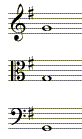 | the key of 'G major' |
|
 |
| the scale of 'G major' |
|
| GmbH | abbreviation of Gesellschaft mit beschränkter Haftung (German: limited-liability company) |
| G minor | 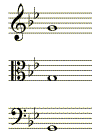 | the key of 'G minor' |
|
| g-Moll | | (German n.) the key of 'G minor' |
|
| Gnaccare | see naccare |
| gnaddelig | (German f. - Northern Germany) sulky |
| Gnade (s.), Gnaden (pl.) | (German f.) grace, graciousness, mercy, blessing, clemency, favour, boon |
| gnadebringend | (German) sacramentally |
| Gnadenakt | (German m.) act of grace, act of clemency, act of mercy |
| Gnadenbezeigung | (German f.) indulgence (relgious) |
| Gnadenbild | (German n.) picture with miraculous powers, statue with miraculous powers |
| Gnadenbrot | (German n.) charity |
| Gnadenbund | (German m.) covenant of grace |
| Gnadenerweis | (German m.) act of grace, pardon |
| Gnadenfrist (s.), Gnadenfristen (pl.) | (German f.) (temporary) reprieve, grace period, period of grace, grace, reprieve (figurative) |
| Gnadengesuch | (German n.) petition for mercy, petition for clemency, plea for clemency, petition of grace, clemency appeal, petition for pardon |
| gnadenhalber | (German) by act of grace |
| Gnadenhof | (German m.) animal sanctuary |
| gnadenlos | (German) merciless, pitiless, unforgiving (climate, landscape, etc.), pitilessly, mercilessly, bare-knuckle |
| gnadenlos hübsch | (German) drop-dead beautiful |
| gnadenlos schön | (German) drop-dead gorgeous |
| gnadenlos sein | (German) to be without mercy |
| Gnadenort | (German m.) place of grace |
| gnadenreich | (German) gracious |
| Gnadenring | (German m.) sanctuary knocker |
| Gnadenschuss | (German m.) coup de grâce |
| Gnadenstand | (German m.) state of grace |
| Gnadenstoß | (German m.) finishing stroke, coup de grâce (also figurative) |
| Gnadentag (s.), Gnadentage (pl.) | (German m.) day of grace |
| Gnadenthron | (German m.) mercy seat, throne of grace |
| Gnadentod | (German m.) mercy killing |
| gnadenvoll | (German) merciful |
| Gnadenwahl | (German f.) election of grace, predestination |
| Gnadenwille | (German m.) gracious will (of God) |
| Gnade vor Recht ergehen lassen | (German) to temper justice with mercy |
| Gnade walten lassen | (German) to spare, to show mercy |
| gnädig | (German) graciously, propitiously, mild, merciful, propitious, gracious, clement |
| Gnädige | (German f. - dated) female employer (of domestic servants)
|
| gnädige Frau (s.), gnädige Frauen (pl.) | (German f.) madam, mesdames (plural form) |
| gnädiger | (German) more gracious |
| gnädigerweise | (German) graciously |
| gnädiges Fräulein | (German n. - dated) madam |
| gnädiges Geschick | (German n.) smiling fortune |
| gnädiges Schicksal | (German n.) merciful fate |
| Gnädigkeit | (German f.) graciousness |
| gnädig nicken | (German) to give a condescending nod |
| gnädigste | (German) most gracious |
| gnä' Frau | (German f.) ma'am |
| Gnama-gnama | (Ivory Coast) a dance popularized in the i980s |
| Gnaoua | or gnawa, Moroccan music performed by people descended from the slaves brought from West Africa, played on the sintir bass lute (also called guimbri or gimbri), the karkabas, metal castanets (also called qarqabou), with unison singing and hand clapping, most often at healing ceremonies |
| Gnawa | see gnaoua |
| Gnitze | (German f.) biting midge |
| Gnocchettino | (Italian m.) very small dumpling |
| Gnocchetto | (Italian m.) small dumpling |
| Gnoccho (s.), Gnocchi (English pl., Italian pl. German pl.) | (Italian m.) dumpling |
| G-nøgle | | (Danish) a clef sign that shows the position of G on the staff, for example, the treble clef |
|
| Gnom (s.), Gnome (pl.) | (German m.) gnome |
| gnomartig | (German) gnomic |
| Gnome (s.), Gnomae (pl.) | (Englush, German f., from Greek) a maxim, an aphorism, a proverb |
| gnomenartig | (German) gnomic |
| gnomenhaft | (German) gnomish |
| Gnomenreigen | (German) dance of the gnomes, for example Etude de Concert S 145 No. 2 Gnomenreigen for piano by Franz Liszt (1811-1886) |
| gnomico | (Italian) gnomic, gnome-like |
| Gnomic poetry | sententious maxims put into verse to aid the memory. They were known by the Greeks as gnomes, from the Greek word for 'an opinion' |
|
| gnomisch | (German) gnomic |
| Gnomo | (Italian m.) gnome, goblin |
| Gnomon | (English, German m., from Greek) the rod or plate that casts the shadow on a sun-dial |
| Gnosis | (English, German f., from Greek) a special knowledge or understanding of spiritual mysteries |
| Gnostiker (s.), Gnostiker (pl.) | (German m.) Gnostic |
| gnostisch | (German) gnostic |
| gnostisierend | (German) gnosticizing |
| Gnostizismus | (German m.) Gnosticism |
| Gnu (s.), Gnus (pl.) | (English, German n.) wildebeest |
| Gnuherde | (German f.) herd of gnu(s), herd of wildebeest(s) |
| GNU Solfege | a computer program written to help people studying music to train their ears. It is free software, as defined by the GNU project. It contains exercises to train chords, intervals, scales, rhythms and harmonic progressions. The program is designed to be easily extended by adding "lesson files" describing new exercises. Adding a exercise to train those special jazz chords can be done by editing a plain text file in a text editor |
|
| Go | (English, German n.) board game |
| Go | abbreviation of giga octet (French: GB - gigabyte) |
| G.O. | abbreviation of 'great organ', Grande-orgue (French: great organ) or grandes ondes (French: long wave) |
| Goa | see 'Goa trance' |
| Goal notes | synonymous with 'guide tones' |
| goanisch | Goanese |
| Goa trance | born in the state of Goa, India, 'Goa trance' is relaxing, easy-listening 'beach music' |
|
| Goat Skin Woo-Woo dance | (Montserrat) Jumbie dance |
| Goat's trill | also chevrotement (French), Bockstriller or Geisstriller (German), a poor executed vocal trill |
| Gobbledygook | incomprehensible or pompous jargon of specialists |
| Gobelin | (German m.) tapestry, Gobelin tapestry |
| Gobelinmanufaktur | (German f.) Gobelins manufactory |
| Gobelinstickerei | (German f.) needlepoint |
| Gobelinsticknadel | (German f.) tapestry needle |
| Gobelinteppich | (German m.) Gobelin tapestry |
| Gobi | (English, German f.) a desert in central China |
| Goblet drum | a single headed drum in the shape of a goblet. It has a narrow waisted body and can be made out of wood, metal or pottery. It is also known as hourglass-shaped drum |
| Goce | (Spanish m.) pleasure, enjoyment |
| Gock | one of the two standard types of rim shots in marching percussion, which is produced by putting the bead of the drum stick close to the centre, the rim making contact closer to the hand than in a 'ping shot', thus making a lower sound |
| see 'ping shot' |
| Gockelhahn | (German m.) chanticleer, cock |
| Göd (m.), Godl (f.) | (German - Austria) godfather (m.), godmother (f.) |
| Godel | (German f. - Southern Germany) godmother |
| Goder | (German m. - Austria) double chin |
| Godet | (French) a gore, a triangular piece of cloth inserted into a skirt or other garment to make it flare |
| Godie | (Niger) a one-stringed fiddle |
| Godo (m.), Goda (f.) | (Spanish) Goth, Spaniard (Latin America) |
| godo (m.), goda (f.) | (Spanish) Gothic |
| Gods | see 'gallery' |
| Goethean | of or relating to or in the manner of Goethe |
| goethéen | (French) goethean |
| Goethe'sch | (German) goethean |
| goethesch | (German) goethean, goethian |
| Goethezeit | (German f.) era of Goethe |
| Goethian | of or relating to or in the manner of Goethe |
| goethisch | (German) Goethesque |
| Goetie | (German f.) goety |
| Goety | invocation of evil spirits, witchcraft |
| Göffel | (German m.) utensil that combines a fork and a spoon |
| Gogbohoun | (Benin) rhythm of the Ouida region |
| Gogo | a late twentieth-century African American urban style developed in Washington D.C, that combines live funk, soul and blues |
| Gnawan lute, better known as sintir that derives from the West African word for fiddle |
|
| Go-go dancer | an entertainer who performs popular dances on a stage or platform for the patrons of a discotheque or nightclub |
| Go-Go-Girl | (German n.) go-go dancer |
| Goi (s.), Gojim (pl.) | (German m.) goy (colloquial: offensive), gentile |
| Goidelic | one of the two branches of the Celtic family of languages descended from Proto-Indo-European. Goidelic includes Celtic languages such as Manx, Irish Gaelic, and Scots Gaelic. Contrast with the related Brythonic branch, which includes Cornish, Breton, and Welsh. The Goidelic language branch is also referred to as "Q-Celtic" because it tends to use a /q/ or /c/ in certain words where a /p/ appears in Brythonic equivalents |
|
| goidelisch | (German) Goidelic |
| goidelische Sprachen | (German pl.) Goidelic languages |
| Goita | (Cape Verde) a diatonic accordion played in funana |
| Goje | Nigerian spike fiddle |
| a one string fiddle from northern Ghana in which a snakeskin covers a gourd bowl, horsehair is suspended on the bridge and it is played with a bow string |
| Gokartfahren | (German n.) karting, go-karting |
| Gol | (Irish) a funeral lamentation |
| Gola | (Italian f.) throat, a gutteral voice |
| Golatschen | (German pl. - Austria) pastries |
| Gold | (English, German n.) in English also or or aurum, a precious metal used widely in the making of jewellery, works of art, etc. |
| Goldabfall | (German m.) scrap gold |
| Goldader | (German f.) vein of gold, gold vein |
| Goldamalgam | (German n.) gold amalgam |
| Goldarmband | (German n.) gold bracelet |
| goldarme Legierung | (German f.) low-gold alloy |
| Goldauflage | (German f.) gilt, gilding |
| Goldbarren (s.), Goldbarren (pl.) | (German m.) bullion, gold bar, bar of gold, gold ingot |
| goldbeladen | (German) gold-laden |
| goldberändert | (German) gold-rimmed |
| Goldberg Variationen | in the Goldberg Variations, Johann Sebastian Bach (1685-1750) summarized the characteristic species of Baroque keyboard music, the theme and variations. The Aria with (thirty) Different Variations, published (probably) in 1742 as Part IV of the Clavier-Übung and known as the Goldberg Variations, is organized in the complete fashion of many of the compositions from the latter part of Bach's life. The theme is a sarabande in two balanced sections, the bass and harmonic structure of which are preserved in all thirty variations. The form of the whole is that of a chaconne or passacaglia. The variations are grouped by threes, the last of each group being a canon, with the canons at successive intervals from the unison to the ninth. The thirtieth and last variation, however, is a quodlibet, a mixture of two popular song melodies combined in counterpoint above the fundamental bass; and after this the theme is repeated da capo. The noncanonic variations are of many different types, including inventions, fughettas, a French ouverture, ornamental slow arias, and, at regular intervals, bravura pieces for two keyboards. The diverse moods and styles in these variations are unified by means of the recurring bass and harmonies and also by the symmetrical order in which the movements are arranged; the entirety is a perfectly organized structure of great proportions |
|
| Goldberg-Variationen | (German pl.) Goldberg Variations |
| Goldbergwerk (s.), Goldbergwerke (pl.) | (German n.) gold mine |
| goldbeschichtet | (German) gold-coated |
| goldbestickt | (German) embroidered in gold, gold-embroidered |
| Goldblatt | (German n.) gold leaf |
| Goldblättchen | (German n.) gold tablet |
| Goldblech | (German n.) gold plating |
| Goldblechschere | (German f.) jeweller's (tin) snips |
| Gold brass | gold brass has a higher copper content than standard (yellow) brass and is used for making brass instruments |
| goldbraun | (German) auburn, golden brown |
| goldbraunes Haar | (German n.) auburn hair |
| Goldbrokat | (German m.) damassin |
| Goldbronze | (German f.) gold bronze, ormolu |
| Goldbronzepulver | (German n.) gold bronze powder |
| Goldbrosche | (German f.) gold brooch |
| Goldbuch | (German n.) gold book |
| Goldbuchstaben | (German pl.) gold letters |
| Golddraht | (German m.) gold wire |
| Golddruck | (German m.) gold print |
| Golden | of, relating to, made of, or containing gold. |
| having the colour of gold or a yellow colour suggestive of gold |
| lustrous, radiant |
| golden | (German) golden, aureate, gold, gilt |
| Golden Age | the term Golden age stems from Greek mythology. It refers to the highest age in the Greek spectrum of Iron, Bronze, Silver and Golden ages, or to a time in the beginnings of Humanity which was perceived as an ideal state, or utopia, when mankind was pure and immortal. In literary works, the Golden Age usually ends with a devastating event, which brings about the Fall of Man (see Ages of Man). An analogous idea can be found in the religious and philosophical traditions of the Far East. For example, the Vedic or ancient Hindu culture saw history as cyclical composed of yugas with alternating Dark and Golden ages. The Kali yuga (Iron Age), Dwapara yuga (Bronze Age), Treta yuga (Silver age) and Satya yuga (Golden age) correspond to the four Greek ages. Similar beliefs can be found in the ancient Middle East and throughout the ancient world |
- Golden age from which the second entry has been taken
|
| goldene Gans | (German f.) golden goose (figurative) |
| goldene Gelegenheit | (German f.) golden opportunity |
| goldene Hochzeit | (German f.) golden wedding, golden wedding anniversary |
| goldene Jahre | (German pl.) golden years |
| Goldene Madonna | (German f.) Golden Madonna of Essen (the gilded wooden sculpture, fashioned in about 980, has been known as the Golden Madonna only since the 19th century) |
| Goldene Muschel | (German f.) Golden Shell, Conca d'Oro - a valley near Palermo in Sicily, Italy |
| goldene Note | (German f.) golden touch |
| Goldener Bär | (German m.) Golden Bear (award at the Berlin film festival) |
| goldene Regel | (German f.) golden rule |
| goldener Handschlag | (German m.) golden handshake |
| Goldener Handschlag | (German m.) golden handshake |
| goldener Humor | (German m.) irrepressible sense of humour |
| goldener Käfig | (German m.) gilded cage |
| goldener Löffel | (German m.) golden spoon |
| Goldener Löwe | (German m.) Golden Lion (award at the Venice film festival) |
| goldener Schnitt | (German m.) sectio aurea, golden ratio, golden mean, golden section, golden number, golden rule |
| Goldenes Buch | (German n.) (official) visitors' book |
| goldene Schallplatte | (German f.) gold record, gold disc (awarded for a significant number of sales of that particular record) |
| goldenes Gerät | (German n.) gold plate |
| goldenes Herz | (German n.) heart of gold |
| goldenes Jubiläum | (German n.) golden jubilee |
| goldenes Kalb | (German n.) golden calf |
| Goldenes Tor | (German n.) Golden Gate (Constantinople) |
| Goldenes Vlies | (German n.) Golden Fleece (Greek mythology) |
| goldenes Zeitalter | (German n.) golden age |
| goldene Uhr | (German f.) gold watch |
| goldene Worte | (German pl.) wise words, words of wisdom |
| goldene Zahl | (German f.) golden ratio, golden mean, golden section, golden number |
| goldene Zeit | (German f.) golden age |
| Golden Madonna of Essen | a wooden sculpture of the Virgin Mary and the infant Jesus, dated from around 980, covered completely in thin sheets of gold leaf, part of the treasury of Essen Cathedral, formerly the church of Essen Abbey, in North Rhine-Westphalia, Germany. It is both the oldest known sculpture of the Madonna and the oldest free-standing sculpture north of the Alps, and one of the few major works of art to survive from Ottonian times |
|
| Golden section | a mathematical proportion, related to the Fibonnaci series, where the ratio between a small section and a larger section is equal to the ratio between the larger section and both sections put together, used by many twentieth-century composers, especially Béla Bartók (1881-1945), to determine the point of climax for a given work |
| Goldesel | (German m.) cash cow (colloquial) |
| Goldfaden | (German m.) gold thread |
| Goldfarbe | (German f.) gilt (paint) |
| goldfarben | (German) gold-coloured, golden-coloured |
| goldfarbig | (German) gold-coloured |
| Goldfassung | (German f.) gold setting |
| Goldfieber | (German n.) gold fever |
| Goldfiguren | (German pl.) figurines of gold |
| Goldfisch | (German m.) goldfish (Carassius auratus), gold fish |
| Goldfischglas | (German n.) goldfish bowl |
| Goldfolie | (German f.) gold foil |
| Goldförderung | (German f.) gold mining |
| goldfrei | (German) non-gold |
| goldfreie Palladium-Silber-Legierung | (German f.) gold-free palladium-silver alloy |
| Goldfüllung | (German f.) gold filling |
| Goldfund (s.), Goldfunde (pl.) | (German m.) gold find, gold discovery, discovery of gold |
| Gold führen | (German) to carry gold |
| Goldgegenstände | (German pl.) gold objects |
| Goldgehalt | (German m.) gold content |
| goldgelb | (German) golden, golden yellow |
| Goldgerüst | (German n.) gold framework |
| goldgesäumt | (German) gold-bordered |
| goldgestreift | (German) gold-striped |
| goldglänzend | (German) shining like gold |
| Goldgräber (m.), Goldgräberin (f.) | (German m.) gold digger, gold prospector, forty-niner (reference to the 1849 gold rush in California) |
| Goldgräberstadt | (German f.) gold mining town |
| Goldgräberstimmung | (German f.) gold-rush mood |
| Goldgrube (s.), Goldgruben (pl.) | (German f.) goldmine, bonanza, gold mine (also figurative) |
| goldgrün | (German) gold-green |
| goldhaltig | (German) auriferous, containing gold, gold-bearing |
| Goldherz | (German n.) gold heart |
| Goldhut | (German m.) gold cone |
| goldig | (German) quaint, golden (poetic), sweet, cute, lovely, darling (cat, dress, etc.) |
| goldige Zeiten | (German pl.) golden days |
| Gold in Barren | (German n.) gold bullion in bars, gold bullion |
| Gold ink | made by rubbing up gold leaf as thoroughly as possible with a little honey, which is then washed away leaving finely powdered gold dust, which when mixed with weak gum water, has the consistency of a writing ink and the right golden colour. The ink would be applied using a quill pen to a roughened area of the parchment to improve the adhesion, after which the area was carefully burnished |
| Goldinlay | (German n.) gold inlay |
| Goldjunge | (German m.) golden boy (colloquial) |
| Goldkappenkrone | (German f.) gold shell crown |
| Gold kaufen | (German) to buy gold |
| Goldkettchen | (German n.) gold chain (small, short or thin) |
| Goldkette | (German f.) gold chain |
| Goldklammer | (German f.) gold clasp |
| Goldklumpen (s.), Goldklumpen (pl.) | (German m.) gold nugget, lump of gold |
| Goldknappheit | (German f.) gold shortage |
| Goldkrone | (German f.) gold crown |
| Goldkugel | (German f.) gold ball |
| Gold-Kupfer-Legierung | (German f.) gilt copper alloy |
| Goldküste | (German f.) Gold Coast (former name of Ghana) |
| Goldland | (German n.) El Dorado |
| Gold leaf | gold beaten out into microscopically thin sheets, which was applied to manuscript letters and illustrations |
the position on the vellum where the leaf was to be applied was prepared by brushing on several thin coats of mordant (which is a white substance ground very finely and mixed with size to the consistency of cream, then applied with a brush). After each coat of mordant was completely dry, the next coat was added. When sufficient mordant had been applied, the mordant was burnished until it resembled glass. Then egg white (albumen) was brushed on. While the egg white was still sticky, the gold leaf was applied. After the egg white dried, the gold was laboriously burnished until it glittered
[taken from Some Basic Textual Criticism Terms Defined © copyright 2006, Mr. Gary S. Dykes] |
| (in gilding) the nature of the finish the gold leaf produces depends entirely on the surface upon which it is placed. Finishes range from matte oil gilding surfaces to brilliant, burnished clay surfaces with water-gilding. The advantages of a gold leaf finish as opposed to other gold coloured finishes are: its reflective quality (the beaten leaf has more reflective quality than anything produced with pigment), its durability (properly gilded surfaces can last for centuries) and its stability (it does not tarnish) |
| Goldlegierung | (German f.) gold alloy |
| Goldlöckchen | (German n.) goldilocks, Goldilocks |
| Goldlot | (German n.) gold solder |
| Goldmädchen | (German n.) golden girl (colloquial) |
| Goldmaske | (German f.) golden mask |
| Goldmedaille (s.), Goldmedaillen (pl.) | (German f.) gold medal |
| Goldmedaillengewinner (m.), Goldmedaillengewinnerin (f.) | (German) gold medallist, gold medal winner |
| Goldmessing | (German n.) gold brass |
| Goldmine (s.), Goldminen (pl.) | (German f.) gold mine |
| Goldmünze (s.), Goldmünzen (pl.) | (German f.) gold coin |
| Goldoberfläche | (German f.) gold surface |
| Goldpapier | (German n.) gold foil, gilt paper (book binding) |
| Goldpellet | (German n.) gold pellet |
| Goldperlen | (German pl.) golden beads |
| Goldplatte | (German f.) gold plate |
| Goldplattierung | (German f.) gold plating |
| Goldprägung | (German f.) gold embossing |
| Goldprägung von Münzen | (German f.) gold coinage |
| Goldpreis | (German n.) gold price, price of gold |
| Goldproduktion | (German f.) gold production |
| Goldpulver | (German n.) gold powder |
| Goldquelle | (German f.) bonanza |
| Goldrahmen | (German m.) gilt frame |
| Goldrand | (German m.) gold edge, gold collar |
| Goldrandbrille | (German f.) gold-rimmed spectacles, gold-rimmed glasses |
| Goldrausch (s.), Goldräusche (pl.) | (German m.) gold rush, gold fever |
| Goldrauschstadt | (German f.) gold rush town |
| Goldrauschzeit | (German f.) gold rush years |
| Goldregen | (German m.) bonanza, shower of gold, crop of gold medals |
| goldrichtig | (German) spot-on (colloquial), perfect |
| goldrichtig liegen | (German) to be dead on (colloquial) |
| Goldring | (German m.) gold ring, gold band (jewellery) |
| Goldröhrchen | (German n.) gold tube |
| Goldsavonette | (German f.) gold hunter-cased watch, gold savonette |
| Goldschatz | (German m.) hoard of gold, treasure of gold |
| Goldschicht | (German f.) gold coating, gold layer |
| goldschimmernd | (German) gold shimmering |
| Goldschläger | (German m.) gold-beater |
| Goldschlägerei | (German f.) gold-beating |
| Goldschlägerhaut | (German f.) goldbeater's skin |
| Goldschmelzer | (German m.) gold smelter |
| Goldschmied (m.), Goldschmiedin (f.), Goldschmiede (pl.) | (German) goldsmith, gold smith |
| Goldschmiedearbeit | (German f.) gold work |
| Goldschmiedehammer | (German m.) goldsmith's hammer |
| Goldschmiedehandwerk | (German n.) gold work |
| Goldschmiedekunst | (German f.) gold work, goldsmithery |
| Goldschmiedemeister | (German m.) goldsmith |
| Goldschmiedschere | (German f.) jeweller's scissors |
| Goldschmuck | (German m.) gold jewellery |
| Goldschnitt | (German m.) gilt edging |
| Goldschnittausgabe | (German f.) gilt-edged edition |
| Goldschrift | (German f.) gold lettering |
| Goldschürfen | (German n.) gold mining |
| Gold spinnen | (German) to spin gold (also figurative) |
| Goldstadt | (German f.) gold town |
| Goldstatue | (German f.) golden statue |
| Goldstaub | (German m.) gold dust |
| Goldstern | (German m.) gold star |
| Goldstickerei | (German f.) gold work (embroidery) |
| Goldstück | (German n.) gold piece, piece of gold |
| Goldsuche | (German f.) gold prospecting, gold-seeking, quest for gold, search for gold |
| Goldsucher (s.), Goldsucher (pl.) | (German m.) gold seeker, gold prospector, prospector, gold hunter |
| Goldton | (German m.) golden hue |
| Goldtönung | (German f.) gold toning |
| Goldüberzug | (German m.) gold plate |
| goldumrandet | (German) gold-edged, bordered with gold (ceiling, table cloth, etc.) |
| goldumsäumt | (German) bordered with gold |
| Gold- und Silberbestand | (German m.) bullion |
| Gold- und Silberförderung | (German f.) gold and silver mining |
| Gold- und Silberproduktion | (German f.) gold and silver production |
| goldverziert | (German) with golden ornaments |
| Goldverzierung | (German f.) gold ornament, gold decoration |
| Goldwaage | (German f.) a pair of gold scales |
| Goldware aus der Antike | (German f.) antique gold |
| Goldwaschen | (German n.) gold panning |
| Gold waschen | (German) to pan for gold |
| Goldwäscher | (German m.) gold washer, gold panner |
| Goldwäscherei | (German f.) gold panning |
| Goldwäschertrog | (German m.) batea |
| Gold wert sein | (German) to be worth a mint |
| Goldzahn | (German m.) gold tooth |
| Goldzertifikat | (German n.) gold certificate |
| Gold zu einem dünnen Faden ausziehen | (German) to spin gold |
| Goldzufluss | (German m.) gold inflow |
| Golem | (English, German m.) (Jewish folklore) an artificially created human supernaturally endowed with life |
| Golf | (German m.) gulf, bay |
| (English, German n.) a game played on a large open course with 9 or 18 holes; the object is use as few strokes as possible in playing all the holes |
| Golfball | (German m.) golf ball |
| golfballgroß | (German) golf ball-sized |
| Golfclub | (German m.) golf club |
| golfen | (German) to play golf |
| Golfer (m.), Golferin (f.) | (German) golfer |
| Golferellenbogen | (German m.) golfer's elbow |
| Golfjunge | (German m.) caddie |
| Golfklub | (German m.) golf club |
| Golfkrieg | (German m.) Gulf War |
| Golfkriegssyndrom | (German n.) Gulf War syndrome, Gulf War illness |
| Golfkriegsveteran | (German m.) Gulf War veteran |
| Golfküste | (German f.) Gulf Coast |
| Golfküstenregion | (German f.) Gulf Coast region |
| Golfmobil | (German n.) golf cart |
| Golfo mistico | (Italian m.) also buca dell'orchestra or fossa dell'orchestra, orchestra pit |
| Golfplatz | (German m.) golf course, golf links |
| Golfregion | (German f.) Gulf region |
| Golfschläger (s.), Golfschläger (pl.) | (German m.) golf club, golfclub |
| Golfschuh | (German m.) golf shoe |
| Golfspiel | (German n.) golf, game of golf |
| Golfspielen | (German n.) golfing |
| Golf spielen | (German) to play golf |
| Golf spielend | (German) golfing |
| Golfspieler (m.), Golfspielerin (f.) | (German) golfer, golf player |
| Golfstaat (s.), Golfstaaten (pl.) | (German m.) Gulf State, gulf nation |
| Golfstrom | (German m.) Gulf Stream |
| Golftasche | (German f.) golf bag |
| Golfturnier | (German n.) golf tournament |
| Golfwagen | (German m.) golf cart |
| Golfwitwe | (German f.) golf widow |
| Golgatha | (German) Calvary |
| Goliath | (German m.) (Old Testament) a giant Philistine warrior who was slain by David with a slingshot |
| Goliathbezwingung | (German f.) giant-killing act |
| Goliard song | Medieval Latin-texted secular song, often with corrupt or lewd lyrics, associated with wandering scholars, where, because they are notated with staffless neumes, the melodic content is highly speculative |
| Golpe | (Spanish m.) stroke, blow, knock, bump, bang, collision (car), blow, misfortune, witticism, sally, shock, punch, hold-up, robbery |
| Golpe | tap on the guitar soundboard in flamenco music |
| in flamenco dance the term refers to footwork: the full sole of the foot striking or stamping upon the floor
|
| the term is also used in flamenco to refer to rhythmic acceleration
|
| golpeado | (Portuguese) or batido (Portuguese), battu (French) |
| Golpeador | (Spanish m.) flamenco guitar tap plate |
| golpear | (Spanish) to hit, to knock, to beat, to thump (a person), to hit (a person), to punch (a person), to bang (door, head) |
| Golpe bajo | (Spanish m.) punch below the belt (figurative and in boxing) |
| Golpe de arco | (Spanish m.) bow-stoke, bowing, coup d'archet (French) |
| Golpe de efecto | (Spanish m.) coup de théatre |
| Golpe de estado | (Spanish m.) coup d'état |
| Golpe de fortuna | (Spanish m.) stroke of good fortune |
| Golpe de glotis | (Spanish m.) or 'glottal attack, a singing method, now considered rather exaggerated, that utilises the two membranes above the natural vocal chords, coup de glotte (French) |
| Golpe de gracia | (Spanish m.) coup de grâce |
| Golpe de vista | (Spanish m.) a quick glance |
| Golpes, dos | (Spanish m. pl.) see dos golpes |
| Golpes por segundo | (Spanish m. pl.) cycles per second |
| Golpes, tres | (Spanish m. pl.) see tres golpes |
| golpetear | (Spanish) to bang |
| Golpeteo | (Spanish m.) banging, hammering |
| Goltrai | see sean nos |
| Golubez | a Russian dance |
| Goma | (Spanish f.) rubber, gum, rubber band |
| Goma arábiga | (Spanish f.) gum arabic |
| Goma de borrar | (Spanish f.) rubber, eraser |
| Goma de mascar | (Spanish f.) chewing gum |
| Goma de pegar | (Spanish f.) glue, gum |
| Gomaespuma | (Spanish f.) foam-rubber |
| Gombeen | (Irish) usury (the lending of money) |
| Gome | (Ghana) rectangular frame drum played by the hands and feet. While the drummer is sitting on the gome and playing the drum with his hands, he is changing the pitch by varying the position of his heels |
| one of the oldest musical types performed by the coastal Ga of Ghana, which was introduced by Accra fishermen from the Fernando Po Islands in the early eighteenth century. Originally, gome was performed exclusively by fishermen after their expeditions to celebrate their catch. Other occupational groups, especially artisans, also eventually adopted this music and dance as a form of entertainment. Presently, gome is performed by all categories of people - young and old, male and female, on all social occasions |
|
| Gomina | (Spanish f.) haircream |
| Gomito | (Italian m.) elbow |
| Gomme | (French f.) rubber, gum, eraser (in the U.S.) |
| gommer | (French) to rub out, to erase |
| Gomorrha | (German n.) Gomorrah |
| Gon | (German n.) centesimal degree, gradian, gon, grade or grad |
| Gonagra | (English, German n.) a form of gout which occurs in the knees |
| Gondel (s.), Gondeln (pl.) | (German f.) gondola, basket, car |
| Gondelbahn | (German f.) gondola cableway, gondola lift (skiing) |
| Gondelfahrer | (German m.) gondolier |
| Gondelfahrt | (German f.) gondola ride |
| Gondelführer (s.), Gondelführer (pl.) | (German m.) gondolier |
| Gondellied | (German n.) gondola song, barcarole |
| gondeln | (German) to cruise around (by car, bike) |
| Gondelruderer | (German m.) gondolier |
| Gondola | (Italian) a light Venetian boat rising sharply to a point at each end, usually propelled by a single oar at the stern |
| the gondola is now mostly used for tourists, or for weddings, funerals, or other ceremonies. Most Venetians now travel by motorised waterbuses (vaporetti) which ply regular routes along the major canals and between the city's islands. The city also has many private boats. The only gondolas still in common use by Venetians are the traghetti, foot passenger ferries crossing the Grand Canal at certain points without bridges |
- Venice from which this comment has been taken
|
| Góndola | (Spanish f.) gondola |
| Gondoler | (French) warp, to laugh (enough to split one's sides) |
| Gondoliera | (Italian f.) gondola song, barcarole |
| Gondoliere (s.), Gondoliere (pl.), Gondolieri (pl.) | (German m.) gondolier |
| Gondwana | (English, German n.) the Mesozoic landmass in the Southern Hemisphere that included what are now South America, Africa, Australia, and Antarctica |
| Gondwanaland | (English, German n.) a hypothetical continent that (according to plate tectonic theory) broke up later into India and Australia and Africa and South America and Antarctica |
| Gonfalon | or gonfalone (from the early Italian confalone), a long flag or banner, often pointed, swallow-tailed, or with several streamers |
| Gonfanon | (German n.) gonfalon, gonfalone |
| gonfler | (French) to inflate (as in 'to exaggerate') |
| Gong | (Chinese) bow, for example that used to play the erhu |
| (Italian m., English, German m., French m.) a percussion instrument, sometimes of indefinite pitch (in which case it should be called a tam-tam), a round metal plate of bronze or brass with turned drumlike edge, with or without a raised centre (boss) and struck with a knobbed wooden mallet. The gong may be suspended either vertically or horizontally, and its side can range from a shallow lip to one of several inches, resembling an inverted cauldron. Its resonance is greatest at the centre and least at the lip |
|
| (Javanese) in gamelan the two tunings, slendro and pelog, had their own set of three gongs, two big gongs called gong ageng and one gong suwukan about 90 cm. in diameter, made from bronze, with a raised section in their centre, called the 'boss', and suspended on a wooden frame |
|
|
| (German m.) bell (boxing match) |
| Gong ageng | the term used in Java and Bali for the suspended gong used in gamelan |
|
|
| Gongang | in Javanese gamelan, the length of the piece delimited by strokes of the gong. This can vary from a few seconds to several minutes, depending on the tempo, irama, and length of the structure (bentuk). It is the longest time-span in the colotomic structure of gamelan |
| Gongche notation | or gongchepu, a traditional musical notation method, once popular in ancient China. It uses Chinese characters to represent musical notes. Many people mistakenly call it gongchi notation or gongchipu. Sheet music written in this notation is still seen for traditional Chinese musical instruments and Chinese operas. However the notation is becoming less popular, replaced by mostly jianpu (numbered musical notation) and sometimes the standard western notation |
|
| Gong chime | an instrument where a set of wide-flanged gongs or 'gong-kettles' are arranged on a low horizontal frame or bed, with each gong resting boss upwards on crossed cords. The gongs are struck on the 'boss' with a mallet |
| Gong cinesi | (Italian m. pl.) tuned gong-carillon |
| gongen | (German) to strike a gong |
| Gong gan | (Chinese) bow stick, as for example, of the bow of the erhu |
| Gongguluur | Tuvan term for 'gonging' or clashing hand bells together for percussive effect |
| Gong-kettle | wide-flanged, bossed gong, individually tuned and used in sets, that forms the sounding part of a gong-chime |
| Gong ma | (Chinese) bridge of the erhu |
| Gong mao | (Chinese) bow hair, as for example, on the bow of the erhu |
| Gongo | Ghanaian bells |
| Gongon | Ghanaian cowbell |
| Gongschlag | (German m.) stroke of the gong |
| Gongspiel (chromatisch) | (German n.) tuned gong-carillon |
| Gong suwukan | in Javanese gamelan, the smaller gong in the set used for smaller phrases. It is generally pitched higher, and at different pitches for pélog and sléndro |
| Gonguê | a metal cowbell that features in maracatu nação (also known as maracatu de baque virado) an Afro-Brazilian performance genre |
| Gonguhr | (German f.) gong clock |
| Gong wong ya | Thai gong chime, in which 16 gongs, seated in a frame, circle the performer who strikes them with mallets |
|
| Gonje | see goonji |
| Gonkogu | (Ghana) bells |
| Good ear | see 'ear, good' |
| Goniometer | (German n.) direction finder that determines the angular direction of incoming radio signals, protractor |
| Goniometrie | (German f.) goniometry |
| goniometrisch | (German) goniometrical, goniometric |
| Goniometry | the measurement of angles (for example, in a study of the articulation of joints) |
| gönnen | (German) to grant, to not begrudge, to allow, to deign |
| Gönner (m.), Gönnerin (f.), Gönner (pl.) | (German) patron, patroness (f.), sponsor, benefactor, benefactress (f.), backer (sponsor) |
| Gönner der schönen Künste | (German m.) patron of the arts |
| gönnerhaft | (German) patronising, patronisingly |
| Gönnerschaft | (German f.) patronage, sponsorship |
| Goodwill | (English, German m.) an intangible asset which provides a competitive advantage, such as a strong brand , reputation, or high employee morale |
| (English, German m.) an attitude of kindness, friendliness or benevolence |
| Goofus | see 'shim sham' |
| see couesnophone |
| googlen | (German) to google (colloquial) |
| Googol | (English, German n.) googol (ten raised to the hundredth power) |
| Googolplex | (English, German n.) 10 rasied to the power of a googol |
| Goombay | a type of drum |
| a percussion music made famous by Alphonso 'Blind Blake' Higgs, who played to tourists arriving at Nassau International Airport for several years |
| Go on at once | attacca (Italian), attacca subito (Italian), sofort fortsetzen (German), attaquez (French) |
| Goonda | a rowdy or hooligan |
| Goondaism | rowdyism |
| Goong | (Sunda, Indonesia) a large hanging gong, part of the instrumentation of a gamelan degung orchestra |
| Goong Renteng | (Sunda, Indonesia) or Renteng, a rural ritual gamelan still found in some villages in the Sunda and Cirebon (north coast of Java) areas, used to primarily to celebrate the rice harvest |
| Goonji | (Ghana) a one-stringed fiddle with a calabash resonator covered with skin. It is bowed with a curved bow, strung with horsehair, or in some cases the artificial hair used in weaving women's hairstyles. It is played by many tribes throughout West Africa with similar playing styles, the only variation usually being the construction of the instrument |
| Goose | the harsh break or squeak in the sound of an ill-controlled clarinet, oboe or bassoon |
| Go out | in jazz, to take the final chorus or end of a piece |
| Gopak | also called hopak, a lively 2-in-a-bar Russian and Ukrainian folk dance |
| Gopal | cowherd, a name of Sri Krishna |
| Gopichand | also known as gopicand, ektar, gopiyantra or khamak, this popular folk instrument in Bengal. It is an instrument that is much used by the wandering minstrels known as the baul. There are several variations in construction. The length may be as small as one foot or as long as three feet, however 2-3 feet is the norm. It consists of a length of bamboo that is split through most of the length. The two ends are pried apart and attached to a resonator. This resonator may be a coconut, gourd, metal container or a hollowed out cylindrical section of wood. The open end of the resonator is covered with taught skin and a string penetrates the centre. This string is attached to a reinforced section in the centre. This string then passes through the hollow of the resonator and attaches to a tuning peg located in the bamboo. The sound of the gopichand is most distinctive. There is a peculiar bending of the pitch as the two legs of the bamboo are squeezed together by the left hand while the right hand plucks the string. This is a rhythmic instrument rather than a melodic instrument and it is used to accompany instruments such as kartal, dotar or khol |
|
|
| Göpel | (German m.) a hoisting drum, usually vertical (often horse powered), a whim |
| Goqing | the goqing once sounded to announce the arrival and rank of a guest or to denote the length of a pause following the completion of a musical piece. The great importance of sonorous substances, such as wood and stones, among the percussion instruments of the Far East stems from the religious belief that nature itself speaks to the human ear through this vibrating matter |
|
| Gör | (German m. - particularly Northern Germany) kid (colloquial), brat, saucy little miss, cheeky little miss, hussy |
| Góralski | one of the two basic dances of the Skalne Podhale region (Rocky Foothills of the Tatra Mountains in southern Poland). The góralski and zbójnicki do not occur in the neighboring mountains of Pieniny and Beskidy, and the districts of Orawa and Spisz. The góralski is a general name of the solo dance of one couple who perform a series of dances (3-8). In each segment of the dance, the male dancer sings a selected tune (nuta) in a freely structured rhythm |
|
| Görch | (German m. - Southern Germany, Austria) George |
| Gordischer Knoten | (German m.) Gordian knot |
| Gordon | Romanian term for acoustic bass |
| Göre (s.), Gören (pl.) | (German f. - particularly Northern Germany) brat (colloquial), saucy little Miss (colloquial), cheeky little miss (colloquial), hussy (colloquial), chit (of a girl) |
| Gorecore | similar to 'goregrind' but stripped of its 'grindcore' nature blastbeats & having more emphasis on sloppy or abject punk style |
| G.Org. | abbreviated form of 'great organ' or Grande-orgue (French: great organ) |
| Gorge | (French f.) throat |
| Gorgée | (French f.) sip, gulp |
| Gorgerin | the moulding at the top of a column |
| Gorgheggi | see gorgheggio |
| gorgheggiamento | (Italian) trilling, quavering |
| gorgheggiare | (Italian, literally 'to trill') to perform florid passages, trills, etc. |
| Gorgheggio (s.), Gorgheggi (pl.) | (Italian m., literally 'warbling') a florid vocal passage in which many notes cover a single vowel sound, often used as a exercise for the voice, to acquire facility |
| Gorgia | (Italian f.) the art of vocal ornamentation in use during the early seventeenth century for the performance of madrigals, motets, etc. |
| see ribattuta di gorgia |
| Gorgigala | Central American rattle necklace |
|
| Gorgio | a non-Romany (a Romany is what many people call a 'gypsy' although many Romany consider the word 'gypsy' insulting) |
| Gorgo | (German f.) Gorgon |
| Gorgon | any of the three sisters Stheno, Euryale, and the mortal Medusa who had snakes for hair and eyes that if looked into turned the beholder to stone |
| Gorgone | (German f.) Gorgon |
| Gorgons, The | founded in about 1930, a group of neo-pagan feminists mentioned by Elliot O'Donnell in Strange Cults and Secret Societies of Modern London (1934) who reputedly lived in a large house on the Thames above London and 'love open-air life and cocktails but have no liking for men' |
| Gorgonzola | (English, German m.) a pungent, blue-veined, pressed Italian cheese made of cow's milk |
| Gorilla (s.), Gorillas (pl.) | (English, German m.) the largest of the anthropoid apes (Gorilla gorilla) native to the forests of equatorial Africa, having a stocky body and coarse, dark brown or black hair |
| Gorillakostüm | (German n.) gorilla costume |
| Gorodo | (Madagascar) accordion |
| Gorong | (Senegal, Wolof) A long Wolof drum |
| Gorong talmbat | (Senegal, Wolof) small tenor accompanying drum in a sabar drum set |
| Gorong yeguel | (Senegal, Wolof) small tight drum used in a sabar drum set |
| Gorsedd | (Welsh, literally 'throne') a meeting of Welsh bards and druids (often as a preliminary to an eisteddfod) |
| Gosan | early central Asia poet-musician |
| Gosche | (German f. - Austria, Southern Germany, Switzerland) mouth |
| Göschstock | (German m.) jack staff, flag staff |
| Goshu ondo | (Japanese) a traditional dancing song that has its origin in Shintoist festive recitation of the Heian or Nara Period (eighth to twelfth century) and may feature in Obon events |
| Gosier | (French m.) throat |
| Goslari | (Croatia) fiddle instruments |
| Gospel | (English, German m./n.) book containing the first four books of the New Testament; Matthew, Mark, Luke and John; detailing the life, death and resurrection of Christ |
| see 'gospel music' |
| Gospel beat | see 'Jesus music' |
| Gospelchor | (German m.) gospel choir |
| Gospel Go-Go | or 3G, a genre of music that originated from Go-Go music. It is religious in nature, hence gospel. It is most popular around the Washington, D.C. Metropolitan Area and first appeared in about 1995 |
|
|
| Gospellied | (German n.) gospel song |
| Gospel music | an African-American sacred music style that includes gospel song, particularly evangelical (Protestant) Christian, and which came into being in the 1920s, when Thomas A. Dorsey recorded his first religious song, If You See My Savior. Gospel music became popularised during the 1940s and 50s |
|
|
| Gospelsängerin | (German f.) (female) gospel singer |
| Gospel song/Devotional lyric | a religious lyric expressing an aspect of personal faith, although the distinction between these categories is mainly a matter of musical taste. Examples of this form include Amazing Grace (John Newton), It Is Well with My Soul (Horatio G. Spafford), Blessed Assurance, Jesus Is Mine (Fanny Crosby), Wonderful Words of Life (Philip P. Bliss) and How Great Thou Art (Carl G. Boberg) |
| Gosse (s.), Gossen (pl.) | (German f.) drain, gutter (also figurative), kennel |
| Gössel | (German n. - Northern Germany) gosling |
| Gossenkind | (German n.) guttersnipe |
| Gossenpolitik | (German f.) gutter politics |
| Gossensprache | (German f.) the language of the gutter |
| Gossoon | (Irish, corruption of French garçon) a young countryman, a boy, a hobbledehoy |
| Gosto | (Portuguese) taste |
| Gote (m.), Gote (f.) | (German - dated) godfather (m.), godmother (f.) |
| Gote (m.), Gotin (f.), Goten (pl.) | (German) Goth |
| Göteborg | (German n.) Goteborg, Gothenburg |
| Gotenschlacht | (German f.) gothic battle |
| Gothcore | a fusion of hardcore punk and Gothic music |
| Gothic | the word Gothic originally only referred to the Goths, one of the Germanic tribes that helped destroy Rome. Their now-extinct language, also called Gothic, died out completely |
| (English, German m.) Gothic, which may well have originated with Alberti as a derogatory term and which certainly corresponds to Vasari's maniera tedesca ('German style'), is properly the descriptive term for an artistic style which achieved its first full flowering in the Ile de France and the surrounding areas in the period between c. 1200 and c. 1270, and which then spread throughout northern Europe. It is characterised by the hitherto unprecedented integration of the arts of sculpture, painting, stained glass and architecture which is epitomized in the great cathedrals of Chartres, Amiens, and Reims or in the Sainte Chapelle in Paris. In all the arts the predominantly planar forms of the Romanesque are replaced by an emphasis on line. There is a transcendental quality, whether in the soaring forms of the pointed arches or in the new stress on the humanity of Christ, which similarly distinguishes it from the preceding Romanesque style |
| Gothic literature | poetry, short stories, or novels designed to thrill readers by providing mystery and blood-curdling accounts of villainy, murder, and the supernatural |
| Gothic metal | a genre of heavy metal music that originated in the early 1990s in Europe as an outgrowth of doom-death, a subgenre of doom metal |
|
| Gothic music | see 'goth music' |
| Gothic novel | or gothic romance, a type of romance wildly popular between 1760 up until the 1820s that has influenced the ghost story and horror story |
| Gothic period | the late middle ages (1100-1450) |
| Gothic rock | a popular music style that evolved out of 'post-punk' during the late 1970s |
|
| Gothic romance | another term for a Gothic nove |
| Gothicszene | (German f.) gothic scene |
| gothique | (French) Gothic |
| Goth music | a relatively confusing term, in that its usage varies from country to country with the usage of the words goth and gothic. This often makes it necessary to distinguish it as used to mean goth music and semi-related term gothic music in some countries, while in others the two terms are used in a co-opted fashion that often lends to its own confusions and arguments. The term goth music is probably most widely used to mean a selection of genres encompassing mainly gothic rock, darkwave, Industrial, EBM, synth pop and deathrock while gothic music is a distinct term referring to music that fits within the classic meaning of the word gothic, rather than holding any connection to the modern day goth subculture
|
|
| Gotik | (German f.) Gothic style, Gothic period |
| Gotisch | (German n.) Gothic |
| gotisch | (German) gothic, gothically, Old English (script), Gothic (pertaining to the Goths) |
| gotische Kathedrale | (German f.) Gothic cathedral |
| gotische Kirche | (German f.) Gothic church |
| gotische Schrift | (German f.) black letter, Gothic |
| gotische Stil | (German m.) Gothic style (architecture) |
| gotischer Strebepfeiler | (German m.) Gothic buttress |
| gotländisch | (German) Gotland |
| Gott (m.), Göttin (f.), Götter (pl.), Göttinnen (f.pl.) | (German) God, Lord, Godhead, deity, god (m.), goddess (f.) |
| Gott! | (German) God! |
| Gotta | (Benin) a drum made of a gourd covered with a skin, used in tchinkounmey, a rhythm for funerals |
| Gottan | (Japan) an instrument styled after the shamisen, traditionally played by farmers, but also used by mendicant village musicians |
- Gottan from which this extract has been taken
|
| gottähnlich | (German) godlike |
| Gott allein weiß. | (German) God only knows. |
| Gott anrufen | (German) to call on God |
| gottbegnadet | (German) divinely gifted |
| Gott behüte! | (German) Perish the thought! |
| Gott bewahre! | (German) Perish the thought! |
| Gott, der Gerechte | (German) God the righteous |
| Gott des Feuers | (German m.) fire god |
| Gott des Krieges | (German m.) war god, god of war |
| Gott des Nordwinds | (German m.) Boreas |
| Gott die Ehre geben | (German) to give God (the) glory |
| Gotte | (German f. - Switzerland) godmother |
| Gottechind | (German n. - Switzerland) godchild |
| gotterbärmlich | (German) god-awful (colloquial) |
| Götterbild (s.), Götterbilder (pl.) | (German n.) idol, image of God, image of a deity, divine image |
| Götterbote | (German m.) messenger of the gods |
| Gotterdämmerung | (German f.) the twilight of the gods, Ragnarok or Ragnarök - the end of the world in Scandinavian mythology (the last part of Richard Wagner's opera The Ring |
| Göttergatte | (German m.) lord and master, better half (colloquial), hubby (colloquial) |
| Gottergebenheit | (German f.) abandonment to God, resignation to God's will |
| Götterglaube | (German m.) deism |
| göttergläubisch | (German) deistically |
| Götterkult | (German m.) cult of the gods |
| Göttermutter | (German f.) mother of gods |
| Götternamen | (German pl.) names of gods |
| Götterrechte | (German pl.) divine rights and powers (of the gods) |
| Götterspeise (s.), Götterspeisen (pl.) | (German f.) ambrosia, food of the gods |
| Göttertempel | (German m.) temple of the gods |
| Göttertrank | (German m.) nectar, nepenthe |
| Göttervater | (German m.) father of the gods |
| Göttervielfalt | (German f.) multiplicity of gods |
| Götterwelt | (German f.) theotechny |
| Gottesacker | (German m.) cemetery, graveyard, God's acre, churchyard |
| Gottesanbeterin | (German f.) praying mantis, mantis |
| Gottesauffassung | (German f.) idea of God |
| Gottesbegegnung | (German f.) encounter with God |
| Gottesbegriff | (German m.) concept of God, conception of God |
| Gottesbeweis | (German m.) proof of the existence of God, proof for the existence of God |
| Gottesbeziehung | (German f.) relationship with God, relationship to God |
| Gottesbezug | (German m.) reference to God |
| Gottesbild | (German n.) notion of God, image of God, concept of God |
| Gottesdienst (s.), Gottesdienste (pl.) | (German m.) the Church, a chapel |
| (German m.) (divine) service, workship, church service, mass, religious service, liturgy |
| am Gottesdienst teilnehmen (German: to workship) |
| den Gottesdienst abhalten (German: to officiate) |
| im Gottesdienst (German: at church) |
| Gottesdienstbesuch | (German m.) church attendance |
| Gottesdienstbesucher (m.), Gottesdienstbesucherin (f.) | (German) worshipper, churchgoer |
| Gottesdienst haltend | (German) ministering |
| gottesdienstlich | (German) congregational, liturgical |
| Gottesdienst mit Chorgesang | (German m.) choral service |
| Gottesdienstordnung | (German f.) the tirual, the ordinary, order of worship |
| Gottesdienstreform | (German f.) liturgical reform |
| Gottesereignis | (German n.) divine event, divine happening |
| Gotteserkenntnis | (German f.) knowledge of God, divine knowledge |
| Gottes erwähltes Volk | (German n.) God's chosen people |
| Gottesferne | (German f.) remoteness of God |
| Gottesfriede | (German m.) truce |
| Gottesfurcht | (German f.) godliness, fear of God, piety |
| gottesfürchtig | (German) pious, God-fearing, devout, god-fearing, godly |
| Gottesfürchtiger | (German m.) God-fearer (especially a Gentile sympathiser with Judaism in the Hellenistic or Roman period) |
| Gottesfürchtigkeit | (German f.) piousness |
| Gottesgebärerin | (German f. from Greek) Theotokos (a title of the Virgin Mary as the Mother of the incarnate Son of God) |
| Gottesgelehrsamkeit | (German f. - Dated) divinity |
| Gottesgelehrter | (German m.) theologian |
| Gottesgeschenk | (German n.) gift of God |
| Gottesglaube | (German m.) deism |
| Gottesgnadentum | (German n.) doctrine of divine right |
| Gotteshaus | (German n.) Lord's house, chapel, house of worship, church, place of worship, tabernacle, house of God, house of prayer |
| Gotteshausbund | (German m. - Switzerland) League of God's House |
| Gottes Heilsplan | (German m.) God's design |
| Gottesherrschaft | (German f.) rule of God, kingdom of God, theocracy (political system), God's reign (over man and the cosmos) |
| Gotteskind | (German n.) child of God |
| Gotteskindschaft | (German f.) (the state of) being a child of God |
| Gottesknecht | (German m.) servant of God |
| Gottesknechtslied | (German n.) Servant Song (Isiah) |
| Gotteskonzept | (German n.) concept of God |
| Gotteskrieger | (German m.) jihadist (colloquial: Muslim fighting holy war), god's warrior |
| Gotteskriegertum | (German n.) jihadism |
| Gotteslästerer (m.), Gotteslästerin (f.) | (German) blasphemer |
| gotteslästerlich | (German) profane, blaspheming, blasphemous, blasphemously |
| gotteslästerliche Sprache | (German f.) blasphemous language |
| Gotteslästerung (s.), Gotteslästerungen (pl.) | (German f.) blasphemy, profanity |
| Gotteslehre | (German f.) doctrine of God |
| Gottesleugner (m.), Gottesleugnerin (f.) | (German) atheist |
| Gottesleugnung | (German f.) atheism |
| Gotteslob | (German n. - literally 'praise of God') hymn and prayer book for the German-speaking Catholic dioceses (exc. Switzerland) since 1975 |
| Gottesmann | (German m.) man of God, divine (cleric - dated) |
| Gottesminne | (German f.) love of God |
| Gottesmord | (German m.) deicide (act) |
| Gottesmörder (m.), Gottesmörderin (f.) | (German) deicide (person) |
| gottesmörderisch | (German) deicidal |
| Gottes Mühlen mahlen langsam. | (German) The mills of God grind slowly. |
| Gottesmutter | (German f.) Blessed Mother |
| Gottesnähe | (German f.) nearness to God |
| Gottesname | (German m.) divine name |
| Gottesrede | (German f.) divine speech |
| Gottesreich | (German n.) kingdom of God |
| Gottesschau | (German m.) beatific vision, vision of God |
| Gottes Segen erbitten | (German) to invoke God's blessing |
| Gottessohn | (German m.) Son of God |
| Gottesstaat | (German m.) theocratical state, theocracy |
| Gottes Stimme | (German) vox dei |
| Gottesurteil | (German n.) ordeal, judgment of God |
| Gottesurteil durch Zweikampf | (German n.) ordeal by battle |
| Gottesverehrung | (German f.) divine service, worship |
| Gottes Wege sind unergründlich. | (German) God moves in mysterious ways. |
| Gottfried | (German m.) Godfrey, Geoffrey |
| gottgefällig | (German) godly, pleasing in the sight of God, agreeable to God |
| gottgegeben | (German) God-given, ordained by God |
| gottgesandt | (German) sent from God |
| gottgeweiht | (German) divine, consecrated |
| gottgewollt | (German) willed by God, ordained by god |
| gottgewollt sein | (German) to be the will of God |
| gottgläubig | (German - dated) religious |
| Gottgläubiger (m.), Gottgläubige (f.) | (German) deist |
| gottgläubisch | (German) deistic |
| gottgleich | (German) godlike |
| Gott hab' ihn selig! | (German) God rest his soul! |
| Gottheit (s.), Gottheiten (pl.) | (German f.) deity, divinity, godhead, god |
| Gott hilf mir! | (German) Lord help me! |
| Gott hilf uns! | (German) Lord help us! |
| Götti | (German m. - Switzerland) godfather |
| Göttibueb | (German m. - Switzerland) godson |
| Gott im Himmel! | (German) Good heavens! |
| Göttin der Blumen | (German f.) goddess of flowers |
| Göttin der Freiheit | (German f.) goddess of liberty |
| Göttin der Gesundheit | (German f.) goddess of health |
| Göttin der Jagd | (German f.) goddess of the hunt |
| Göttin der Jugend | (German f.) goddess of youth |
| Göttin der Morgenröte | (German f.) goddess of dawn |
| Göttin der Weisheit | (German f.) goddess of wisdom |
| Göttin der Zauberkunst | (German f.) goddess of witchcraft |
| Göttin der Zwietracht und des Streites | (German f.) goddess of strife |
| Göttin des Feuers | (German f.) fire goddess |
| Göttin des Frühlings | (German f.) goddess of spring |
| Göttin des Überflusses | (German f.) goddess of abundance |
| Göttin des Wohlstandes | (German f.) goddess of prosperity |
| Göttinnen {pl} der Jahreszeiten | (German pl.) goddesses of the seasons |
| Gott-Komplex | (German m.) God complex |
| Gottkönig | (German m.) god king, god-king |
| Gott lästern | (German) to blaspheme |
| göttlich | (German) divine, godlike, divinely, godly (divine), God's |
| Göttliche | (German n.) divinity (godhood) |
| göttliche Bestimmung | (German f.) divine purpose |
| göttliche Erfüllung | (German f.) divine fulfilment |
| göttliche Erscheinung | (German f.) theophany, divine manifestation |
| göttliche Fügung | (German f.) dispensation, divine providence |
| göttliche Gnade | (German f.) divine grace |
| göttlicher Funke | (German m.) divine spark |
| göttliches Walten | (German n.) theurgy |
| göttliches Recht | (German n.) divine law |
| göttliche Stimmen | (German pl.) voices from on high |
| göttliches Wesen | (German n.) deity, godhead |
| göttliche Vorsehung | (German f.) divine providence |
| göttlich gestiftet | (German) divinely ordained |
| göttlich inspiriert | (German) entheal, enthean (archaic), divinely inspired |
| Göttlichkeit | (German f.) divineness, heavenliness, divinity, godhead |
| gottlob | (German) thank God |
| Gott lohne es dir. | (German) May God reward you for it. |
| gottlos | (German) profane, godless, ungodly, godlessly, wicked, impious, unholy |
| gottlose Stunde | (German f.) ungodly hour |
| Gottloser (m.), Gottlose (f.), Gottlose (pl.) | (German) atheist, wicked (plural form) |
| Gottloser | (German m.) nullifidian, sceptic, unbeliever |
| gottloser Tumult | (German m.) unholy row |
| Gottlosigkeit | (German f.) godlessness, impiousness, ungodliness, atheism, impiety |
| gottmenschlich | (German) theandric |
| Gott preisen | (German) to bless the Lord |
| Gottron | after the catalogue of music by Roman Hoffstetter (1742-1815) prepared by Adam Gottron, Alan Tyson and Hubert Unvericht |
| Gottschalk | the hymn Mercy (1880), which is also known as Gottschalk, is derived from Louis Moreau Gottschalk's famous piano work The Last Hope (1854), was set in 1866 by the Gottschalk-enthusiast Hubert Platt Main. Alternately titled Gottschalk or Mercy, the hymn is often credited to Edwin Pond Parker and mistakenly dated to 1880. Main's use of The Last Hope, a Gottschalk signature-piece, as a hymn may have been motivated by an infamous incident in 1866 involving Gottschalk and the honour of two young women in San Francisco |
|
| Gott schütze den König. | (German) God save the King. |
| Gott schütze die Königin. | (German) God save the Queen. |
| Gott segne dich | (German) God bless you! Blessings upon you! |
| Gott segne euch! | (German) God bless you! |
| Gott sei Dank | (German) blessedly, thankfully |
| Gott sei Dank! | (German) Thank goodness! Thank God! |
| Gott sei mit dir! | (German) God speed you! |
| Gottsein | (German n.) divinity |
| Gott sei seiner Seele gnädig! | (German) God rest his soul! |
| Gott sei's geklagt! | (German - dated) Alas! More's the pity! |
| gottselig | (German - dated) blissful |
| Gott und die Welt | (German) all the world and his wife, all and sundry |
| Gottuvadhyam | also known as the chitravina, the gottuvadhyam (sometimes written gettuvadhyam) is an instrument played in Southern India, usually as a solo instrument in Carnatic sangeet. It resembles the saraswati vina in its general form, having six main playing strings which pass over the very top of the instrument, three thallam (drone) strings at the side, and a series of sympathetic strings which pass under the main strings. It is played with a slide in a manner somewhat like a Hawaiian guitar. The gottuvadyam does not appear to be very old, probably not much more than 100 years old |
| Gottvater | (German m.) God the Father |
| gottvergessen | (German) godforsaken |
| gottvergessene Gegend | (German f.) godforsaken area |
| Gottvergessenheit | (German f.) godforsakenness |
| gottverlassen | (German) godforsaken |
| Gottverlassenheit | (German f.) abandonment by God |
| Gottvertrauen | (German n.) trust in God, faith in God, trust in the Lord |
| Gottwerdung | (German f.) deification |
| gottwidrig | (German) contrary to God's will |
| Gott wird uns nicht verlassen. | (German) God will not forsake us. |
| Götze (s.), Götzen (pl.) | (German m.) juggernaut, idol, false god, tin god |
| Götzen- | (German) idolatrous (prefix) |
| Götzenanbeter | (German m.) idolater |
| Götzenanbetung | (German f.) idol worship |
| Götzenbild | (German n.) graven image, idol (image) |
| Götzendiener (m.), Götzendienerin (f.) | (German) idolater, idolatress (f.) |
| götzendienerisch | (German) idolatrous |
| Götzendienst | (German m.) idolism, idolatry |
| Götzenglaube | (German m.) idolatry |
| Götzenverehrung | (German f.) idolatry |
| Gouache | (English, German f., from French) (a method of painting) using opaque water-colour, a painting executed in this medium |
| Gouda | (German m.) Dutch hard cheese |
| Goudakäse | (German m.) Gouda (cheese) |
| Gouda-Käse | (German m.) Gouda (cheese) |
| Goujon | (French) small strips of fish fillet |
| Goulash | (Magyar) a high-season stew of steak and vegetables |
| in colloquial English 'to make a goulash' means 'to make a mess of something' |
| Goulot | (French m.) neck |
| Goumbe | (Guinea-Bissau) a modernised version of the goumbe rhythm of the lambats (local griots) |
| Gourd | the dried hollowed-out shell of the fruit of a vine from the cucurbita family, which includes the squash, melon, pumpkin, cucumber |
| gourer (se) | (French) to make a mistake |
| Gourmand (m.), Gourmande (f.) | (English, German from French) one who is over-fond of the pleasures of the table, a glutton, a ravenous eater |
| Gourmandise | (French) gluttony, self-indulgence at table |
| Gourmet | (English, German m., from French m.) one who makes a study of, or is a good judge of, the pleasures of the table, an epicure, an epicurean, a gourmand |
| Gourmetkaffee | (German m.) java (colloquial) |
| Gourmetküche | (German f.) gourmet kitchen |
| Gourmetrestaurant | (German n.) gourmet restaurant |
| Gourmetspeisen | (German pl.) gourmet dishes |
| Gousli | see gusli |
| Goût | (French m.) taste, savour, discernment (figurative), finess in one's judgment, sensitivity, particular charatcer of a work (art, building, statue, etc.) |
| goûter | (French) to taste, to enjoy |
| goûter à ... | (French) to taste ... |
| goutieren | (German) to appreciate (value highly) |
| Goutte | (French f.) drop |
| Goutte-à-goutte | (French m.) drip |
| Gouttelette | (French f.) droplet |
| goutter | (French) to drip |
| Gouvernante, Gouvernanten (German pl.) | (French f., German f.) governess, chaperon |
| Gouvernement | (German n.) governorate, administrative district, government (dated) |
| gouvernemental | (German - Switzerland, dated) governmental |
| Gouverneur (m.), Gouverneurin (f.) | (German) governor |
| Gouverneur der Bank von ... | (German m.) governor of the Bank of ... (name of a country) |
| Gouverneurs- | (German) gubernatorial |
| Gouverneursamt | (German n.) governorship |
| Gouverneurskandidat | (German m.) gubernatorial candidate |
| Gouverneursposten | (German m.) governor's office |
| Gouverneurswahl (s.), Gouverneurswahlen (pl.) | (German f.) gubernatorial election, governor's race |
| Governance | (English, German f.) administration, the persons (or committees or departments, etc.) who make up an administrative body |
| Governatorat der Vatikanstadt | (German n.) Governatorate of Vatican City State |
| Governing note | the key note |
| Governing tone | the key note |
| Goy (s.), Goyim (pl.) | (Hebrew) gentile, a Christian |
| goza del aprecio de sus compañeros | (Spanish) she is highly regarded by her colleagues |
| Gozos | (Sardinia, Italy) sacred songs heard during religious celebrations |
